You are viewing a Module that is not yet enabled or is in Preview Mode. The public cannot see this version of this page.
Skill Explainer
2.2 Explicitly Teach the Did What or Is What: Verbs
Grammatical Building Blocks Skill Explainer
2.2 Explicitly Teach the Did What or Is What: Verbs
After nouns, the next building block we teach is verbs. The function, or job, of a verb is to tell what is happening in the sentence. This is often an action verb, but could also be a linking or helping verb. We explicitly teach students about verbs with a function-first approach (label later) by asking questions.
Three Types of Action Verbs
In this section, we’ll show you how to use the function-first questions that will help your students identify the function of action verbs, linking verbs, and helping verbs.
1. Action Verbs
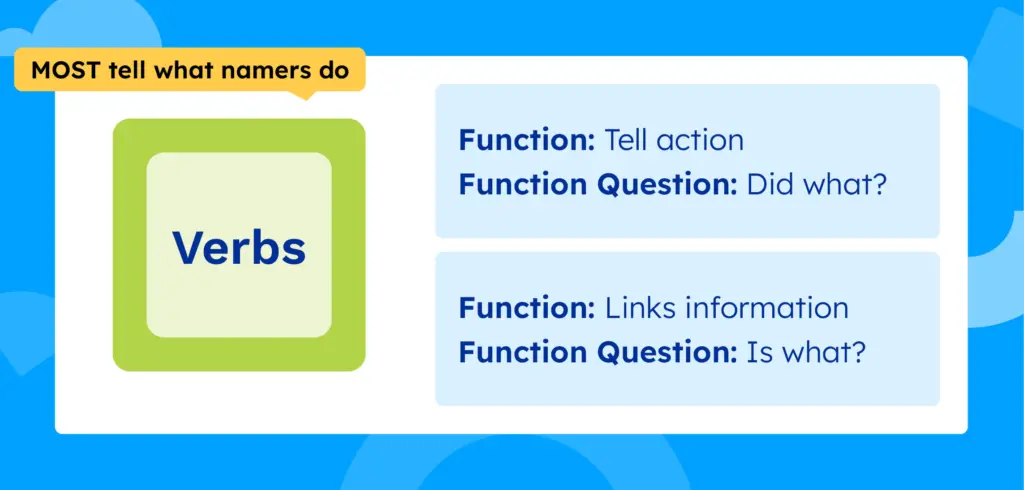
As you know, most verbs tell the action that a namer (or noun) does.
Here’s the function-first question that we like to use with these action verbs:
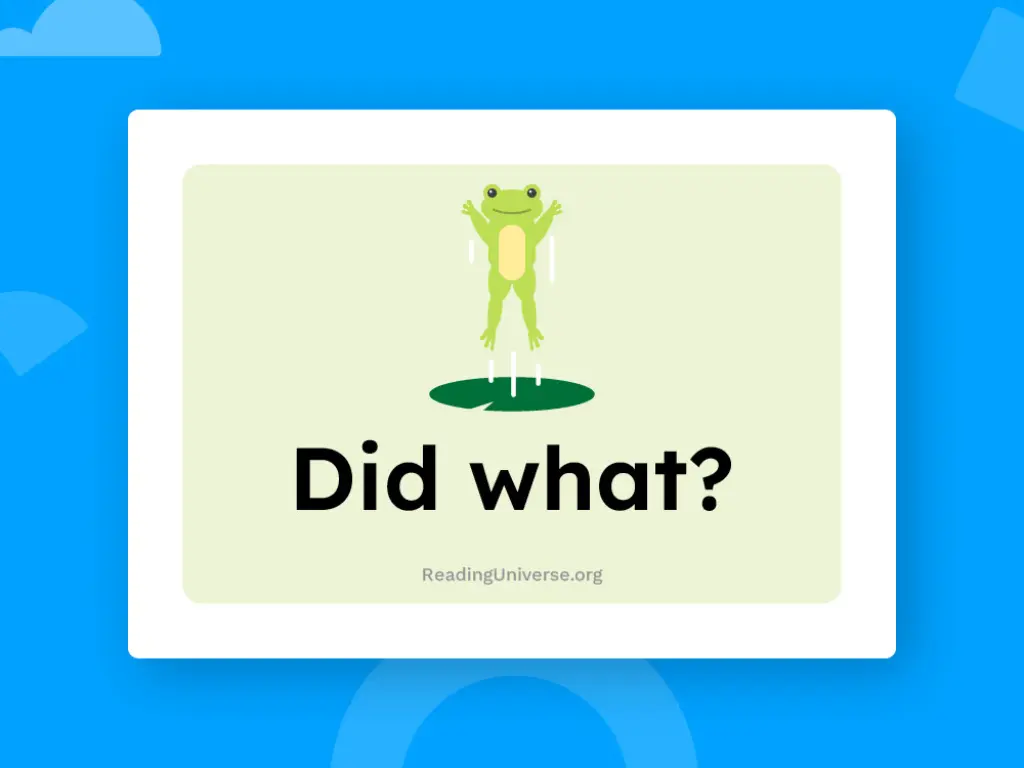
"Did what?"
Imagine you ask your students to read this sentence:
The gardener planted seeds.
You can ask them, "The gardener did what?" And they will answer, "Planted."
2. Linking Verbs
A small number of verbs link information in a sentence … like is, feels, and seems. We call them linking verbs. Linking verbs answer this function-first question:
"Is what?"
This is a way to talk about the few, but highly used linking verbs. Sometimes we say is (singular) or are (plural) that links back to the who or what (or noun).
Take a look at this sentence:
The boy is hungry.
To identify the linking verb you’d ask your students, "The boy ‘Is what?’ — hungry."
What word links the boy to hungry? Is!
The word is links boy to hungry.
Teacher Tip
This overview of did what and is what is for your teacher understanding. We would not teach students both action verbs and linking verbs at the same time. First, we would explicitly teach did what and be sure students had a good understanding of identifying the function of the verb in the sentence before we add in is what.
3. Helping Verbs
Helping verbs are another category of verbs. Using a function-based approach they will help to answer "Did what?" However, you may want to explicitly instruct how they can change based on the who or what.
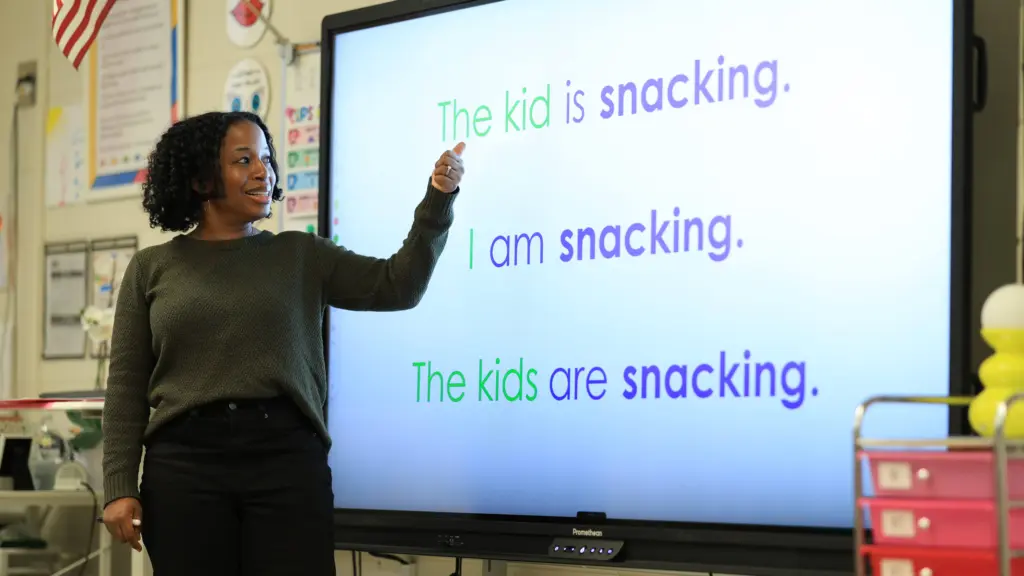
Is and are help by telling us it is happening now.
The kid is snacking. The kids are snacking.
Was and were tells us it was happening before.
The kid was snacking. The kids were snacking.
The action, or the verb, is still the same. Linking verbs can also be helping verbs when they work with the action. They help us to learn something more about the action, mainly the time.
Many of your students use helping verbs in their oral language. And they're usually high frequency words that your students learned to read early on. Once you teach students about helping verbs, they'll be able to think about the function that word is playing in sentences.
Here are more examples of each of the three types of verbs:
Type of Verb
Examples
In context
Action
grow, plant
The seed grows in the pot.
The farmers plant their crops.
Linking
Is, feel, seems
The farmer is a hard worker.
The farmer feels tired.
The dog seems thirsty.
Helping
Present: is, are
Past: was, were
Future: will be
The farmer is planting the crops. (present)
The farmer was planting the crops. (past)
The farmer will be planting the crops. (future)
Identifying Verbs in Context at the Passage Level
A lot of students will be able to identify verbs at the word level, but transferring that understanding to connected text might be tricky.
For students, being able to answer the questions "Did what?" or "Is what?" when listening to a read-aloud or reading independently is a crucial part of both listening and reading comprehension.
By answering "Did what?" students will find the verb in the sentence.
When they answer "Is what?" they will understand the relationship between the who or what and an adjective or another noun.
For example, in the sentence Ruby is my dog when I ask "Is what?" the answer would be my dog. Ruby = my dog.
Let's take a look at an example passage to see how this works. First, read the passage.
Plants grow all over the world. Some plants live in hot, dry deserts. Other plants grow in big, grassy fields called grasslands. Others live in forests with many trees. Wherever they live, all plants need water.
Now, go through sentence by sentence and look for the words thatanswer "Did What?" We’ve bolded them for you below.
Plants grow all over the world. Some plants live in hot, dry deserts. Other plants grow in big, grassy fields called grasslands. Others live in forests with many trees. Wherever they live, all plants need water.
These examples of verbs — grow, live, and need — tell us what plants do. They answer the question "Did what?" Being able to identify what is happening, what the subject of the sentence is doing, is essential for comprehending what we read.
Prepare to Teach
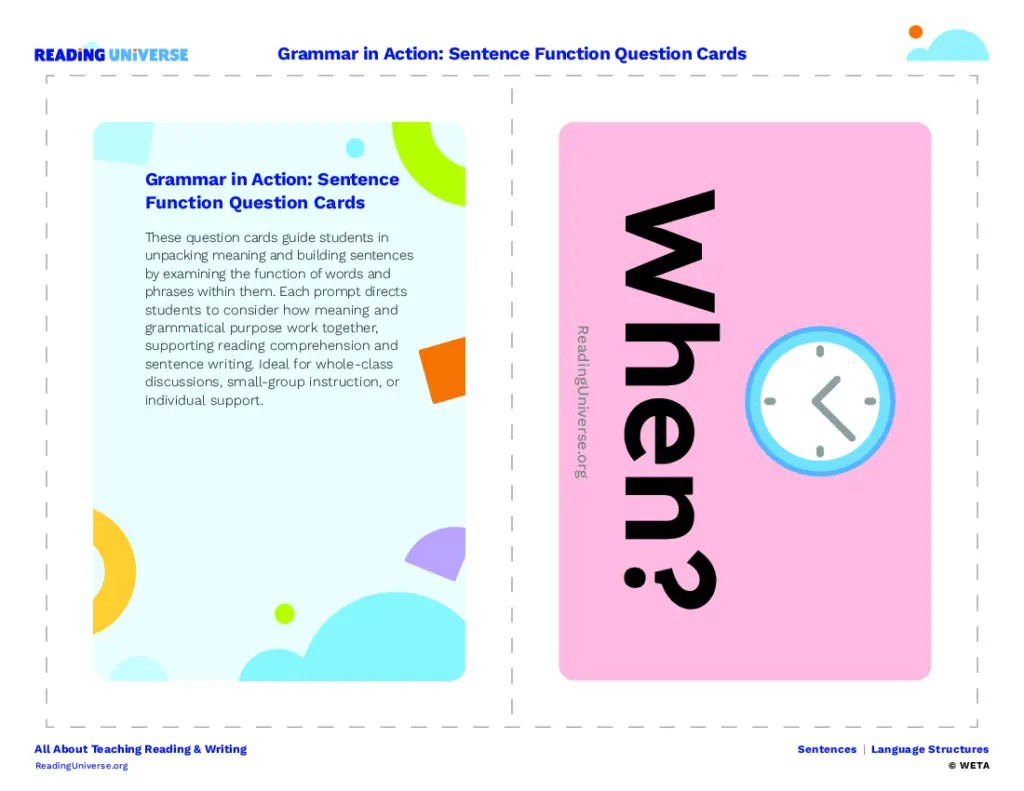
Before you teach this model lesson, you'll want to download these free Sentence Function Cards.
Grammar in Action: Sentence Function Question Cards
Now it’s time to teach!
Next we'll share short example lessons for teaching action verbs and linking verbs.
Action Verb Sample Lesson
To start your lesson on action verbs, here's what you can say to your students.
Today, we’re going learn about words that answer the question "Did what?"
Show students the "Did what?" card.
Say,
Words that answer "Did what?" tell an action.
For example, the frog "Did what?"
The frog hopped.
The word hopped answers "Did what?"
Listen to these sentences and tell me which word tells us "Did what?"
Read aloud the following sentences with students as you model how to identify the action.
Say,
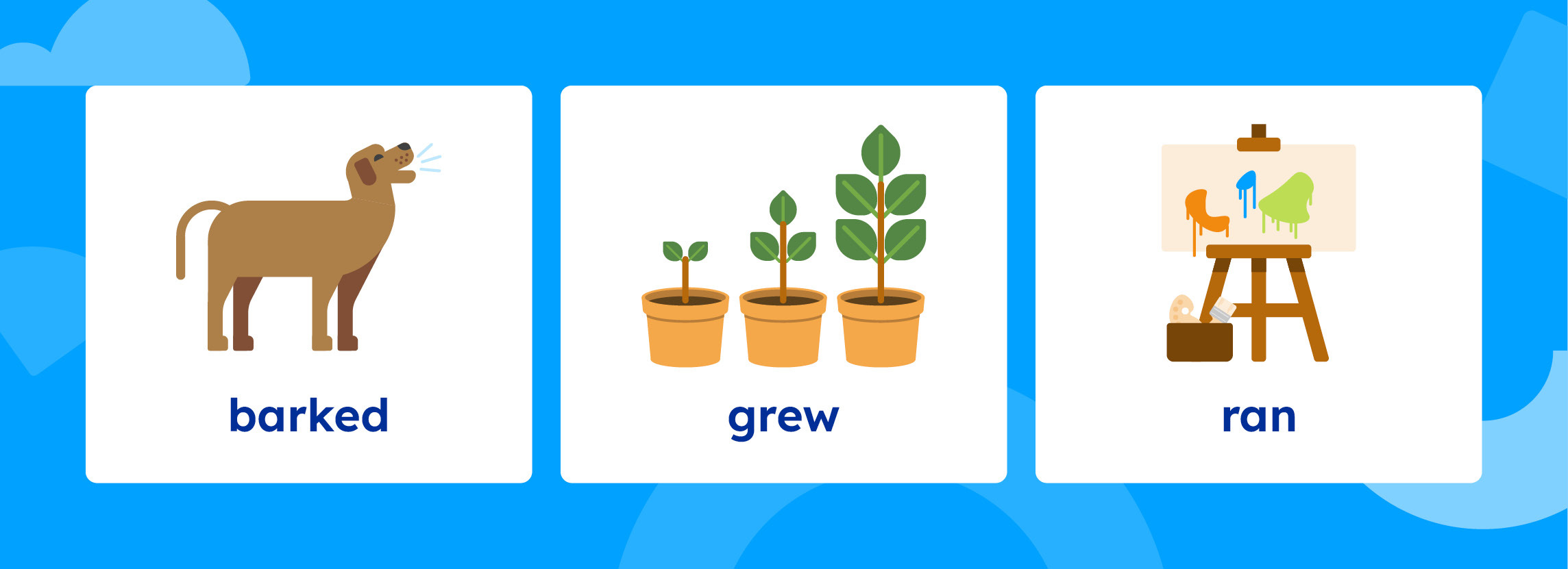
The dog barked. The dog "Did what?" Barked.
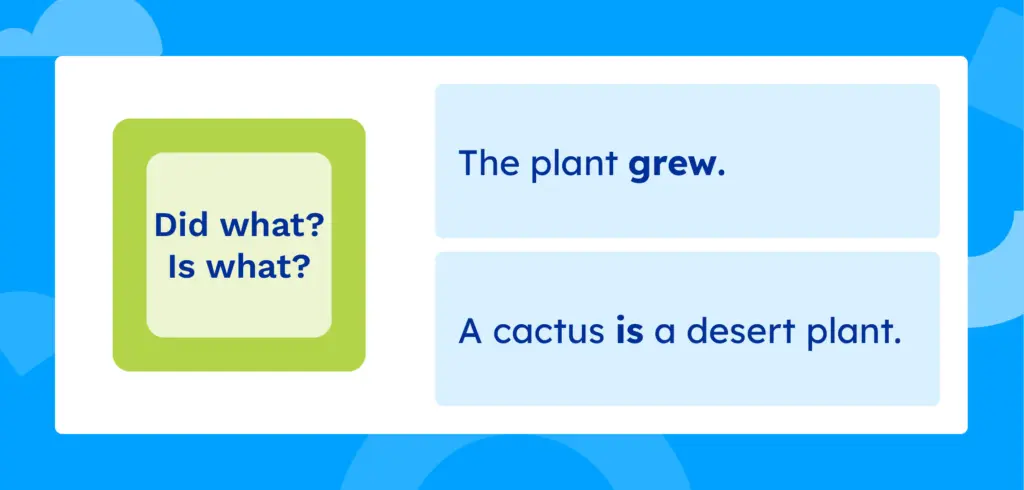
The plant grew. The plant "Did what?" Grew.
The paint ran. The paint "Did what?" Ran.
The words barked, grew, and ran are actions. We call words that are action verbs. Most verbs are actions. Verbs tell us what nouns do. Action verbs answer the question "Did what?"
Now let’s put this together with what we learned about our first function question "Who or what?"
Write this sentence on the board:
The rose wilted without water.
What word answers "Who?" or "What?"
Students answer:
The rose.
Say,
Right! Now let’s ask … the rose "Did what?"
Students answer:
Wilted.
Say,
Yes! The rose wilted.
Teacher Tip
Talk About Verbs Throughout the Day You can talk about verbs in every lesson you teach, from phonics (spell) to history (vote) to math (subtract). We need verbs to learn more about people, places, things, and ideas … words in each content area. Identify verbs during read-alouds or in whatever text students are reading, beginning with the earliest decodable text.
Linking Verb Sample Lesson
Here’s how you could start a lesson on linking verbs:
Some verbs have a different job. They link information. Let’s look at this sentence.
Write this sentence on the board:
The rose is red.
In this sentence, your verb is the word is. The word is links the word rose, which is a noun, to the word red, which is a word that tells us something about the rose … its color!
Because the verb links the what to more information about the what, we call it a linking verb. It answers the question "Is what?" The rose "Is what?"
Red!
So what’s our linking verb?
Is!
Next, write this sentence on the board:
The man is happy.
You’ll say,
Let’s look at another example. Read this sentence with me: The man is happy.
What word answers "Who or what?"
Students answer:
The man.
Right! Now let’s ask this question: the man "Is what?"
Students answer:
Happy.
That’s right! The man is happy. What word links the word man to the word happy?
Is!
Yes! The word is links the man to information about the man … how he’s feeling, which is happy. Our linking verb in this sentence is is.
Write these sentences on the board:
The cactus grew tall in the desert.
The cactus is prickly.
Snow fell silently during the storm.
Snow is a blanket on the ground.
The dogs ran in circles in the snow.
Now, let’s look at the verbs in these sentences. We will decide whether it’s telling us an action — "Did what?" — or if it’s linking to information — "Is what?"
The cactus grew tall in the desert. Grew tells us an action. Grewanswers "Did what?"
The cactus is prickly. Is links cactus to prickly. Is answers "Is what?"
Snow fell silently during the storm. Fell is an action. Fell answers "Did what?"
Snow is a blanket on the ground. Is links snow to blanket. Isanswers "Is what?"
The dogs ran in circles in the snow. Ran is an action. Ran answers "Did what?"
In the next section, we'll show you how to teach adverbs. Click next to learn more!