- Language Comprehension
Teaching Language Comprehension: Five Skills Every Teacher Can Build
When we talk about teaching students to read, we often first think about word recognition, that is, phonological awareness and phonics. And it's for good reason: those skills are foundational.

But word recognition alone doesn't make a reader. According to the Simple View of Reading, reading comprehension depends on two equally important components: word recognition and language comprehension, the ability to understand spoken language.
You might wonder … don't children arrive at school with language comprehension skills? And, yes, that's true. They arrive as language users, often sophisticated ones, who have been making meaning through words, stories, and conversation since birth.

Hide Video Transcript
Show Video Transcript
We're often told that language develops naturally. Word reading isn't natural. We need to teach it systematically and explicitly, but language develops naturally. This is true, but language also develops in environments and children are in schools and that's their environment for majority of the time. So we can stimulate language. Even though it's developing naturally, we need to give it a boost and it only develops what children are hearing. So research shows us that if teachers use complex language, children tend to mirror that complex language. So all children can benefit from systematic explicit instruction in language. That's how we kind of move that forward. Also, language is context specific. So the language you use in home might be different than the language used in schools. The language of books is different than the language we use in spoken language. So they need to have exposure to all types of language and vocabulary and grammar so that they can develop it for academic context and social context.
The Five Components of Language Comprehension
The Reading Universe language comprehension taxonomy identifies five skill areas for teachers to focus on: knowledge, words, sentences, connected sentences, and critical thinking.
They're not a hierarchy to work through in sequence. Each one deserves attention across grades and across the school day, woven together at times. Together, they form a complete picture of what language comprehension instruction needs to include.
1. Knowledge
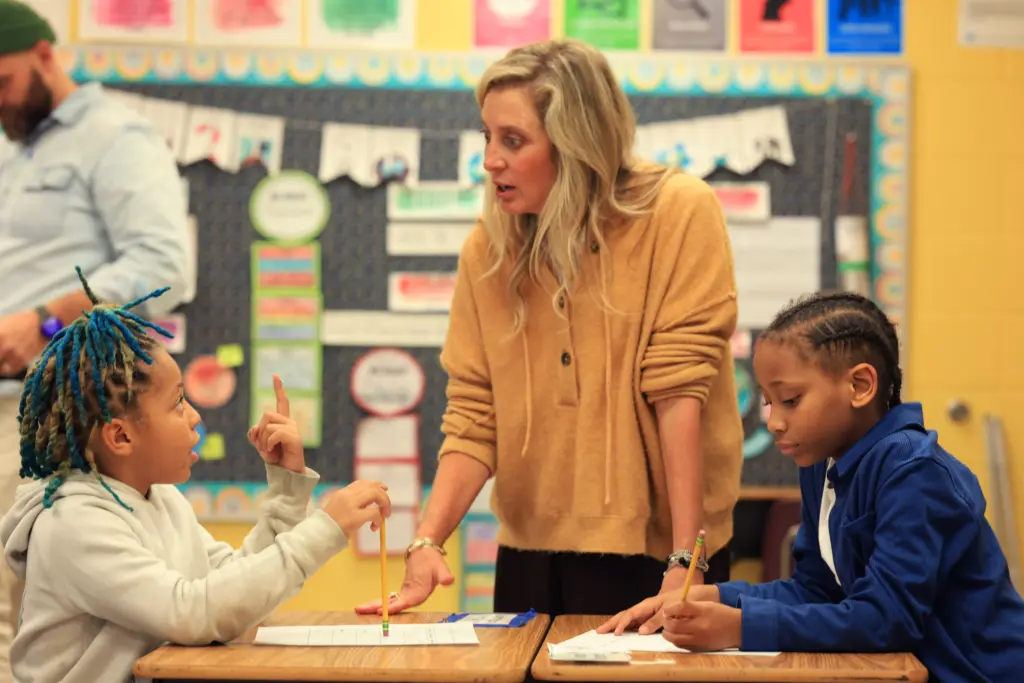
Reading Universe defines knowledge as all the information a student acquires over time to help them understand language and comprehend text. This includes facts and concepts about the world; personal experiences; cultural knowledge; and subject-matter knowledge across science, history, and literature. And they may acquire it through their own life experience, through reading or other media, or by being taught.
Background knowledge is not a nice-to-have. It is a core comprehension skill. When students bring prior knowledge to a text, they can make sense of new information faster, make inferences from what the author implies but doesn't state, recognize cause-and-effect relationships, and fill in gaps the text leaves open. A student who already knows something about cold climates and animal adaptations will comprehend a text about penguins in Antarctica more deeply than a student who doesn't — not because they decoded it better, but because they brought more knowledge to it.
Language Is the Key
Language is used to convey knowledge. Even in a content-rich curriculum children need opportunities to talk about the content, and they need explicit instruction in content-specific vocabulary, sentence formation, and how to connect sentences in paragraphs to convey their knowledge. Strong language can help compensate for some gaps in background knowledge, but strong background knowledge cannot fully compensate for weak language skills. This means that explicit language instruction remains essential — and cannot be replaced by content exposure alone.
2. Words
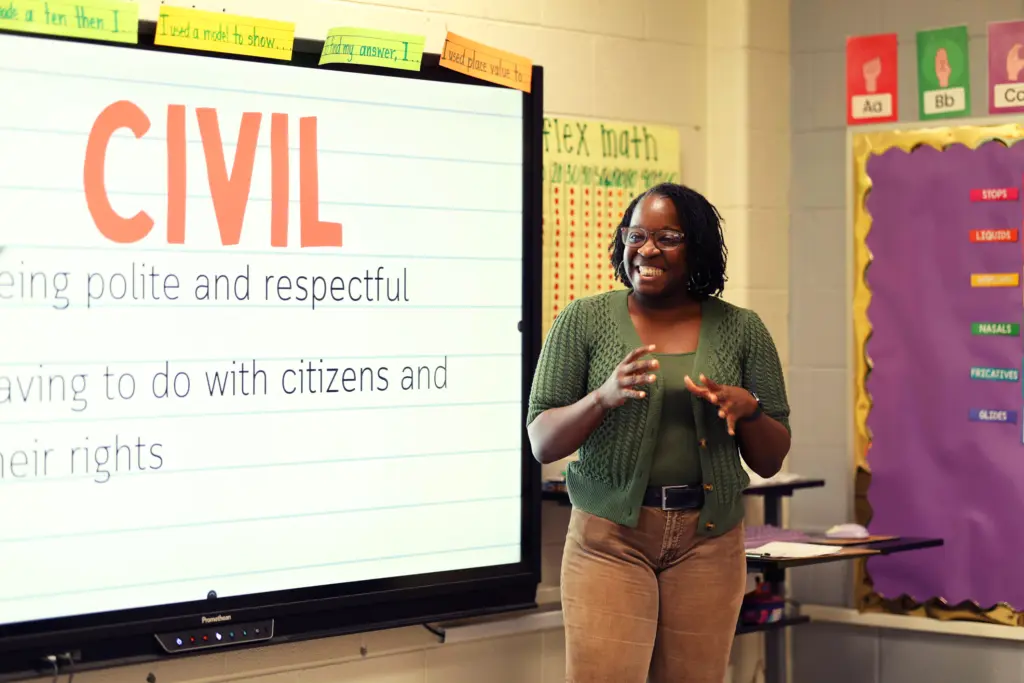
Vocabulary is one of the strongest and most consistent predictors of reading comprehension. Students who know more words understand more of what they read — not just because they recognize the individual terms but because rich vocabulary knowledge helps readers anticipate sentence patterns, connect ideas, and understand word meanings in context. Vocabulary gaps compound over time: students who know fewer words tend to read less, which means they encounter fewer words, which limits their vocabulary growth further. This widening gap is one of the main reasons we need to teach vocabulary early, often, and deliberately, across all content areas.
Vocabulary instruction isn't about assigning longer word lists. Evidence supports explicit teaching of high-utility general academic vocabulary (words like analyze or transform) and content-specific vocabulary (words like photosynthesis), with student-friendly definitions and multiple meaningful exposures. A student truly knows a word when they can use it flexibly across different contexts — not just match it to a definition. Word relationships matter, too. Synonyms, antonyms, categories, and morphology (the meaningful parts of words like prefixes, suffixes, and roots) all help students build a richer mental web of word knowledge, their lexicon.
Let's Watch!
Leonor Delgado, a veteran teacher at P.S. 109 in the Bronx, receives coaching from Dr. Elsa Cárdenas-Hagan, a bilingual reading specialist and speech pathologist, on how to intentionally integrate language development into her structured literacy lesson. As the students work toward reading fluency, they also practice defining words and giving answers in complete sentences. Ms. Delgado uses visuals and gestures to help the English Learners build their vocabulary throughout the lesson.
Hide Video Transcript
Show Video Transcript
[music]
Lenore Delgado: What sounds do birds make?
Jisbel: Hoo …
Lenore Delgado: They tweet, right? Tweet, tweet, tweet? Okay, well, today, we're going to be reading a story, and the title of the story is called "Yip Yap."
Leonor Delgado is a veteran teacher at P.S. 109 in the Bronx. She's been getting coaching from English Learner expert Dr. Elsa Cárdenas-Hagan, who's joining her class today.
Ms. Delgado: Have you ever had a puppy?
This small group is working on reading fluency, and Ms. Delgado is learning from Dr. Cárdenas-Hagan how to intentionally integrate language development into this structured lesson.
Ms. Delgado: Have you ever seen a puppy?
Student: Yes.
Ms.Delgado: You've seen? How do they behave?
She begins by getting the kids talking about puppies, the topic of the story they'll be reading later.
Ms. Delgado: They're babies? And what do they do? What do pups do?
Jisbel: They, they do bad, and they broke your stuff.
Ms. Delgado: Oh, yes, they break … say, "Puppies break your stuff." Can you say that?
Jisbel: Puppies break your stuff.
Second grader Jisbel clearly has background knowledge about puppies … and she's in an environment where she feels comfortable sharing it, thanks to Ms. Delgado. It's critical for English Learners like Jisbel to get plenty of chances to speak, building upon the language skills they already have as they learn to read in a new language.
Ms. Delgado: So we are going to practice the short vowel sounds, okay. Name?
Students: 'a'
Ms. Delgado: Sound?
Students: /ă/
The students begin their reading fluency practice with individual sounds.
Ms. Delgado: Name?
Students: 'i'
Ms. Delgado: Sound?
Students: /ĭ/
Next, it's fluency with individual words … words that will appear in the story they'll be reading at the end of the lesson.
Ms. Delgado: I want you to look at row one. We are going to read the words, and then I will ask you a question after each row. Okay. Ready? Begin.
Students: Bug, van, dug …
Instead of just plowing through the word list, Ms. Delgado stops and focuses on different characteristics of the words … starting with the phonology of the word hug, the sounds it's made up of.
Ms. Delgado: Which word, or words rhyme with the word hug?
Ms. Delgado gives Carol plenty of time to answer.
Carol: /h/
Ms. Deglado: /d/
Carol: /d/, /ŭ/? Dug?
Ms. Delgado: /d/, /ŭ/
Carol and Ms. Delgado: Dug.
Ms. Delgado: Very nice.
Dr. Cárdenas-Hagan takes a moment to extend the students' knowledge of rhyming, which can help them eventually decode new words with ending patterns they already know.
Dr. Cárdenas-Hagan: How did you know it rhymed? I'm confused.
Carol: Because the …
Dr. Cárdenas-Hagan: How did you know?
Carol: It has the same ending as bug.
Dr. Cárdenas-Hagan: What's the ending?
Carol: 'u', 'g', and, and, and the word I said have the same ending sound.
Dr. Cárdenas-Hagan: It has the same ending. And what changed? Only what?
Carol: The, the, the, the first letter.
Dr. Cárdenas-Hagan: The first letter. The first letter changed. The first sound changes. And that's what makes a rhyming word.
With a little push from Dr. Cárdenas-Hagan, Carol is now primed to take the step from identifying a rhyme to being able to generate rhyming words, because she's talked through how rhymes are made.
Ms. Delgado: Okay. Row two.
Students: Wags, not …
After looking at sounds in a word, Ms. Delgado now explores meaning in other words from the list.
Ms. Delgado: Which word means to move from side to side? What word? Yes.
Jisbel: Wags.
Ms. Delgado: Yes. Very good. Wags. And who wags his…?
Jisbel: The tail … the dog wags the tail.
Ms. Delgado: Very nice. Okay, let's go to line three.
And there's a word they've been discussing all week … sobs. Ms. Delgado reviews it today with visuals, a sample sentence, and gestures.
Ms. Delgado: And the word is sobs. Can you say that?
Students: Sobs.
Ms. Delgado: And I'm going to read the sentence: "The boy sobs when he misses his mom." So what do you think sobs means? What does it mean? Yes, Jisbel.
Jisbel: To cry noisily.
Ms. Delgado: Yes, to cry noisily. So when you sob, you're not just crying, you're crying and you're making noise. Can we practice that? Can we practice sobbing?
Ms. Delgado and Students: [crying noises]
Now they're ready to read the story. They'll read it a few times, to work toward fluency … accurate, automatic, and expressive reading. On the first go-round, accuracy is the focus. Each student reads at their own pace, with both teachers nearby, in case a little help is needed.
Dr. Cárdenas-Hagan: /h/. Look at it.
Carol: /h/, /o/, /p/, pop?
Dr. Cárdenas-Hagan: What's right here? /h/
Carol: 'h'!
Dr. Cárdenas-Hagan: Mmhmm. 'h' says what? /h/
Carol: /h/
Dr. Cárdenas-Hagan: Next one.
Carol: /o/
Dr. Cárdenas-Hagan: /o/. Good. /p/.
Carol: /p/
Dr. Cárdenas-Hagan: Put it all together.
Carol and Dr. Cárdenas-Hagan: Hoooop. Good.
Dr. Cárdenas-Hagan: Say it again.
Carol and Dr. Cárdenas-Hagan: Hop.
For their next reading, Ms. Delgado and her students read the story together.
Ms. Delgado: So now we are going to read the story a second time. And we are reading for expression and fluency. So when you come to punctuation and the exclamation, you sound what?
Carol: Loud!
Ms. Delgado: Excited. We are excited. We sound … say, "We sound excited."
Students: We sound excited.
Ms. Delgado: Are we ready? I'm going to model, but I want you to read along with me.
Ms. Delgado and Students: Jim finds how Wags got out. Wags dug and ran!
By reading along with Ms. Delgado, students hear … and can mimic … the correct pacing, pronunciation, and expression. This good practice helps them build confidence in their second language, too.
Ms. Delgado and Students: Wags wags. Did Wags hop up in our van? She did not.
Ms. Delgado: Okay, so I want you to turn to your partner, and I want you to retell the story from the beginning, middle, and end.
[students speaking over each other]
This gives students the chance to practice expressing their ideas out loud … and to demonstrate their understanding of the story.
Ms. Delgado: So how was the problem solved?
Byron: The problem is solved because they find him.
Ms. Delgado: Beautiful.
Dr. Cárdenas-Hagan: And where did they find him, may I ask?,
Byron: In the … in. … They found Wags in the mud.
Dr. Cárdenas-Hagan: "They found Wags in the mud." That was a complete sentence. Very nice.
Byron ends the lesson on a high note, bringing language and meaning together.
Dr. Cárdenas-Hagan: That was good reading.
Ms. Delgado: Good reading.
Dr. Cárdenas-Hagan: Give yourselves a round of applause. [clapping]
Ms. Delgado: Thank you for coaching me in …
Dr. Cárdenas-Hagan: You're welcome!
Ms. Delgado: … and having them expand their thinking and their, um, sentences. Thank you.
Dr. Cárdenas-Hagan: Pleasure to be here.
Reading Universe is made possible by generous support from Jim & Donna Barksdale; the Hastings/Quillin Fund, an advised fund of the Silicon Valley Community Foundation; the AFT; the Emily Hall Tremaine Foundation; and anonymous donors.
Special thanks to Dr. Elsa Cárdenas-Hagan … and in New York City: P.S. 109 - The Sedgwick School, Bronx District 9, and the New York City Department of Education.
If you enjoyed this video, please subscribe to our YouTube Channel … at-R-U Teaching.
Reading Universe is a service of WETA-Washington, D.C., the Barksdale Reading Institute, and First Book.

Teacher Tip
Try This in Your Classroom
Here's how you could introduce a new word: "This word is enormous. Enormous means very, very big. Can you think of something enormous? Turn and tell your partner." Return to the word throughout the week: "Remember our word enormous? An enormous truck passed me on the highway this morning! Now use the word yourself — what's something enormous you saw this week?"
3. Sentences
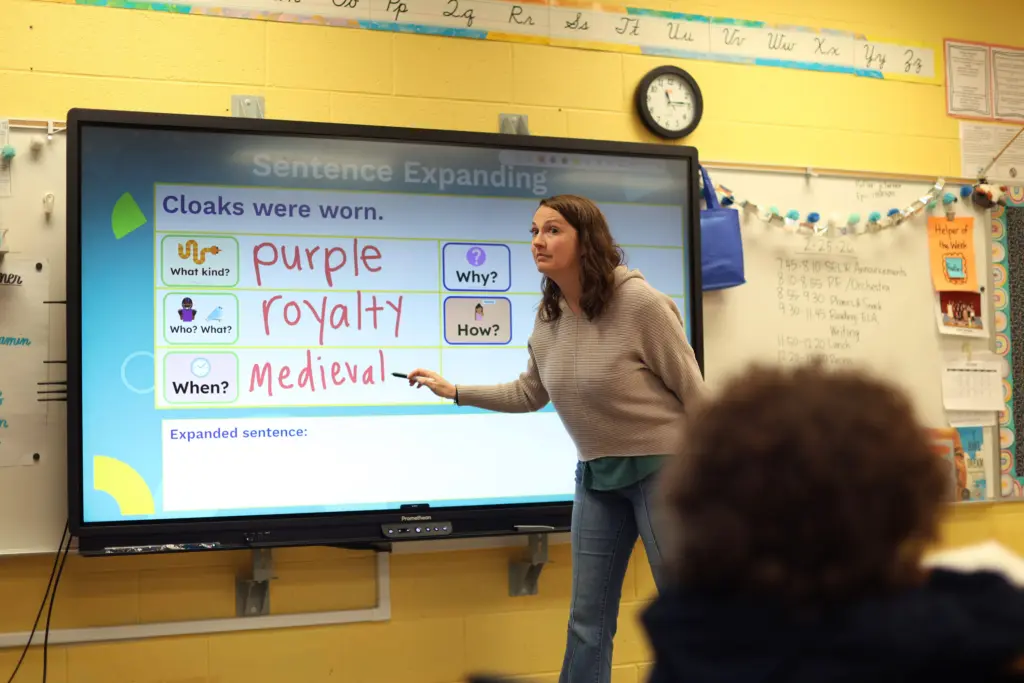
Understanding individual words isn't enough if students can't understand how those words combine to make meaning in sentences. Understanding the anatomy of a sentence — the grammar and syntax that govern how sentences are built — is essential for comprehension. This is especially true as texts grow more complex in the upper grades: longer sentences, multiple clauses, unfamiliar word order, and pronoun references that require readers to track who is doing what to whom.
Oral language development directly supports this. Children who can use and understand complex sentence structures in conversation are better prepared to comprehend them on the page. They understand how ideas connect within sentences — how words like however, although, and as a result signal relationships between ideas. They can track pronoun references. They know that punctuation signals meaning. These are not skills students simply pick up; they develop through exposure and through explicit instruction that draws attention to sentence structure as a reading and communication tool.
Teacher Tip
Do I need a grammar block?
You do need to explicitly teach grammar, but we hope you'll connect it to other lessons. For instance, when you're reading aloud and encounter a particularly complex sentence, pause and think aloud: "This sentence is long. Let me figure out who it's about and what happened." That kind of in-the-moment attention to language structure is powerful, low-burden language comprehension instruction.
4. Connected Sentences
What instruction in connected sentences might look like in your classroom:
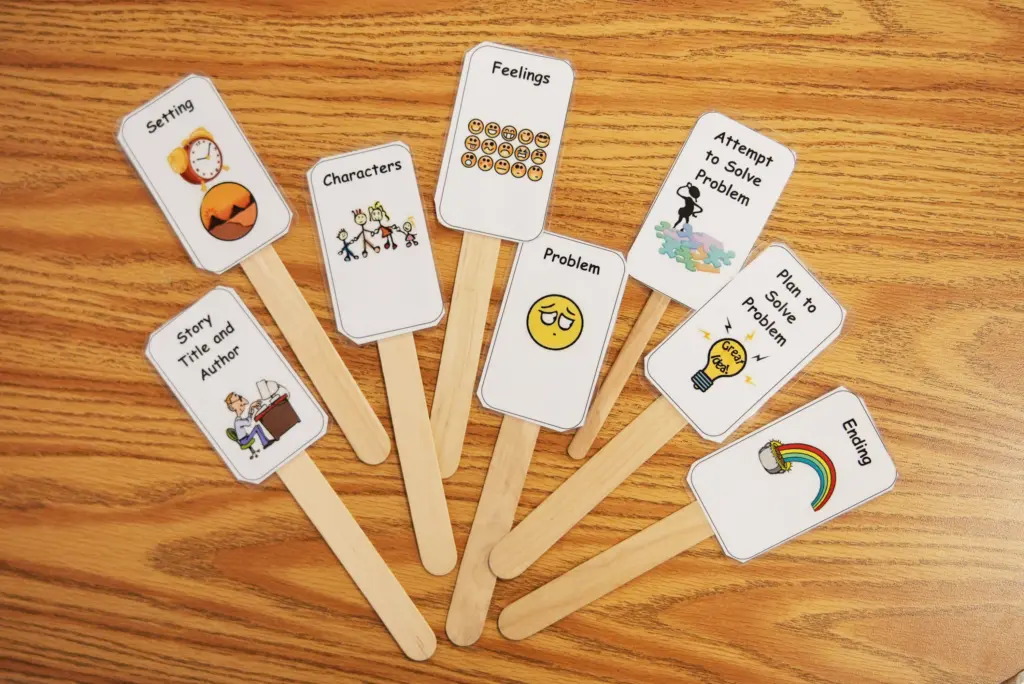
- Explicitly teach story grammar elements (characters, setting, problem, attempts, resolution, theme) using a consistent shared framework.
- Use graphic organizers to make the structure of narrative and informational texts visible before, during, and after reading.
- Practice spoken retelling with increasing structure and detail — moving from "tell me what happened" to "tell me the problem, the attempts, and the resolution."
- Teach students to identify signal words that indicate text structure: first, as a result, in contrast, the solution was, and so on.
- Use mentor texts to show students how authors deliberately choose structures to convey their ideas.
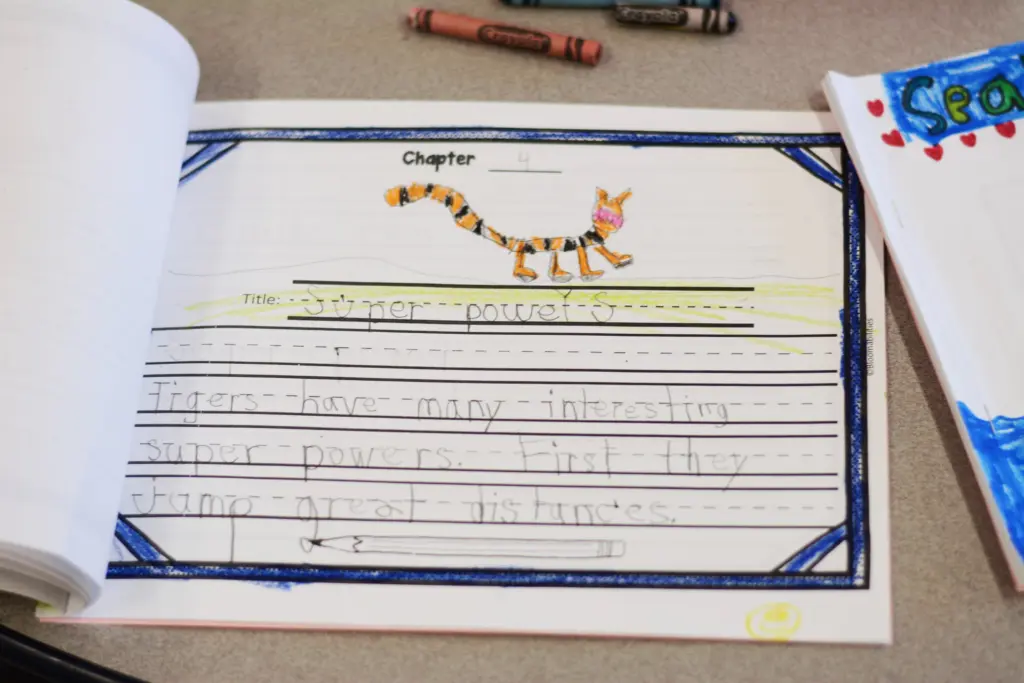
- Connect text structure knowledge to writing. When students understand how texts are organized, they can use those structures to organize their own.
Teacher Tip
The Power of Read-Alouds
Read-alouds are one of the most powerful tools for building text structure knowledge, especially for students who are still developing their decoding skills. When you read aloud a rich, complex text and think aloud about its organization, every student in the room benefits, regardless of where they are as an independent reader.
5. Critical Thinking Strategies
Let's Watch!
Watch Elke Blanchard explicitly teach an inferencing lesson with second graders at Stillmeadow Elementary in Stamford, Connecticut. She's doing a read-aloud with the book Carlos and the Squash Plant by Jan Romero Stevens.

Hide Video Transcript
Show Video Transcript
Elke Blanchard: Good morning, boys and girls.
Students: Morning.
Elke Blanchard: I'm so happy to be here today to read to you "Carlos and the Squash Plant." It's one of my favorite stories, and I think you'll like it too. We're going to be listening for the characters, the setting, the problem, the feelings, all those things that are part of stories. Okay, let's get started. So boys and girls, now we're going to go through the text, and we're going to be talking about something that happens in our minds. Okay? The author writes text or sentences, and then he or she writes some more sentences. But in between we have to be thinking about what we already know and how it connects. Those are called our inferences that we use … and our background knowledge. Okay? Do you want to do some of that? Alright, let's go. Remember in the story, when the mother says, "'Did you take your bath?' His mother asked, looking at Carlos with a raised eyebrow. 'Sí, Mama. I did.' Papa only shook his head." Let's talk about that. Why did the author say Papa only shook his head? What did that mean? Yes, Nelly.
Nelly: I don't know if he did take a bath.
Elke Blanchard: Is that what the papa's thinking? Is that what you're trying to tell me? You don't — the pop's thinking, "I don't know if he did." And how do you know that? What makes you think that? That didn't say that in the text. Why do you think that? Yes. Ari.
Ari: I think he didn't take the bath because maybe he smells.
Elke Blanchard: Oh, maybe the dad smelled it. Okay. Yes, Jace?
Jace: I, I think the both things. Um, add this to it — and then the dirt on his legs, shoes, hands, and the other hands and under his nails are dirty.
Elke Blanchard: So the papa ...?
Jace: Saw all those …
Elke Blanchard: He saw all that. First of all, I just want to say, nice job. I love the way you said, "I agree with that, what they're saying, and I'd like to add." I loved that. That was excellent. And then you said the piece that I was thinking — the papa saw it or he noticed. Let's go to another piece. "Carlos worked outside all morning and ate his lunch sitting on a branch of a huge cottonwood tree while a thin stream of water ran beneath him." At lunch, we usually sit with our family and our friends and eat lunch. Why do you think ... the text doesn't tell us why he sat by himself. Why do you think he sat by himself? What are you thinking about? Yes.
Grace: He chose to not eat with his families because he has a big plant on his ear and they don't want to notice.
Elke Blanchard: He didn't want them to notice it. So he stayed as far away as possible. All right, listen to this part. "'Sí, Mama. I did,' said Carlos, and he quickly ate his dinner and went upstairs to bed. He was so tired that he fell asleep immediately." Two questions for you. Why did the author choose to say in the text, "He quickly ate his dinner"? Yes, Nelly.
Nelly: Because he didn't want the mom to notice that sprout sticking out of his ear.
Elke Blanchard: So if he eats it quickly, then there's not as much time for her to notice it. Right. All right. And this one other part, it said, "He was so tired that he fell asleep immediately." Why is the author in the text telling us that he's so tired? This is a little bit of a harder one. What do, what are you thinking about that you're connect, making those connections? Jace?
Jace: I think he was so tired for working in the garden all day and climbing up that tree and then eating so fast — he couldn't take it no more and then he fell asleep right away.
Elke Blanchard: Okay. So working in the garden, having to climb the tree to be away from people, having to eat fast so people didn't notice. Does anybody else want to add to that? Why he would be so tired when he has to keep trying to eat quickly and avoid people and do all that stuff? Is he having to constantly think about hiding it? Is he always thinking about hiding it and pulling it down and staying ... ? What happens if you have to constantly be thinking about something and pulling it down, pulling a hat down and saying, "Oh, my god. I have to hurry up and eat." Is he relaxed? He's not relaxed. What's the word? If he's not relaxed, what would you say? What do you want to say? Yes, Kylie?
Jayleigh: Uncomfortable?
Elke Blanchard: He's uncomfortable. And when you're not relaxed and you're uncomfortable after a long day, how do you feel?
Student: Tired.
Elke Blanchard: Tired.
Jayleigh: He was stressed out after a long day.
Elke Blanchard: Yes, he was stressed out. Exactly what I was thinking. And boys and girls, when you lie like that, you have to be thinking so many steps that you start to becoming ... to become stressed out. And that's another reason why he fell asleep so fast. He was just so tired. And one last thing right at the end. This one is, is the hardest one. "' I have cooked your favorite dish, calabacitas.' And as she put the steaming plate down in front of him, she winked at Papa, who pretended not to notice." Why did the mom wink at the dad when she put the plate? This, I don't know if any of you guys are going to know this. I think the author put this in for adults because I don't know if kids can get this. It's hard. Okay, turn and talk to your partners and I want to hear what you think.
Students: [overlapping chatter]
Elke Blanchard: I heard a couple of ideas about why the mom winked, and I want all of you to hear what one of your classmates said. Nelly, can you tell us what you thought why the mom winked?
Nelly: When he finally took a bath, the mom, I think the mom saw it in the bathroom. There was a little like vine, vine sprout in the bath bathtub. And then she planted it and made the dish and served it on the table.
Elke Blanchard: So are you connecting that what was in his, growing out of his ear, the squash plant was then what was his dinner? His dinner. Oh my goodness. And so she did a little wink, wink. She did a little wink. He's been having a squash plant all these days. Now isn't squash his favorite? It is his favorite. So she says, your favorite dish. I have to say we did such a nice job looking at what the text that the author says and then making those inferences and thinking about what do we know? What does that mean? And so we connected that, those pieces together. So that's making an inference, and we do that all the time in our books, and I loved doing that with you today.
Announcer: For more information, please visit ReadingUniverse.org. Special thanks to Literacy How, Stillmeadow Elementary School, and Stamford Public Schools in Stamford, Connecticut. Reading Universe has made possible by generous support from Jim and Donna Barksdale, the Emily Hall Tremaine Foundation, and two anonymous donors. Reading Universe is a service of WETA, Washington D.C., the Barksdale Reading Institute, and First Book.
Elke Blanchard: This is Reading Universe.
Teacher Tip
Try This in Your Classroom
During a read-aloud, stop and say, "The author didn't tell us this directly, but I think ... because the text said ... and I also know ... so I can figure out ..." Then try it together: "Now you try. What can you figure out that the author didn't say? What clues in the text helped you?" Here's an example: "I see that the sand castle was washed away and Bobby is mad. But the story doesn't say how the castle was washed away. I remember that Bobby is at the beach, so I remember at the beach that waves come in and out. And I'm making a connection with my knowledge, so I believe a wave washed Bobby's sand castle away. That's frustrating for Bobby because he worked on it for so long."
Putting It All Together: Five Components, One Coherent Framework
What the Research Says
- Language comprehension is a strong, independent predictor of reading comprehension, and its influence grows across the school years. After third grade, language comprehension — not word reading — accounts for the majority of individual differences in reading comprehension (Catts et al., 2005).
- Oral language skills transfer broadly across all reading contexts and content areas, while the effects of content knowledge are more topic specific. Strong spoken language can help compensate for gaps in background knowledge, but the reverse is not true: strong content knowledge cannot fully compensate for weak language skills (Hogan, 2025).
- A child's early language skills — vocabulary, grammar, and inferencing — in pre-K predict language comprehension in third grade, just as early code-related skills predict word reading (Language and Reading Research Consortium & Chiu, 2018).
- Many students identified as "late-emerging" poor readers are better described as late-identified: their language comprehension was always weaker than their peers', but reading tests didn't reveal it until texts became complex enough to tax language abilities (Petscher et al., 2014).
- Direct, rich vocabulary instruction with multiple exposures in varied contexts produces stronger outcomes than incidental learning alone. Explicit teaching of Tier 2 and Tier 3 vocabulary is strongly supported by evidence (Beck, McKeown, & Kucan, 2013).
- Classroom-based language curricula targeting vocabulary, grammar, story grammar, inferencing, and comprehension monitoring have been shown in randomized controlled trials to improve students' comprehension (Language and Reading Research Consortium et al., 2019).
All Five Components
Explore the Reading Universe language comprehension taxonomy for teaching resources, videos, and skill explainers for each component.
- Inferencing is teachable. Direct instruction in making inferences improves reading comprehension and is especially beneficial for students who struggle (Elleman, 2017).
- Text structure instruction, including story grammar instruction, significantly improves comprehension of both narrative and informational texts (Williams, 2018).
- Focusing on either phonics or language alone will not produce reading comprehension improvements for most children. Knowledge and language supports must be integrated (Hogan, 2025).
