- Assessment
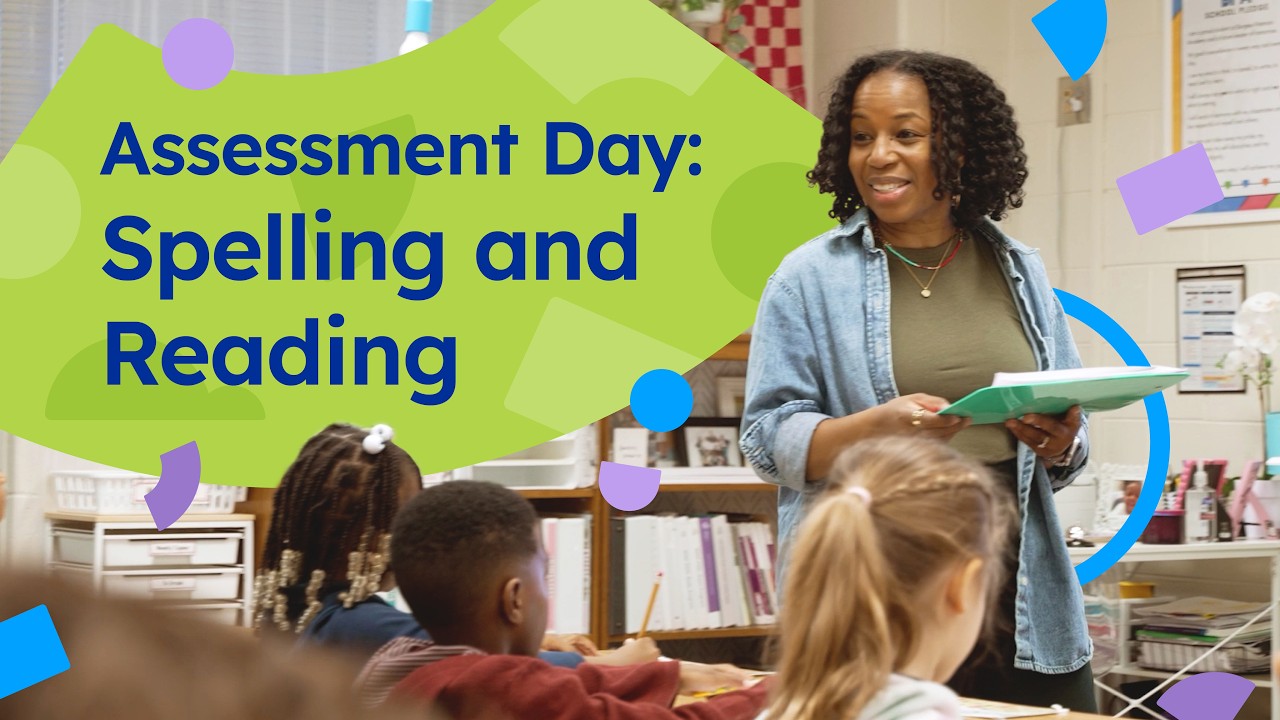
Assessment Day: Spelling and Reading
Hide Video Transcript
Show Video Transcript
Carla Miller: Good morning, friends. How's everybody doing?
Students: Good.
VO: This week, Dr. Carla Miller's first graders at Burgess-Peterson Academy in Atlanta have been learning how to read and write words with the suffix '-ed'.
Carla Miller: Okay, friends, it's time for our Friday probe. I want you to go ahead and put your name and the date on your paper.
VO: What Dr. Miller calls the Friday probe is a quick end of the week assessment. It tells her which students have mastered suffix '-ed' and who needs more instruction.
Carla Miller: We're going to start with sounds.
VO: She'll assess both spelling and reading today, with spelling first. Dr. Miller starts by asking her students to spell suffixes in isolation.
Carla Miller: The first suffix I want you to write is the suffix that means past tense.
VO: Next come words. Notice how Dr. Miller draws her students' attention to the base word first, giving them a strong foundation to spell from.
Carla Miller: The word is spilled. What word?
Students: Spilled.
Carla Miller: Base word.
Students: Spill.
Carla Miller: I want you to write spilled.
VO: While today's assessment is focused on suffix '-ed', Dr. Miller includes previously learned suffixes as well.
Carla Miller: Next word. I want you to write bunches. What word?
Students: Bunches.
Carla Miller: Base word.
Students: Bunch.
Carla Miller: I want you to write bunches.
VO: Dr. Miller gives her students four to six words before moving on to sentences.
Carla Miller: "We crossed the path to get to the mall."
Students: "We crossed the path to get to the mall."
Carla Miller: Pound.
Together: [pounding their fists into their palms with each word] "We crossed the path to get to the mall."
Carla Miller: Scoop.
Together: [scooped fingers for each section of the sentence] "We crossed the path to get to the mall."
VO: The spelling assessment can be given to the whole class at once, but reading calls for a different approach.
Carla Miller: I'm going to call friends over to read to me. I want it to be nice and quiet in the room. Can we do that?
Students: Yes.
Carla Miller: Thank you.
VO: For the reading assessment, Dr. Miller will ask each student to read words in isolation and then sentences. She starts with Aurora.
Carla Miller: Are you ready?
Aurora: Yes.
Carla Miller: I want you to put your finger under the first word. Can you read it for me?
Aurora: Test.
Carla Miller: Next word.
Aurora: Spelled.
VO: As each student reads, Dr. Miller is taking notes on accuracy and any mistakes that need to be addressed.
Carla Miller: Next word.
VO: Dust.
Carla Miller: Okay, good job. So now we're going to move on to the sentence. You read the first sentence, put your finger under the first word.
Aurora: "Brad jumped in the pond and then ..."
Carla Miller: You can go on.
Aurora: "On the dock."
VO: She'll use this information to make decisions on what skills to focus on and how to group students for instruction the following week.
Aurora:
"I sniffed the milk and it smelled bad."
Carla Miller: Good job, Aurora. High five.
VO: Let's watch a one-on-one assessment all the way through with Jude.
Carla Miller: Okay, Jude, are you ready for our reading probe?
Jude: Yeah.
Carla Miller: Okay. I'd like for you to put your finger under the first word and read for me.
Jude: Tasted, spelled, camped, grilled, dusted.
Carla Miller: Excellent. Good job. Let's move on to our sentences. Can you put your finger under the first word for me?
Jude: "Brad jumped in the pond and then rested on the dock."
Carla Miller: Excellent. Next sentence.
Jude: "I sniffed the milk and it smelled bad."
Carla Miller: Good job. Last one.
Jude: "Dad honked at the passing truck."
Carla Miller: Excellent.
VO: These Friday assessments aren't just routine check-ins. They provide the data teachers need to shape their instruction and give each student the support they need to become a strong reader.
Carla Miller: Thank you so much for reading for me today and showing what you know. Hi five. Awesome.
VO: Reading Universe is made possible by generous support from Jim and Donna Barksdale; the Hastings/Quillin Fund, an advised fund of the Silicon Valley Community Foundation; the Emily Hall Tremaine Foundation; the AFT; and several anonymous donors. Special thanks to Burgess-Peterson Academy, Reading Is Essential For All People, and Atlanta Public Schools. If you enjoyed this video, please subscribe to our YouTube channel @RUTeaching. Reading Universe is a service of WETA Washington D.C. and was developed in collaboration with the Barksdale Reading Institute and First Book.
Carla Miller: This is Reading Universe
What did you notice?
Support Materials
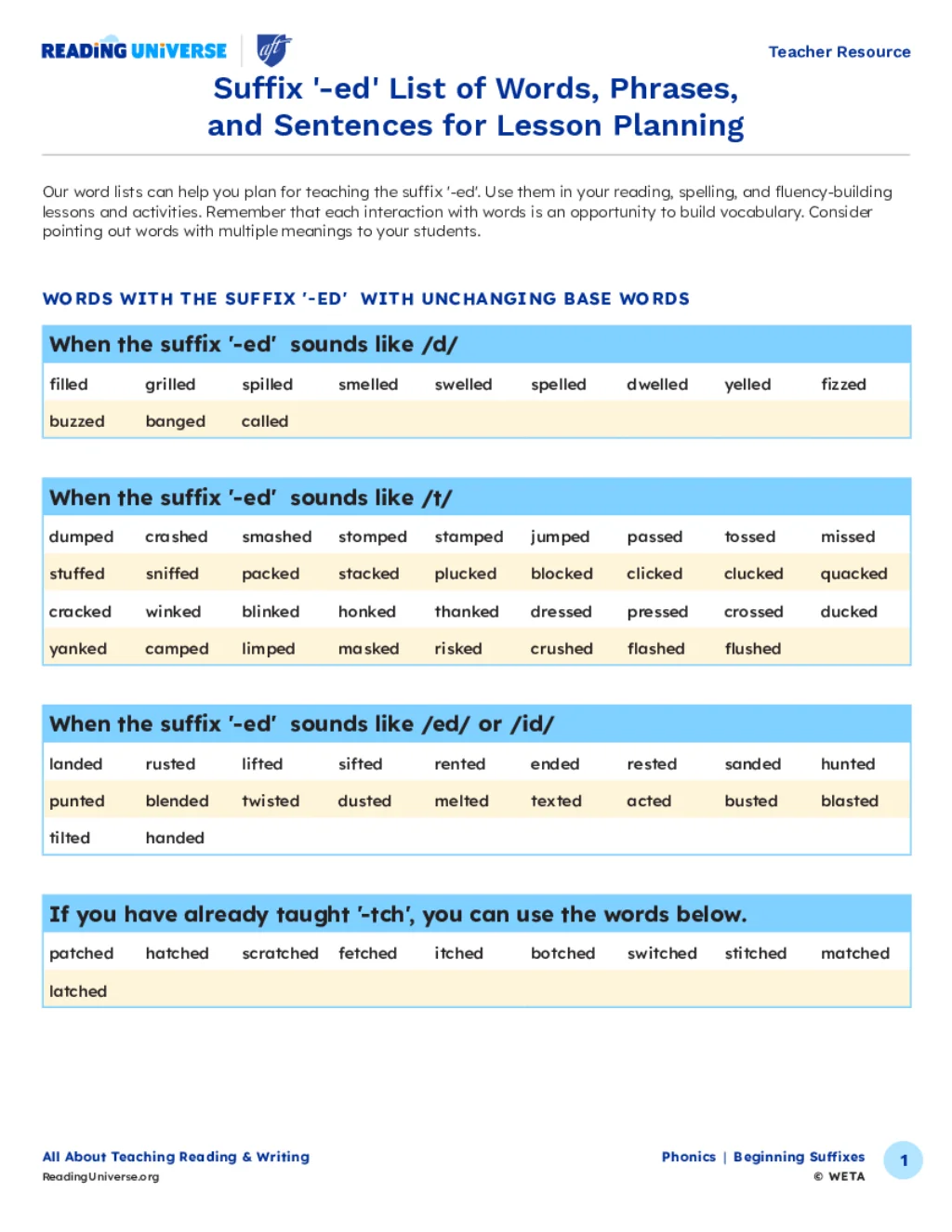
Suffix '-ed' List of Words, Phrases, and Sentences
Our word lists can help you plan for teaching the suffix '-ed' . Use them in your reading, spelling, and fluency lessons and activities.
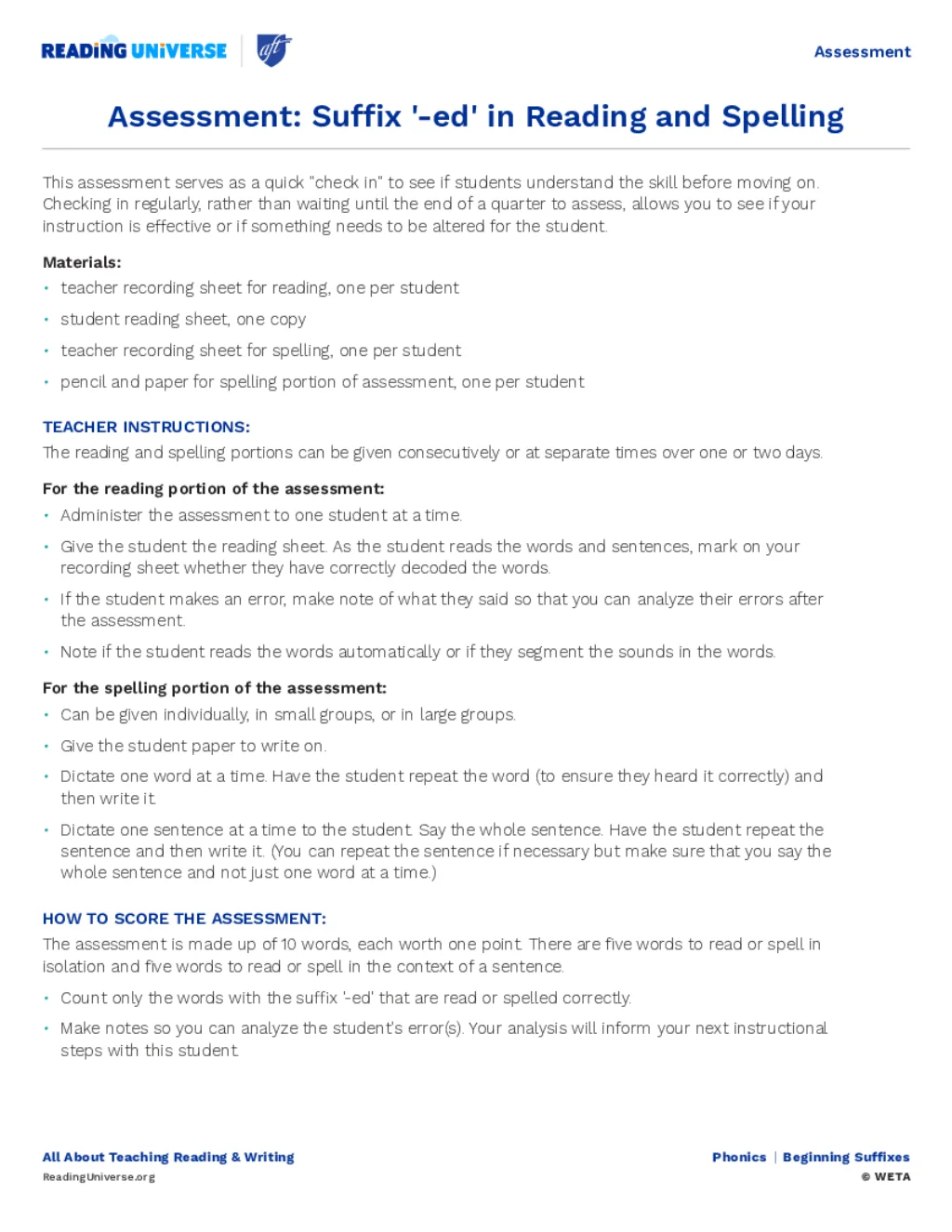
Assessment: Suffix '-ed' in reading and spelling
Use this assessment to see where your students' skills are when it comes to reading and spelling with words that have the suffix '-ed'.
