- Fluency
Fluency Practice: Reading with Expression
Hide Video Transcript
Show Video Transcript
Princess Watts-Blount: Good morning guys. Today we are going to read "Get Up."
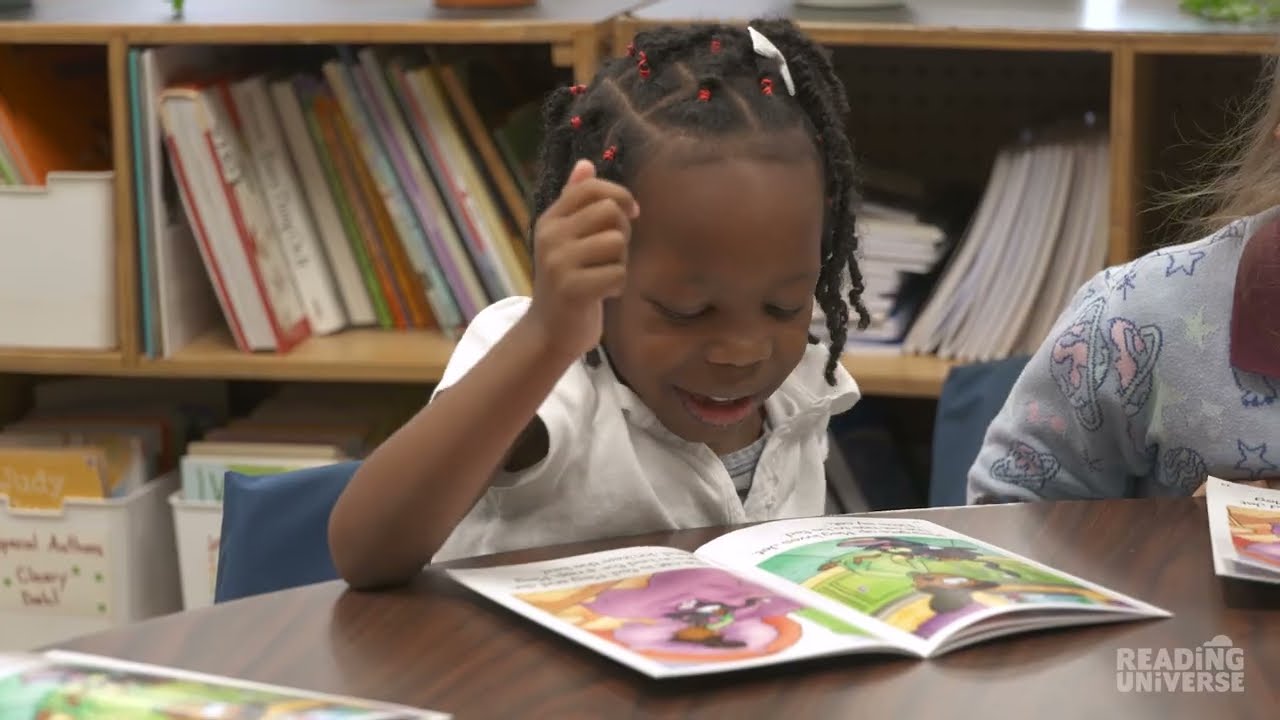
Narrator: Today, reading specialist Princess Watts-Blount is guiding first graders at Burgess-Peterson Academy in Atlanta through a lesson focused on reading with fluency.
Princess Watts-Blount: We will work on reading fluently, so that means reading the words accurately so we're reading them correctly. We will read them with automaticity and we're also going to read the words with expression, which shows that we actually understand the text. Okay?
Narrator: Reading fluently, accurately at an appropriate rate and with proper expression, just means reading the way you would speak. And when we intentionally practice reading with fluency, we're helping students bridge the gap from learning to read, to understanding what they read.
Princess Watts-Blount: I'm going to read the first page aloud and I'd like for you guys to follow along with me. Sounds good?
Student: Got it.
Princess Watts-Blount: Alrighty. What's the title of our book?
Students: "Get Up."
Princess Watts-Blount: "Get Up."
Narrator: In today's lesson, Ms. Watts-Blount is using a fluency strategy called Guided Oral Reading. She begins by modeling fluent reading aloud.
Princess Watts-Blount: All right. I'm going to read page one. I'd like for you guys to follow along in your book. "Meg is in the bed. She will not get up. Meg loves to be in bed. Mom tells Meg, 'Get up. The cat has to be fed.'" Now let's try reading page two together. You guys are ready? Everybody on page two?
Student: Yep.
Princess Watts-Blount: All right. Let's try reading it together.
Together: "Mom tells Meg, 'Get up. The cat has to be fed.'"
Narrator: This isn't the first time these students are working with this text, and they've already had lots of practice reading words with short vowel sounds accurately. So they're able to focus on their expression, reading like they talk and reflecting the meaning of the words. Next, they read without the scaffold of Ms. Watts-Blount reading first.
Princess Watts-Blount: Now let's read the next page together.
Together: "Meg tells mom, 'not yet. I love my bed.'"
Princess Watts-Blount: Don't turn the page just yet. Let's start reading from the beginning again, okay? Page four.
Together: "Mom tells Meg, 'get up. Jet has to be fed.' Meg yells, 'I am not well. I am not well.'"
Princess Watts-Blount: What do you think that means when Meg says, "I am not well." What does she mean by that, Jude?
Jude: She means like she's not feeling good.
Princess Watts-Blount: She's not feeling well. So if Meg is not feeling well, remember, as we're reading, we're trying to understand the text as well. This time we're going to reread this page, but I want us to reread it like Meg would actually say it. So if she is not feeling well, we should read that a certain way, right? You guys agree?
Together: Yeah.
Princess Watts-Blount: Okay. All right, let's go.
Together: "Mom tells Meg, 'Get up. Jeg has to be fed.' Meg yells, 'I am not well!'"
Princess Watts-Blount: I love that. All right. Let's continue guys. Let's read the next page.
Together: "Mom yells. 'You are well, Meg! You have to get up!'"
Princess Watts-Blount: Let's pause right there. What type of punctuation mark do you see after up, Aurora?
Aurora: Like a shouting one. A shouting one where you like kind of like exclamation one.
Princess Watts-Blount: Okay. Exclamation mark. And I like that you said shouting. So when we see that punctuation mark, it means that we show a lot of expression or a lot of feeling. And the text, the author also said, "Mom yells." So how do you think we should read that? Like she's yelling, not too loud, but like she's yelling with lots of strong feeling.
Aurora: "Get up, Meg!" Like that.
Princess Watts-Blount: Let's try it. I don't know. Let's try it. Let's reread page five together. You can even use those pointer fingers. Let's go. Page five.
Together: "Mom tells Meg, 'You are well, Meg! You have to get up!"
Princess Watts-Blount: Let's keep reading.
Narrator: Now it's time for students to try on their own.
Student: "Meg gets up. Meg loves his ... Jet."
Princess Watts-Blount: Excellent reading.
Narrator: And then Ms. Watts-Blount encourages students to group words into phrases or as she calls it, to scoop it up.
Princess Watts-Blount: You want to try to scoop the phrases and make sure it flows, okay? So this time I want you to read it and try scooping it, okay? So instead of "Meg [pause] gets [pause] up," how can we scoop that?
Student: "Meg [pause] gets [pause] up."
Princess Watts-Blount: So you would scoop it like this. One big scoop. "Meg gets up."
Student: "Meg gets up." "Meg gets up."
Narrator: Now it's Jude's turn.
Jude: "Meg gets up. Meg loves Jet. The cat has to be fed. I love my cat."
Princess Watts-Blount: Excellent. This time I want us to read it all together, okay?
Student: Like choral reading.
Princess Watts-Blount: Yes, choral reading. That's exactly right. All right. Page 13. Let's go.
Together: "The cat is mad."
Narrator: Remember, when you work on fluency skills, accuracy is the most important. It's okay to use the same text several days in a row. Once students are accurate, they can work on reading at an appropriate rate and with good expression.
Princess Watts-Blount: Nice job reading guys. We worked on fluency. You guys worked on reading the words with accuracy, with expression. I love it. Kiss your brains. Awesome.
Narrator: Reading Universe is made possible by generous support from Jim and Donna Barksdale; the Hastings/Quillin Fund, an advised fund of the Silicon Valley Community Foundation; the AFT; the Emily Hall Tremaine Foundation; and anonymous donors. Special thanks to Burgess-Peterson Academy, Reading Is Essential for All People and Atlanta Public Schools. If you enjoyed this video, please subscribe to our YouTube channel @RUTeaching. Reading Universe is a service of WETA, Washington D.C., the Barksdale Reading Institute, and First Book.
Princess Watts-Blount: This is Reading Universe.
