- Fluency
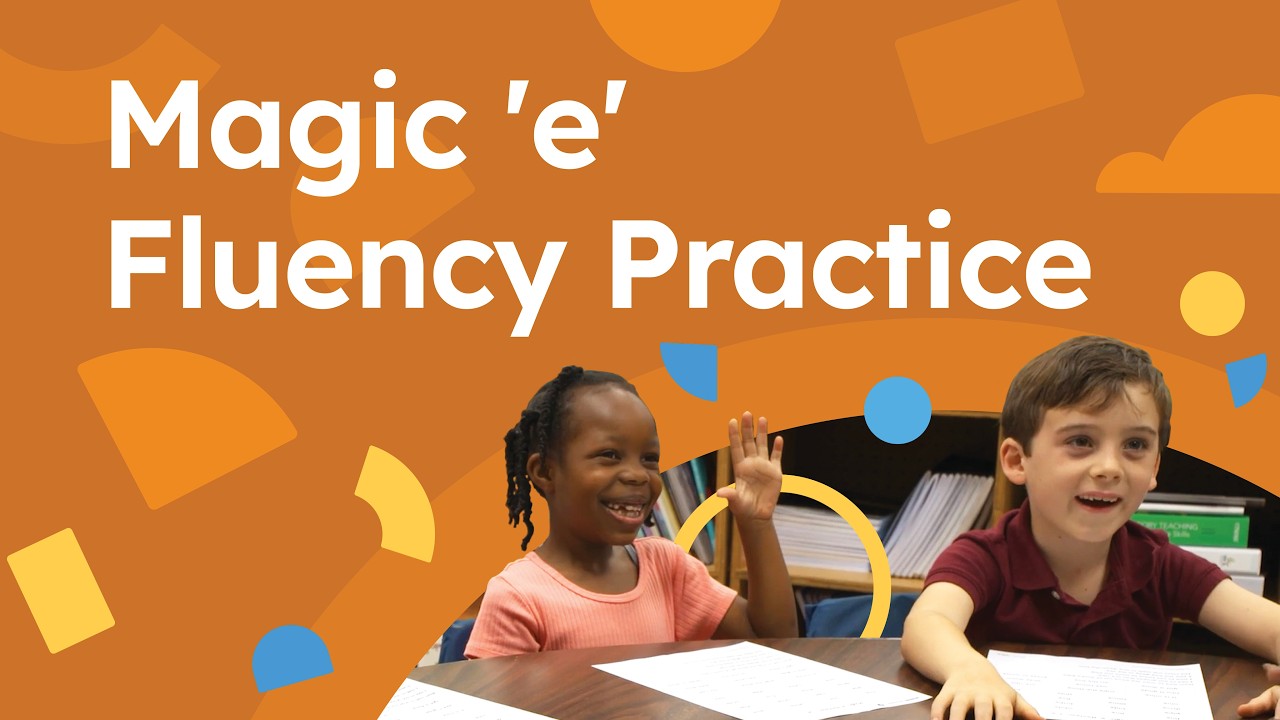
Magic 'e' Fluency Practice
Hide Video Transcript
Show Video Transcript
Princess Watts-Blount: Good morning guys.
Students: Good morning!
Princess Watts-Blount: Morning. So I am so excited to be with you guys this morning. I've heard that you guys have been working on one of my favorite syllable types, magic 'e'. Is that true?
Students: Yes.
Narrator: Reading fluently is just like any other skill. You need lots of practice to get better at it. At Burgess-Peterson Academy in Atlanta, reading specialist Princess Watts-Blount is working with a small group of first graders on reading words with a magic 'e' spelling pattern. But first, she makes the connection between practice and progress.
Princess Watts-Blount: By the way, do any of you guys play a sport or play an instrument? Anybody? What sport?
Student: Basketball.
Princess Watts-Blount: Basketball?
Student: Cheer and gymnastics.
Princess Watts-Blount: Gymnastics. Okay.
Student: I do piano.
Princess Watts-Blount: Piano. Nice. And what were you saying, Waylon?
Waylon: I do gymnastics.
Princess Watts-Blount: Awesome. Just like soccer or just like gymnastics, reading is very similar. In order to become better readers, in order to become a skilled reader, in order to become fluent with reading, we have to what? What do you think?
Students: Practice.
Princess Watts-Blount: Practice. So that's exactly what we're going to be doing today. Okay? You guys down for a little practice. Give me a thumbs up. Thumbs up. Waylon, thumbs up.
Narrator: Today, practice looks like a read sheet full of magic 'e' words. The way Ms. Watts-Blount moves through the read sheet is intentional. Removing supports as students work through each row.
Princess Watts-Blount: Does anybody bring their tappers with them today?
Student: I forgot.
Princess Watts-Blount: Pull it out of your pocket. I know you have it in it. Dig deep down inside of your pocket and pull out that tapper. Come on.
Narrator: The first row is all about tapping out the individual sounds of a word. This helps students focus on accurately reading each sound-letter correspondence.
Princess Watts-Blount: All right. So guys, what we're going to do on the first row is we're going to tap the sounds in each word and then we're going to read it together. Okay? So just listen to me for the first one. I'm going to tap the sounds. /f/, /ī/, /n/. Fine. Let's see if we can tap that one together. Hold those tappers up for me.
Together: /f/, /ī/, /n/. Fine.
Princess Watts-Blount: Excellent. Well, I have a question really quickly. You mind if I ask a question?
Students: Yeah. Yes.
Princess Watts-Blount: When we tap this word, why didn't we make a sound for that final letter? 'e'. Micah.
Micah: The 'e' magic and it makes the 'i' say /ī/.
Princess Watts-Blount: Yes, yes, yes. This is magic 'e'. All right. Let's keep reading. Put your finger on the next word. Hold those tappers up. Let's tap it and then read the words. Okay?
Together: /l/, /ī/, /n/. Line.
Princess Watts-Blount: All right. Next word.
Narrator: Next, they'll try reading the words without pronouncing each sound separately.
Princess Watts-Blount: Let's move to the second row. Put your finger on the second row. Let's read this row and let's see if we could do it without tapping. Okay? If we need to tap, that's okay. All right, let's go. Let's read the first word.
Together: Hide.
Princess Watts-Blount: Excellent. Next word. This one has a beginning blend. You want to tap this one out? Okay, let's tap it. It's okay.
Together: /b/, /r/, /ī/, /b/.
Princess Watts-Blount: Put it together.
Together: Bribe.
Princess Watts-Blount: This time I would like for you to tap the words to yourself or just whisper, read the word to yourself. If you don't need to tap, that's totally fine. Okay? Go ahead. I'll do the same.
[whispering]
Narrator: Notice some of the students still stretch their words. That's a skill they'll have in their back pocket whenever they come to a word they don't know. But Ms. Watts-Blount is pushing them to move beyond that with these words.
Princess Watts-Blount: All right. Everybody put your finger on the first column. So remember, we're reading them back this time to make sure we're reading them for accuracy. We want to make sure that we're reading the words correctly. And to become skilled readers, it takes lots of what? What did we say? We're reading ...
Student: Practice!
Princess Watts-Blount: Lots of practice. All right. Let's read the words going down. Let's read them together.
Together: Fine. Pipe. Drive. Nine.
Princess Watts-Blount: Let's try the second column. Let's go.
Together: Line. Hide. Slime. Twine.
Narrator: All of this work reading words will come in handy for the next step — reading phrases.
Princess Watts-Blount: In the middle section, these are phrases. Everybody say "phrases."
Students: "Phrases!"
Narrator: Reading phrases is where the other elements of fluency, reading with the correct rate and expression, come into play. But accuracy always comes first.
Princess Watts-Blount: First time for accuracy. So we're reading a little bit slower. We want to really make sure that we're getting those words read correctly. Okay? Let's do it. Let's point to each word and read it.
Together: "It [pause] is [pause] mine."
Princess Watts-Blount: Let's scoop it.
Narrator: Scooping phrases help students process text the way fluent readers naturally do. In meaningful chunks rather than word by word.
Princess Watts-Blount: Everyone, let's scoop it and read it back.
Together: "It is mine."
Princess Watts-Blount: Excellent. Let's try the one next to it. Everyone.
Together: "Wipe [pause] the [pause] slime."
Princess Watts-Blount: Let's scoop it.
Together: "Wipe the slime."
Princess Watts-Blount: All right. Our last row, let's read it together.
Together: "Got [pause] a [pause] dime."
Princess Watts-Blount: Let's scoop it.
Together: "Got a dime!"
Princess Watts-Blount: Next one.
Together: "On [pause] the [pause] line." "On the line!"
Princess Watts-Blount: I'd like for you to use your fingers to scoop it for me. Okay? Last phrase.
Together: "Bride [pause] in [pause] white." "Bride in white!"
Princess Watts-Blount: All right guys. Now we're going to slide down to the bottom of your read sheets. You guys have done an excellent job reading words. We read some phrases, writer, and now we're going to practice reading sentences.
Narrator: For sentences, Ms. Watts-Blount follows the same predictable routine. Reading for accuracy first, then with rate and expression.
Princess Watts-Blount: So let's point to each word together and read it aloud.
Together: "I [pause] like [pause] to [pause] eat [pause] grapes [pause] that [pause] are [pause] ripe."
Princess Watts-Blount: Excellent reading. We read each of those words correctly. Now I'm going to model how to scoop the sentence, okay? So I'm going to put some of the words together so that it flows a little bit better. Okay? Watch. "I like [pause] to eat grapes [pause] that are ripe." I had three scoops there. How many scoops?
Students: Three.
Princess Watts-Blount: Three. Okay. Let's see if you guys can scoop it on your paper. Can everybody scoop it on your papers and read it? All right, let's do it.
Together: "I like [pause] to eat grapes [pause] that are ripe."
Narrator: Now that they've scooped the sentence accurately, Ms. Watts-Blount shifts her focus to expression.
Princess Watts-Blount: All right. This time we're going to read the sentence. We're not going to use scoops. We're going to read it just like we talk, okay?
Students: "I like to eat grapes that are ripe."
Princess Watts-Blount: We're going to read this sentence once more all together, but I wanted us to read it excitedly and I want us to sound like we really, really want these grapes. Can you do that for me? Okay. Let's read the sentence together.
Together: "I like to eat grapes that are ripe!"
Princess Watts-Blount: Excellent. Guys, this was wonderful work. We got in lots of practice of reading our words with the magic 'e' spelling pattern. And remember, continue to read, continue to practice so that you can continue to become skilled readers. Do me a favor. Go ahead and kiss your smart brain. Nice work. Thank you.
Narrator: Reading Universe is made possible by generous support from Jim and Donna Barksdale; the Hastings/Quillin Fund, an advised fund of the Silicon Valley Community Foundation; the AFT; the Emily Hall Tremaine Foundation, and anonymous donors. Special thanks to Burgess-Peterson Academy, Reading Is Essential for All People and Atlanta Public Schools. If you enjoyed this video, please subscribe to our YouTube channel @ RUTeaching. Reading Universe is a service of WETA, Washington D.C., the Barksdale Reading Institute, and First Book.
Princess Watts-Blount: This is Reading Universe.
