- Morphology
Teaching English Learners: Using Morphology to Teach Comprehension
Hide Video Transcript
Show Video Transcript
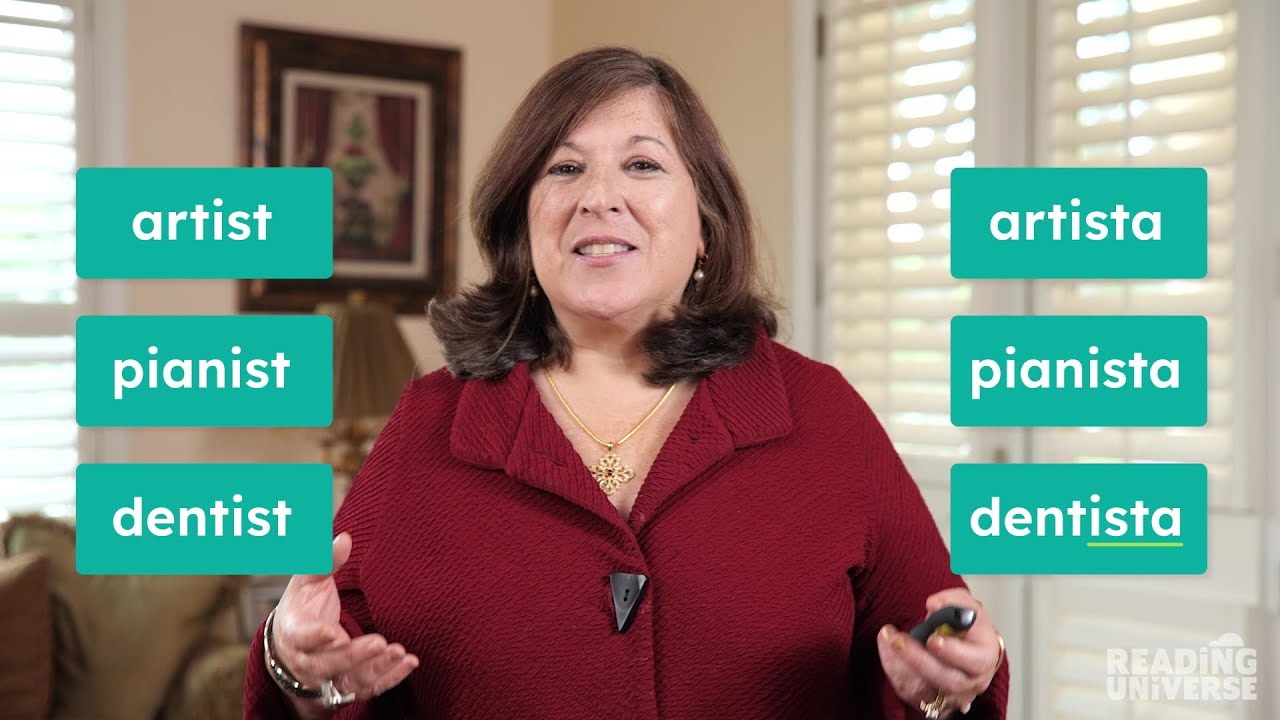
Another excellent word learning strategy is what we call morphological awareness. Oh, 60% of the English language comes from Latin. So what a benefit. What a benefit for our students that they can also see that many of the words from their home language can also be used in the English language and they're connected. And there's many prefixes, roots, and suffixes that transfer across languages. And so we should take advantage of those. And I like to use a root like "auto," right? En español, "auto." I said it in Spanish, right? So 60% of the English language. And what's really beautiful is another, about 15% comes from the Greek. And between those Latin and Greek roots, wow, we can have terrific vocabulary in the English language. But how would I teach it? I would teach it the same way I do cognates. I would bring in those language components, right? So if I was talking about the ending, right, of "-ist," like artist, pianist, dentist. What did you hear at the end of each of those words?
You heard "-ist." Let's figure out the meaning. Artist. Oh, do you have any of those words? Do you have the word "artist" in your home language? What is it? Artista. Oh, you said "-ista" at the end, right? Do you have the word pianist in your home language? Pianista. There it is. Do you have the word dentist. Dentista. Oh, so it's sounding like "-ista" is your ending for "the one who." What does a pianist do? This is the person who plays the piano. What does a dentist do? That's the person who does what? Fixes your teeth when maybe you have a toothache, right? What does the artist do? Oh, the artist creates art. So we have these endings that are the same across languages, right? So we can go through the sounds. We can go through those word meanings. Art and "-ist." Can you use the word "artist" in a sentence for me?
Can you use the word pianist in a sentence for me? Can you use the word dentist? What part of speech is that? Those are all nouns. The person who. A person is a noun, and you just put it together in a beautiful sentence. You used it. So we went through really bringing in language skills as we were teaching that morphological awareness. And when our students understand, ah, I can make those connections of the morphemes across languages, I say they have meta-morphological awareness. We're going to do this so much that they start to use it as a strategy when they come across words that they don't know. They're going to look for those meaning units within words. They're going to look for those prefixes, roots, and suffixes to build words. And this is an excellent strategy for increasing the vocabulary levels of our English learners.
