Hide Video Transcript
Show Video Transcript
Olivia Carmichael: All right, fourth graders. Today we are going to be learning about the water cycle.
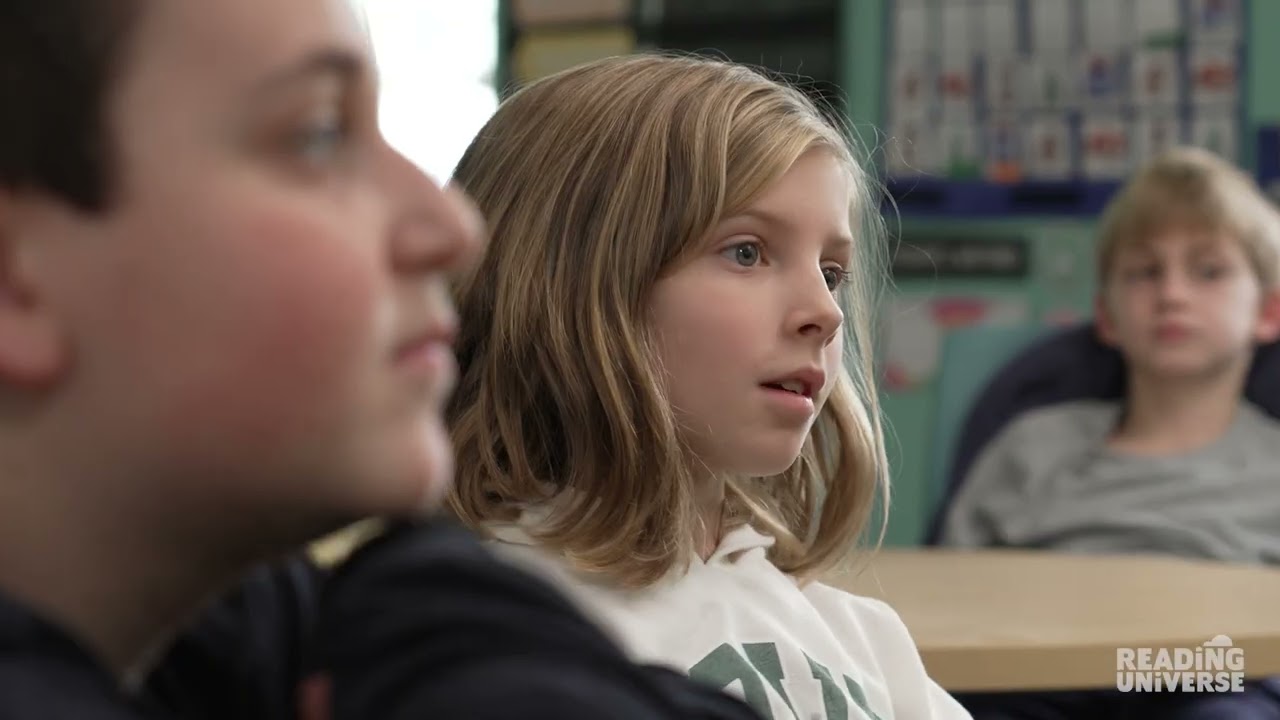
VO: When students connect a new text to what they already know, it's easier for them to understand what they're going to read. At AIM Academy in Conshohocken, Pennsylvania, Olivia Carmichael helps her fourth graders make that connection to the word cycle before they begin a science lesson.
Olivia Carmichael: First, I want you to turn and talk with your partner. [pointing at pairs of students] So you're partners, you're partners, and then that table, you're partners — about what comes to mind when you hear the word cycle. We're going to spend one minute on that. So first turn and talk to your partner, then we will share out.
VO: A turn and talk gets students talking about what cycle means in a low stake setting, laying the groundwork for what they're about to learn.
Olivia Carmichael: Is cycle in any other words? Raise a quiet hand if you have a connection. Zev.
Zev: Cycling.
Olivia Carmichael: Cycling. What does it mean if you're cycling?
Zev: I think it's moving or something.
Olivia Carmichael: Moving. Yeah. Allie.
Allie: A life cycle.
Olivia Carmichael: A life cycle. Yeah, Jules.
Jules: Recycle.
Olivia Carmichael: Recycling. So if you recycle something, it goes back into the system and it's used again. It can go around and around. Any other connections?
Student: Like water, the water cycle.
Olivia Carmichael: The water cycle. Awesome. That's what we're going to be focusing on today.
VO: By providing students the chance to create and share out their own connections to the word cycle, Ms. Carmichael is both anchoring what they already know to the meaning and giving herself some insight into who may need more support throughout the lesson.
Olivia Carmichael: So our definition for cycle is a series of events that's continually repeated in the same order. That word cycle comes from Latin and Greek, and it just means circle. So some of the connections you made are already up here. The wheel of a bicycle goes around and around and around. We know that bi means two. How many wheels does a bicycle have?
Zev: Two. Two.
Olivia Carmichael: What about a tricycle?
Students: Three.
Olivia Carmichael: Awesome. We have the lifecycle of a butterfly, recycling, and the cycle of the moon, which if you were here last year, you may have learned about in IH or science.
VO: Reading Universe is made possible by generous support from Jim and Donna Barksdale; the Hastings/Quillin Fund, an advised fund of the Silicon Valley Community Foundation; the Emily Hall Tremaine Foundation; the AFT; and several anonymous donors. Special thanks to AIM Academy and the AIM Institute for Learning and Research in Conshohocken, Pennsylvania. If you enjoyed this video, please subscribe to our YouTube channel @RUteaching. Reading Universe is a service of WETA Washington D.C. and was developed in collaboration with the Barksdale Reading Institute and First Book.
