Hide Video Transcript
Show Video Transcript
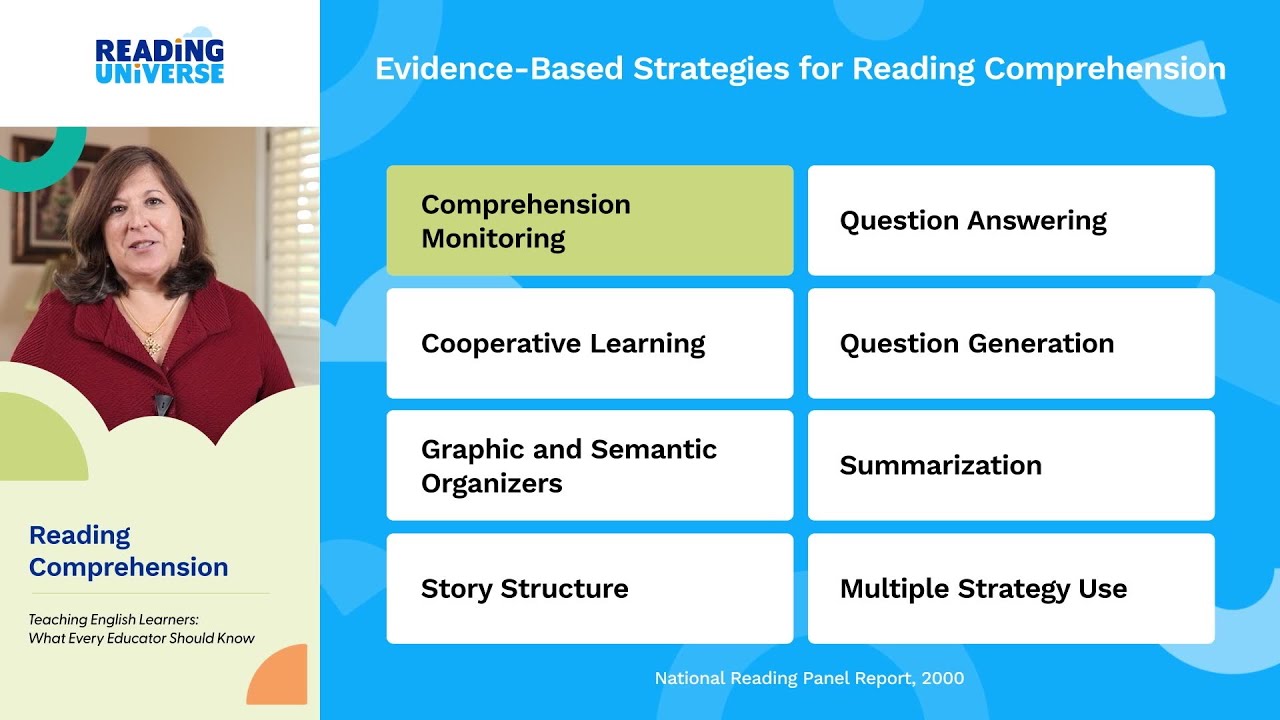
Now, I'd like to speak to you about reading comprehension. Some of the best strategies for reading comprehension really include that there's comprehension monitoring, and we want our students to be able to do that. But as teachers, we need to be monitoring comprehension. We know that having them collaborate with one another and engage with one another can also build that comprehension, using, being strategic and active with our reading. But we also want them to be answering questions and generating questions to make sure that they got to the gist of what they were reading. We know that they have to have the sufficient vocabulary to get to that comprehension, and we know that when they have opportunities to summarize, that summarization is so wonderful. So what I've done is I've tried to make it simple for you, and I want you to think of this acronym: 3-P-V, 3-R-Q.
All right, that's that 3-P-V, 3-R-Q. And let me tell you what the three 'p's stand for. I'm bringing in the best evidence that we know of today. The three 'p's. The first 'p' will begin with the purpose. We want our children and our students to focus on what's the purpose of what we're going to be reading. We can prepare a connection, building that background knowledge, seeing what do they know and what can I add to their prior knowledge. They can make a prediction and see if their prediction comes true regarding the passage that they'll read. We can build vocabulary. That's the 'v', making sure that they have enough vocabulary. And maybe there's some challenge words in there. The 'r's will be for having them to, they'll read, we'll review with them what they've read. But here's something important: retelling. We're not only going to have them retell, we're going to ask questions. But more importantly, we're going to have them generate questions. That really extends beyond what they've read.
So remember that passage of Artisans? I might've started it like this: students, today, you're going to read a passage. If I said the title was Artisans, what would you predict that it's going to be about? That's right. Maybe the persons who create art. Now let's think about this: art. What can be considered art? You're right. When you draw something or when you see a sculpture or when you make things, anything can be, I'm not very good at art, but I wish I were. But anything that you make can be considered art. Like, oh, maybe I created a beautiful dress. Oh my goodness, it's a piece of art ... a beautiful painting. And as they're reading, remember we build upon that fluency and we want them to understand what they've read. So I might do a review. What was this passage about? Who were the main characters in the passage?
What did they do? How did the text end? But I also wanted to make sure that they understood the vocabulary words like content and zigzags. I don't know if they know it, depending on their oral language proficiency. You'll make those decisions. But giving the students the opportunity to not only have that model of a review, that model of a retell, then they can begin to summarize. And then we want to ask questions. And these questions should only, not only be basic questions, but higher order questions, too, right? That how and what if? And then we have them generate their own questions. So it's question answering and question generation. So 3-P-V, 3-R-Q involves that purpose ... what are we reading; that making that connection, preparing a connection; making a prediction; reviewing any vocabulary that they may need to know in order to understand the passage in front of them; having them read not only once, but maybe for building fluency and comprehension. We review with them, we model a retell, they retell, right, and then they answer questions. But more importantly, they generate questions. And when you use this 3-P-V, 3-R-Q, you are putting together those eight comprehension strategies that are identified by the National Reading Panel report. What's also important is to take the students beyond what they're able to read. Now I'd like to speak to you about read-alouds. We must have interesting texts that we bring in that's above their reading level so they have opportunities to expand their world knowledge, expand that vocabulary, relate to maybe something that they've been learning about or maybe something that they're learning in other subjects. And so in one of our studies, we were doing science and mathematics. And so we brought in read-alouds related to those subject areas. And what that gives them an opportunity is to develop that vocabulary, that listening comprehension, build that world knowledge, and also experience high levels of words, high level ideas as they're getting that language, as they're learning that literacy.
