- Vocabulary Skill Explainer
How to Introduce a New Vocabulary Word
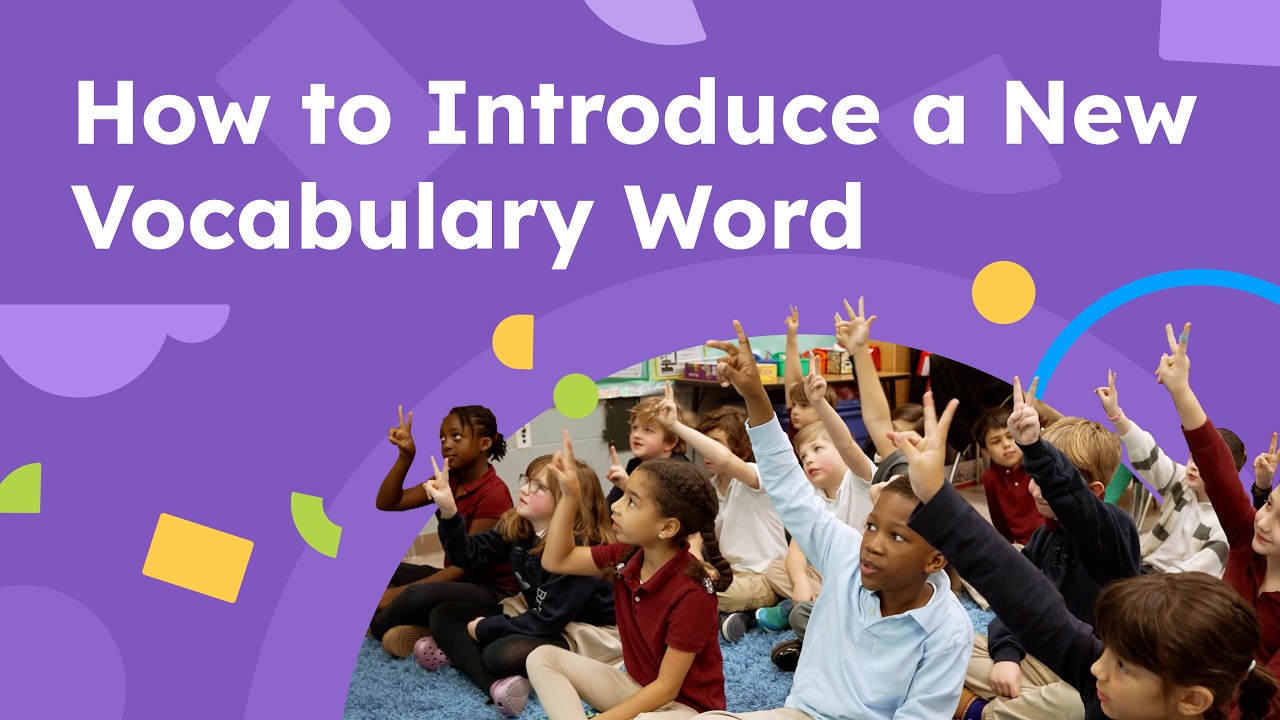
Hide Video Transcript
Show Video Transcript
Lidra West: Great morning to everybody. How y'all feeling?
Students: Good.
Narrator: Today, teacher Lidra West is introducing her second graders to the word civil. It's a word they've heard before in social studies when talking about citizens or society, like with "civil rights." But in this lesson, Ms. West is focusing on a different definition. The first step is to practice saying the word.
Lidra West: And this word is civil. Can you all say civil?
Students: Civil.
Lidra West: Civil. Say it again.
Students: Civil.
Lidra West: What's the word?
Students: Civil.
Lidra West: Turn and tell your partner the word.
Students: Civil.
Lidra West: Civil.
Narrator: Next they'll identify how many syllables are in the word.
Lidra West: Clap it again.
Students: "Civ-il." [students clap syllables]
Lidra West: Show me how many syllables you hear.
Students: Two.
Lidra West: Good.
Narrator: Now Ms. West gives students the meaning they'll be exploring today.
Lidra West: "Civil means being polite and respectful."
Students: Civil means ...
Lidra West: "being polite and respectful."
Students: "Being polite and respectful."
Narrator: Now they'll share the definition with a partner. Another step toward learning the word.
Lidra West: Turn. Teach.
Students: "Civil means being polite and respectful."
Lidra West: Good.
Narrator: Fill in the blanks are a great way to get students saying the word while reinforcing its meaning.
Lidra West: What's our new word?
Students: Civil.
Lidra West: Civil. So we're going to fill in our blanks here. I'm going to read the sentence and you're going to tell me the word that goes into the blank. What's our word?
Students: Civil!
Lidra West: Very good. So if you say "please" and "thank you," you are being...
Students: Civil.
Narrator: Now it's time for Ms. West to take a closer look at the word civil and how it's used.
Lidra West: Civil has a job. It has a job. It has a function. And we learned already that the function of something tells us ... what does it do? So the word civil is an adjective and we know ... read this with me ... what does an adjective do?
Students: Describe a noun.
Lidra West: Very good. So our next sentence says, "They had a civil conversation." "They had a civil conversation." What kind of conversation did they have class?
Students: A civil conversation.
Lidra West: Think time. Knowing the meaning of "civil," what does it mean to have a civil conversation? Everett, can you share a little bit?
Everett: It means to have a kind conversation. For an example, "I like your hair." "I like your hair too."
Lidra West: Do you all agree with Everett's it means to have a kind conversation?
Students: Yes.
Lidra West: Very good. Dr. Martin Luther King had a really hard job, right? And there were probably some times where he had to remember to be civil even when he didn't want to. So what do you think, or when do you think, Dr. Martin Luther King may have had to be civil even when it was really hard? Can you think about that a little bit? Maggie, what are your thoughts?
Maggie: I read a book about him and if people hurt your feelings, you just show them love, not being mad.
Lidra West: Very good. Do you guys agree with Maggie?
Students: Yes.
Lidra West: All right.
Narrator: Examples help build meaning and context, but non-examples are just as valuable. Seeing what civil is not draws a clear boundary around the word and helps prevent overgeneralizations or misconceptions.
Lidra West: So using what we've learned about civil — meaning being polite and respectful — I'm going to give you a few scenarios. If the scenario is an example of being civil, thumbs up. If the scenario is a non-example of being civil, thumbs down. Get it?
Students: Got it.
Lidra West: Good. Calling someone a mean name. What do you think? All right. [students have thumbs down] Marching peacefully for equal rights. [students have thumbs up] Excellent. Hands down.
Narrator: And for the last step of her vocabulary routine, Ms. West asks students to provide their own examples of what it means to be civil.
Lidra West: It is civil to what? Marion?
Marion: If someone said they like your shirt, you shouldn't just be silent and walk away. You should say, "Thanks, but I'm not really in a good attitude today so I'm not really in the mood to get a compliment."
Lidra West: Thank you, Marion.
Narrator: Through the next week and beyond, Ms. West will help her students deepen their connection to the word civil, giving them lots of opportunities to use it in conversation and in writing. Today's explicit vocabulary lesson was just the beginning.
Lidra West: All right. So you guys have done such an amazing job learning our new word today. What's our word that we learned today?
Students: Civil.
Lidra West: Civil. And not only were you able to learn the meaning of the word, we also talked about how we can use this word every day in our lives and when we're learning at school. Because you guys did such an amazing job, will you go ahead and kiss your brains for me? And can you give your partners a high five? Good job.
Narrator: Reading Universe is made possible by generous support from Jim and Donna Barksdale; the Hastings/Quillin Fund, an advised fund of the Silicon Valley Community Foundation; the Emily Hall Tremaine Foundation; the AFT; and several anonymous donors. Special thanks to Burgess-Peterson Academy, Reading Is Essential for All People, and Atlanta Public Schools. If you enjoyed this video, please subscribe to our YouTube channel @RUTeaching. Reading Universe is a service of WETA, Washington D.C. and was developed in collaboration with the Barksdale Reading Institute and First Book.
