1. An Overview of Soft 'c' and Soft 'g'
Soft 'c' and Soft 'g' Skill Explainer
What are the soft 'c' and 'g' sounds?
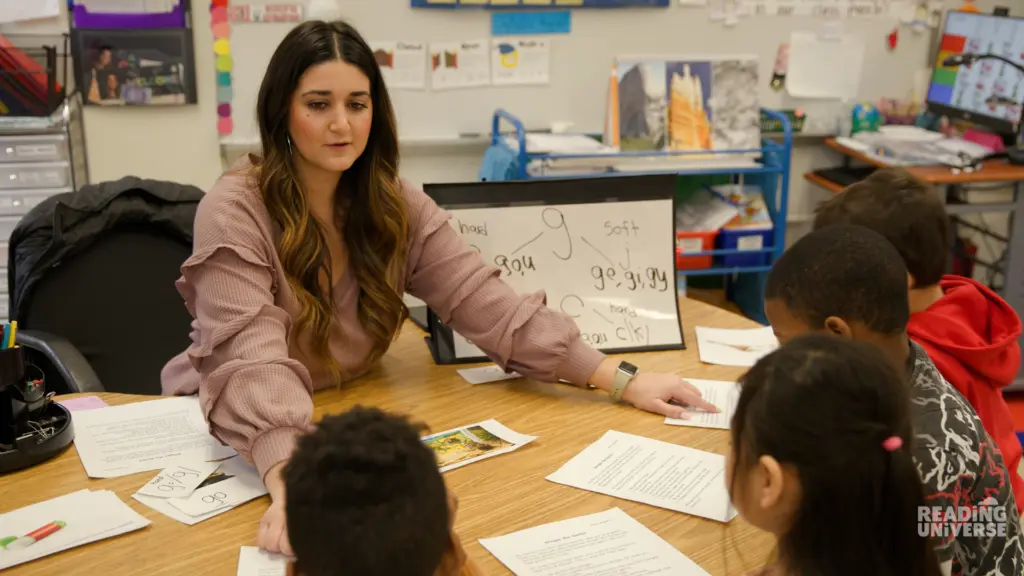
Hard and Soft 'c'

We can expect the soft 'c' sound in three circumstances:
- When 'c' is followed by an 'e', like in ice and cent
- When 'c' is followed by an 'i', like in city
- When 'c' is followed by a 'y', like in cycle
Typically, words like face and rice will be the first time your students will encounter soft 'c' … words ending in '-ace' or '-ice' which follow the magic 'e' phonics pattern.

In our phonics continuum, you'll notice soft 'c' and soft 'g' come right after magic 'e', building on what students just learned about long vowels. Those two skills together open up lots of words to your young readers: race, lace, and space … nice, mice, and twice.

Exception to the Rule
The soft 'c' spelling pattern is generally predictable, but it has a few exceptions, as in soccer, cello, and cappuccino. Often the exceptions come from words borrowed from other languages.
Hard and Soft 'g'

We see soft 'g' in three spelling situations:
- When 'g' is followed by an 'e', like in gem or age
- When 'g' is followed by an 'i', like in gist
- When 'g' is followed by 'y', like in gym
You can introduce your students to the concept of soft 'g' in '-ge' after you teach the sound of soft 'c' in '-ace' and '-ice', building on what students just learned about long vowels and opening up words like age and huge.
Exception to the Rule
The soft 'g' rule has many exceptions, including in words that are common for beginning readers like get, girl, and gift. For this reason we recommend first focusing on soft 'g' in '-ge'.
