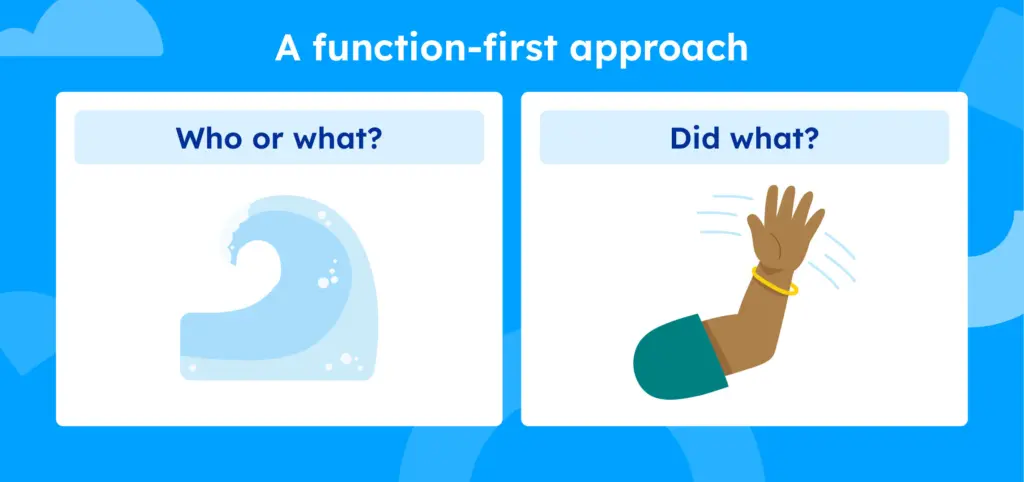
These sentences use the same words, but their arrangement, or sentence structure, builds a different meaning. The first sentence tells us that the cats are watching the birds, possibly to pounce. The second sentence tells us that the birds see the cats and will be cautious around these predators. While both sentences use the same words, the meaning being conveyed is different. Who or what each sentence is about changes. The order of the words, and their relationship to one another, matters!
All languages have an expected, predictable order that helps readers anticipate what comes next. When an unexpected order occurs, the reader often spends more time trying to understand what they just read. For example, if a student reads, "Dog bites man," they understand that as something that could possibly happen. These words not only bring meaning, but they also represent structure. If they read, "Man bites dog," although it fits the predictable order of sentence structure, the meaning does not make sense.
Just as you teach sound-letter correspondences, you need to teach the grammatical building blocks that can be used to create sentences.
Words can be categorized into eight grammatical building blocks:
- Nouns
- Verbs
- Adverbs
- Adjectives
- Prepositions
- Pronouns
- Conjunctions
- Interjections
We use these to organize our thoughts as we speak, listen, read, and write.