2.1 Explicitly Teach the Who or the What: Nouns
Grammatical Building Blocks Skill Explainer
Nancy Chapel EberhardtThe Who or the What — Nouns
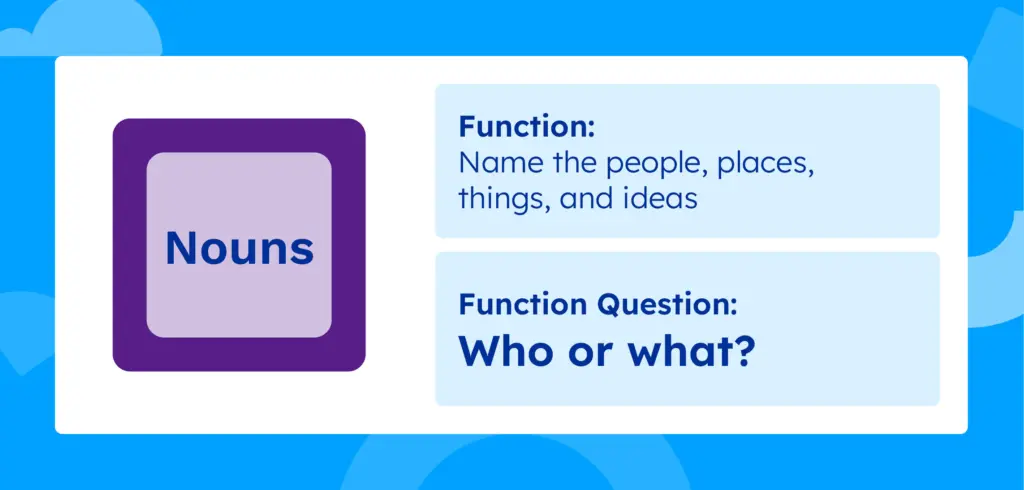
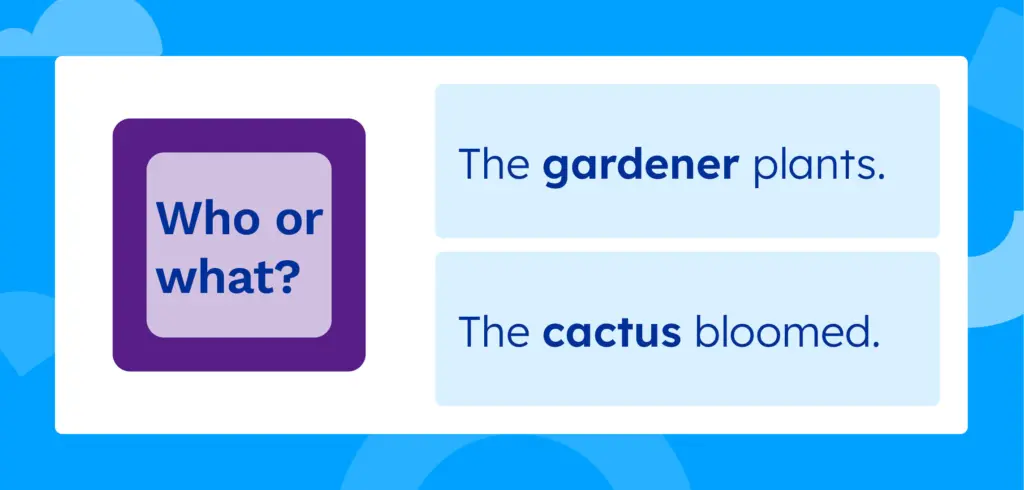
Some of the first words we learn to say are naming words — nouns, like mom or dog. These words tell us who or what a sentence is about. They are also the first grammatical building block that we teach our students. But it is more than just being able to find and identify nouns in sentences.
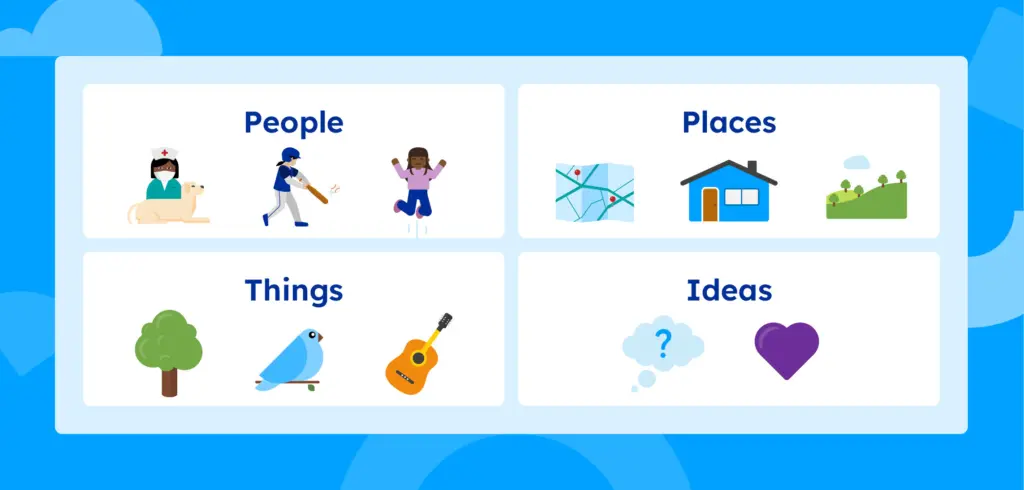
As you know, nouns are the words that label, or name, the following:
- people, like mother, teacher, and gardener
- places, like home, city, and desert
- things, like milk, dog, and cactus
- ideas, like love, peace, and conservation
Prepare to Teach
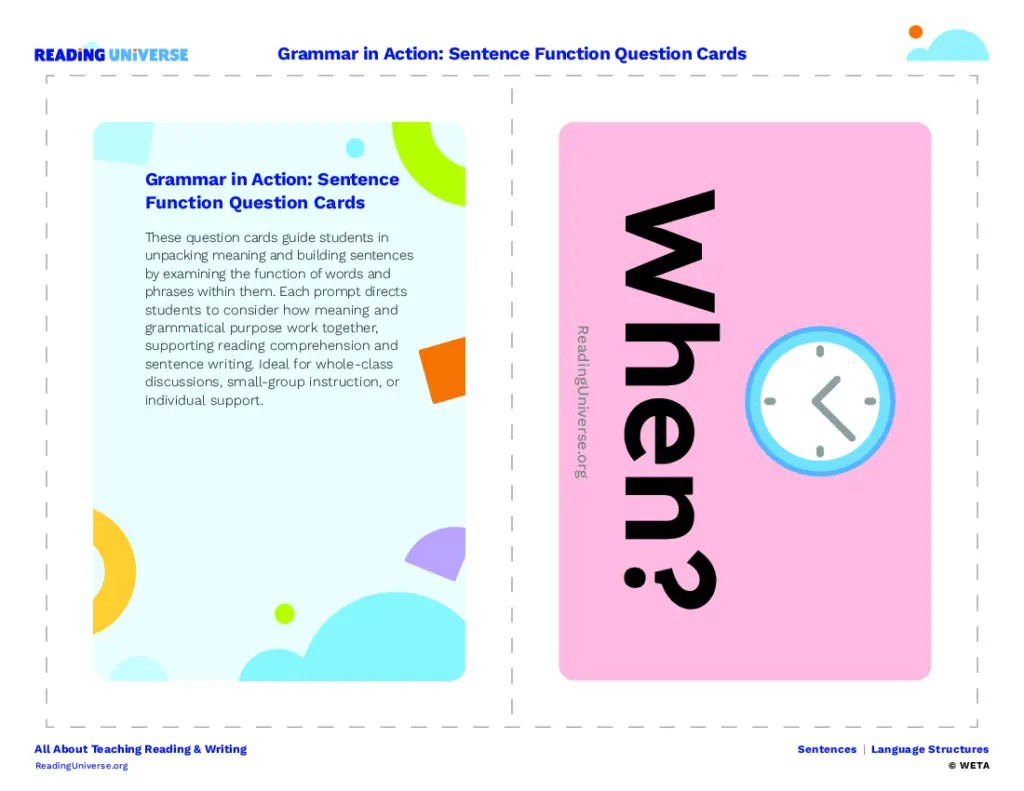
Grammar in Action: Sentence Function Question Cards
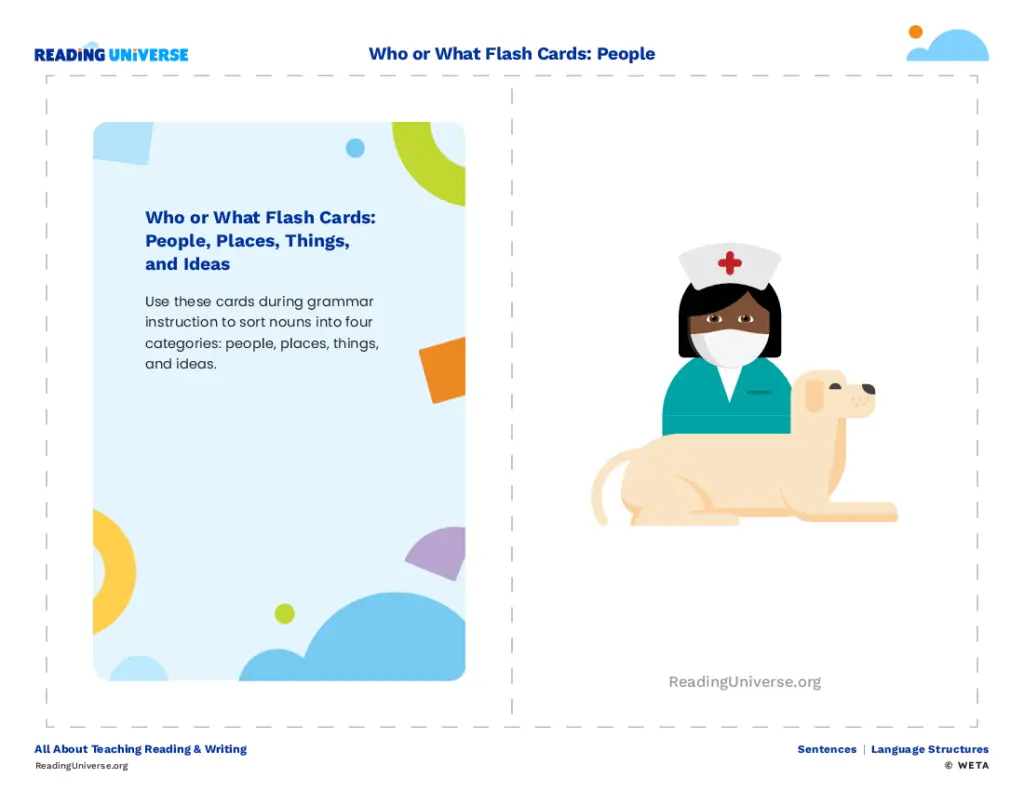
Who or What Flash Cards: People
Now it's time to teach!
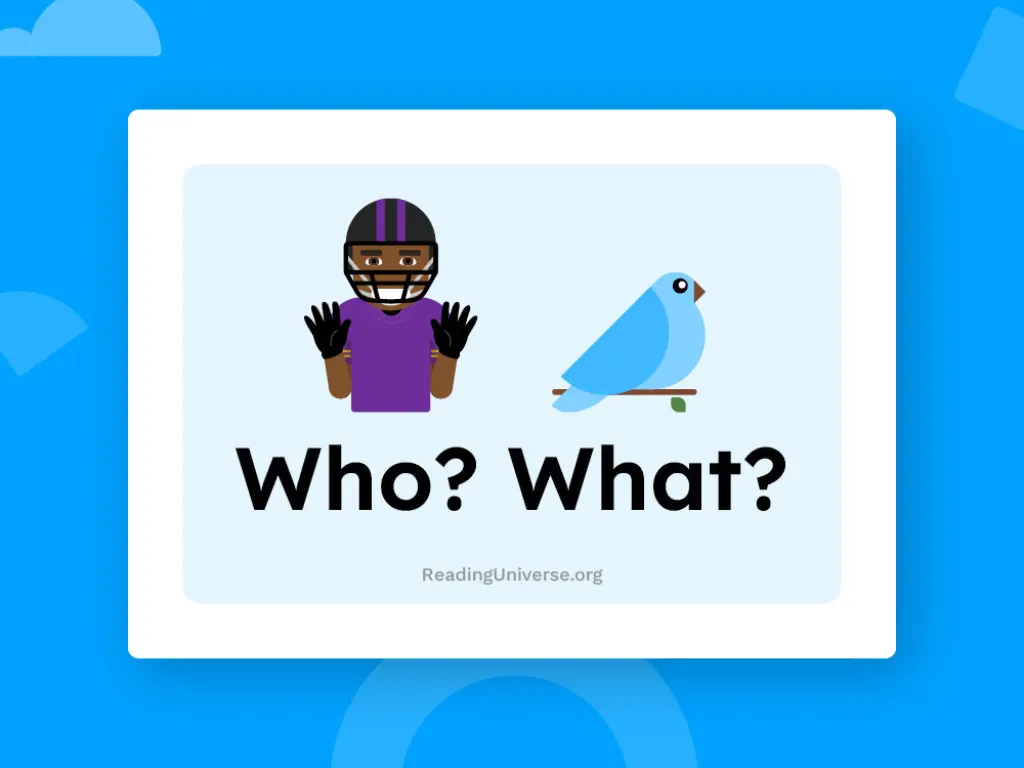
Words that name people, places, things, and ideas can answer these questions.
Let's take a closer look at words that answer "Who?" These words name people, such as vet, man, and girl.
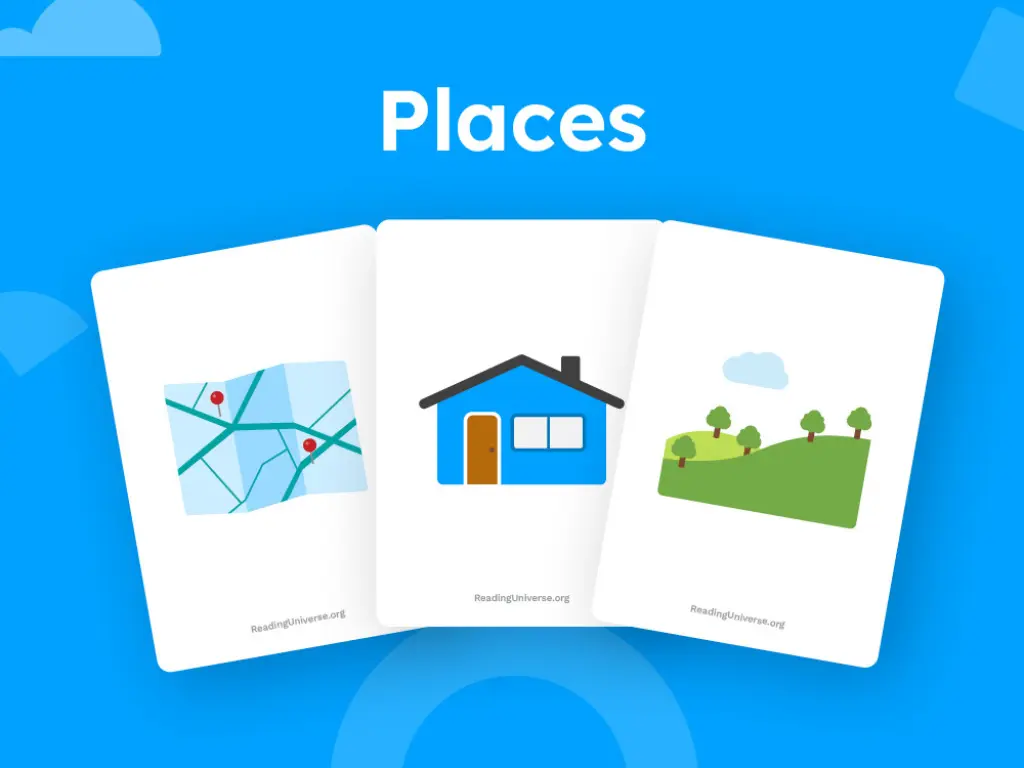
Words that answer the question "What?" can name places, things, and ideas.
Places can be words like map, house, and hillside.
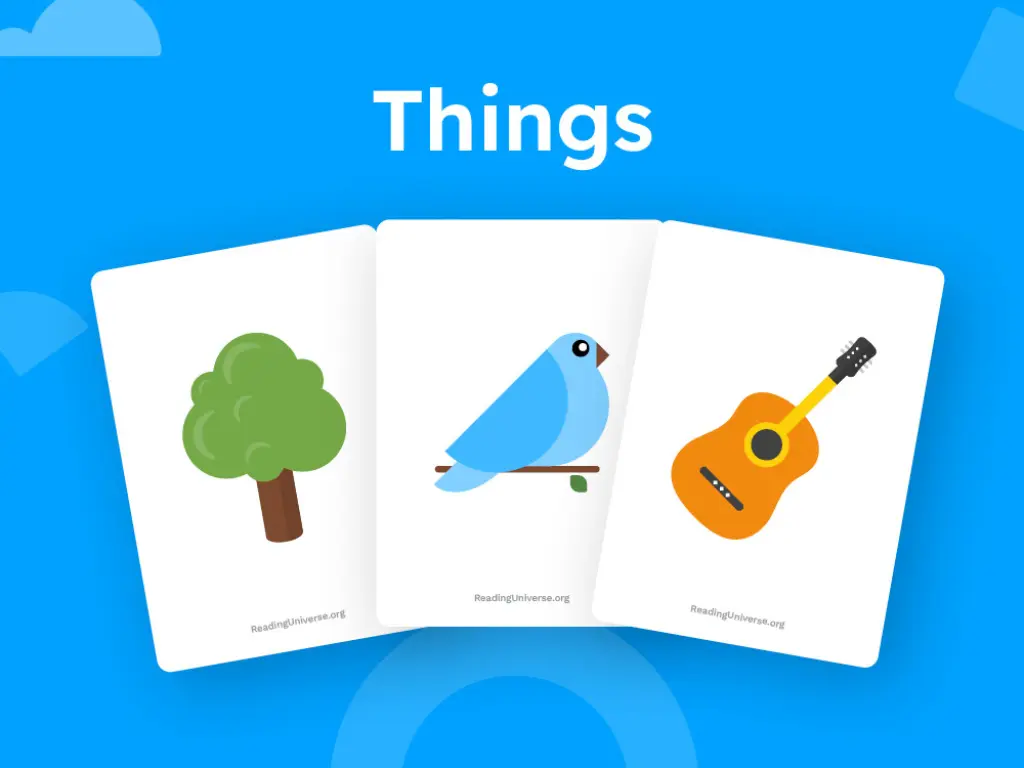
The question "What?" can also name things, such as tree, bird, and guitar.
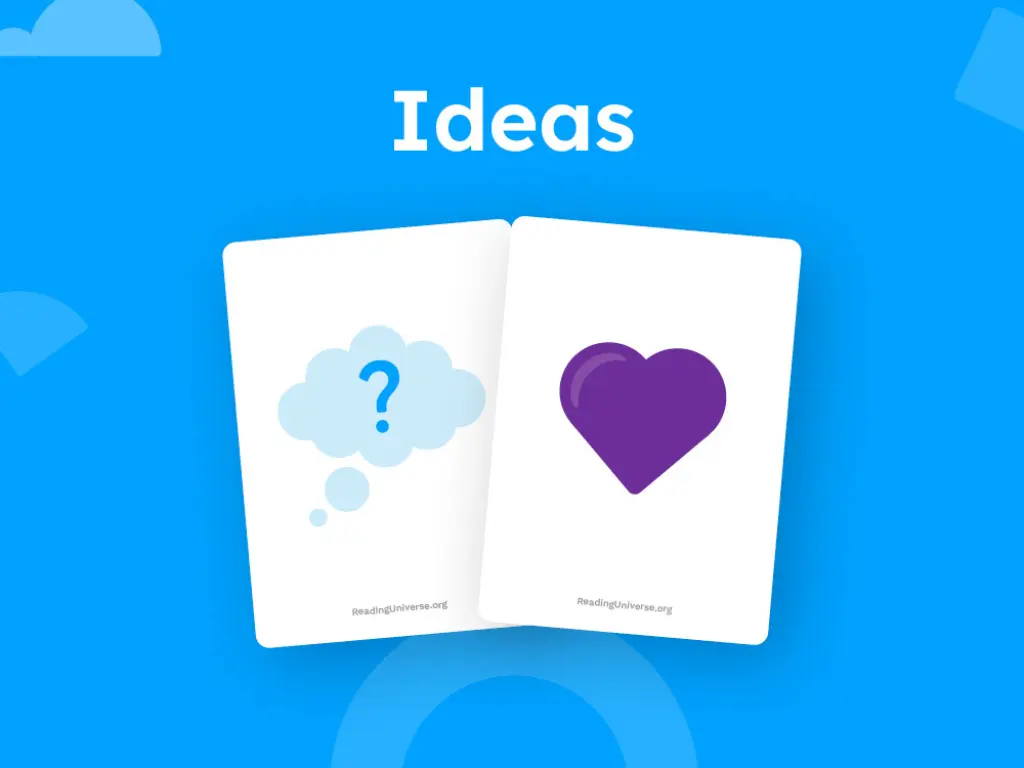
Ideas also can answer the question "What?" Ideas are things such as a thought or love.

Teacher Tip
Word Choice for Sorting Nouns
In the beginning, we start with three categories: people, places, and things, because they are usually more familiar and concrete. Word choice is important for this! You will want to select words that match where your students are in the phonics continuum. For example, in this sort, we selected words with final blends and digraphs. If your students are further along in the continuum, you can select more challenging words.
Word Choice for Sorting Nouns
In the beginning, we start with three categories: people, places, and things, because they are usually more familiar and concrete. Word choice is important for this! You will want to select words that match where your students are in the phonics continuum. For example, in this sort, we selected words with final blends and digraphs. If your students are further along in the continuum, you can select more challenging words.
Teacher Tip
Talking About Words that Tell Who or What
You can talk about nouns that tell who or what throughout the school day. Words that tell who or what are often key vocabulary words in each content area. They can be discussed during read-alouds or in whatever text students are reading, beginning with the earliest decodable text.
Talking About Words that Tell Who or What
You can talk about nouns that tell who or what throughout the school day. Words that tell who or what are often key vocabulary words in each content area. They can be discussed during read-alouds or in whatever text students are reading, beginning with the earliest decodable text.
