3.6 Explicitly Teach the When, the Where, the How, and the Why: Adverbs
Grammatical Building Blocks Skill Explainer
Nancy Chapel Eberhardt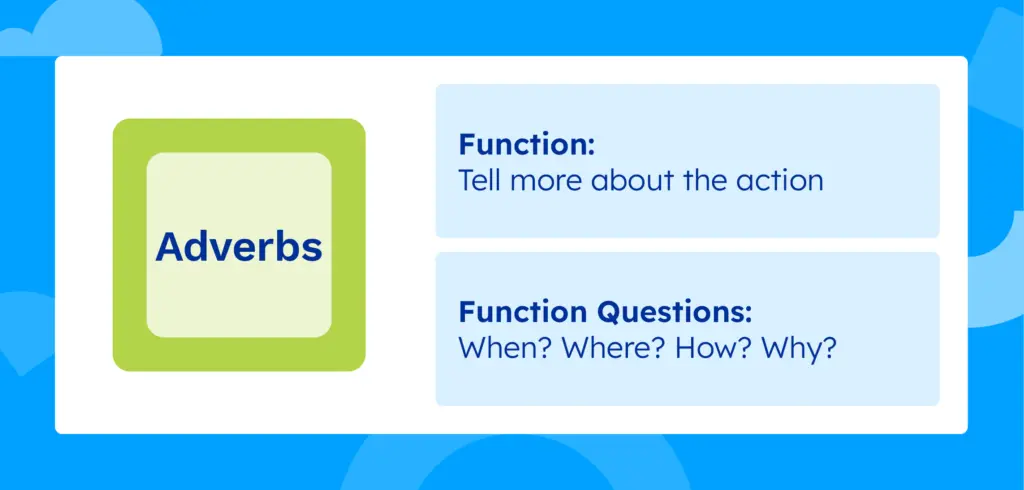
Watch It in Action

Hide Video Transcript
Show Video Transcript
Ashlea Edwards: Hey guys, good morning. My name is Ms. Edwards and I'm excited to work with y'all today.
Narrator: Reading comprehension can feel abstract at first, but it's a process, not a mystery. At Burgess-Peterson Academy in Atlanta, Georgia, reading specialist Ashlea Edwards is teaching third graders how to unlock the meaning of a text by asking questions.
Ashlea Edwards: You all have already worked on "who" or "what," identifying the noun or the pronoun. And today we're going to work on answering other questions like did what? What is the action that's happening? And you can even use other function words like when, where, how, to keep unpacking that sentence to look for meaning.
Narrator: She begins by reviewing a question students have already learned to ask when reading. Who or what is this sentence about?
Ashlea Edwards: We're going to read this sentence. I want you to repeat after me. "The cactus grows."
Students: "The cactus grows."
Ashlea Edwards: "In the desert."
Students: "In the desert."
Ashlea Edwards: All right, let's read it all together.
Together: "The cactus grows in the desert."
Ashlea Edwards: Very good. So the first question we are going to ask is who or what is this sentence about? "The cactus grows in the desert."
Students: The cactus.
Ashlea Edwards: The cactus! Very good.
Narrator: Next, Ms. Edwards layers in additional questions students can ask themselves while reading, guiding them through the work of finding meaning, or as she calls it, unpacking the sentence.
Ashlea Edwards: We're going to practice unpacking some sentences from the chapter you're going to read. And the reason we're going to unpack these sentences is to understand the meaning of the sentences because really good readers, when they read, they're able to think and understand what they're reading about. So unpacking these sentences beforehand might help us be able to understand what we're going to read.
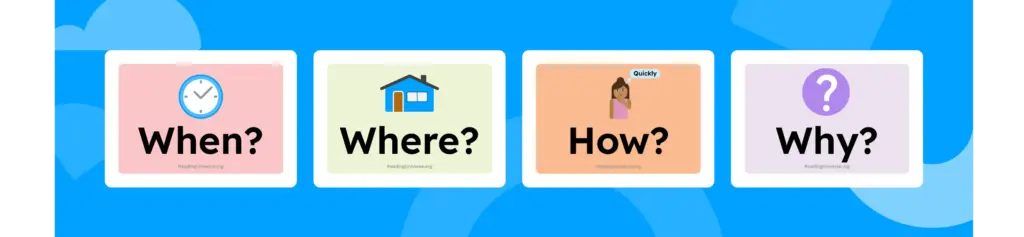
Narrator: Who or what? Did what? When? Where? Why? And how? These are simple, familiar questions, but they are powerful. Asking students to read a sentence and then answer those questions turns them into sentence detectives. All of the answers live in the text itself. The questions are the clues that guide students to understanding what they're reading.
Ashlea Edwards: So here's our first sentence. I want you to repeat after me again. "Butterflies shed scales."
Students: "Butterflies shed scales."
Ashlea Edwards: "On their wings."
Students: "On their wings."
Ashlea Edwards: "Regularly."
Students: "Regularly."
Ashlea Edwards: And regularly means like it happens often, like maybe every day that happens or every other day. Okay. Repeat after me. And let's read it all together. Ready? Go.
Together: "Butterflies shed scales on their wings regularly."
Ashlea Edwards: So our first question is going to be who or what is this sentence about?
Students: Butterflies.
Ashlea Edwards: Butterflies. Very good. And what are the butterflies doing? The butterflies did what?
Students: Shed scales.
Ashlea Edwards: Shed scales. Very good. Where did they shed those scales?
Students: On their wings.
Ashlea Edwards: On their wings. And then I'm even going to ask another question this time. When did they do this?
Students: Regularly.
Ashlea Edwards: Regularly. And everyone say, "Regularly means often."
Students: "Regularly means often."
Ashlea Edwards: Good.
Narrator: They may not realize it yet, but these students just unpacked a sentence for meaning. This strategy is effective because it takes the spotlight off of reading individual words and puts it on comprehension.
Ashlea Edwards: Okay. So now we're going to read one more sentence. And remember, as we are reading this sentence, we are thinking about those function questions so that we can understand the meaning of the sentence. So let's read this. Repeat after me. "A butterfly's wings."
Students: "A butterfly's wings."
Ashlea Edwards: "Are injured."
Students: "Are injured."
Ashlea Edwards: "If they get torn."
Students: "If they get torn."
Ashlea Edwards: All right. Let's read it all together. Ready?
Together: "A butterfly's wings are injured if they get torn."
Ashlea Edwards: Very good. Okay. So the first question that we will ask is who or what is this sentence about?
Students: A butterfly.
Ashlea Edwards: Okay. Let's see. Do you think that the sentence is about a butterfly or can we be more specific? Who or what is this sentence about? A butterfly's ...
Students: Wings.
Ashlea Edwards: Very good. A butterfly's wings. What is the butterfly's wings doing? What's happening to the butterfly's wings?
Students: They're injured.
Ashlea Edwards: They're getting injured and that means they're being hurt. They are injured or hurt. Why? What makes that happen?
Students: If they get torn.
Ashlea Edwards: If they get torn. Very good.
Narrator: While it may seem simple, practicing unpacking the sentence in isolation now gives these students a strategy they can reach for when they're tackling longer, more complex texts on their own later.
Ashlea Edwards: So you guys are so good at unpacking these sentences. Now that you understand the meaning in these sentences, when you read about the butterfly's wings in your storybook later, hopefully that will help you understand the sentence as you're reading it.
Narrator: Reading Universe is made possible by generous support from Jim and Donna Barksdale; the Hastings/Quillin Fund, an advised fund of the Silicon Valley Community Foundation; the AFT; the Emily Hall Tremaine Foundation; and anonymous donors. Special thanks to Burgess-Peterson Academy, Reading Is Essential for All People, and Atlanta Public Schools. If you enjoyed this video, please subscribe to our YouTube channel @RUTeaching. Reading Universe is a service of WETA Washington D.C., the Barksdale Reading Institute, and First Book.
Prepare to Teach Adverbs
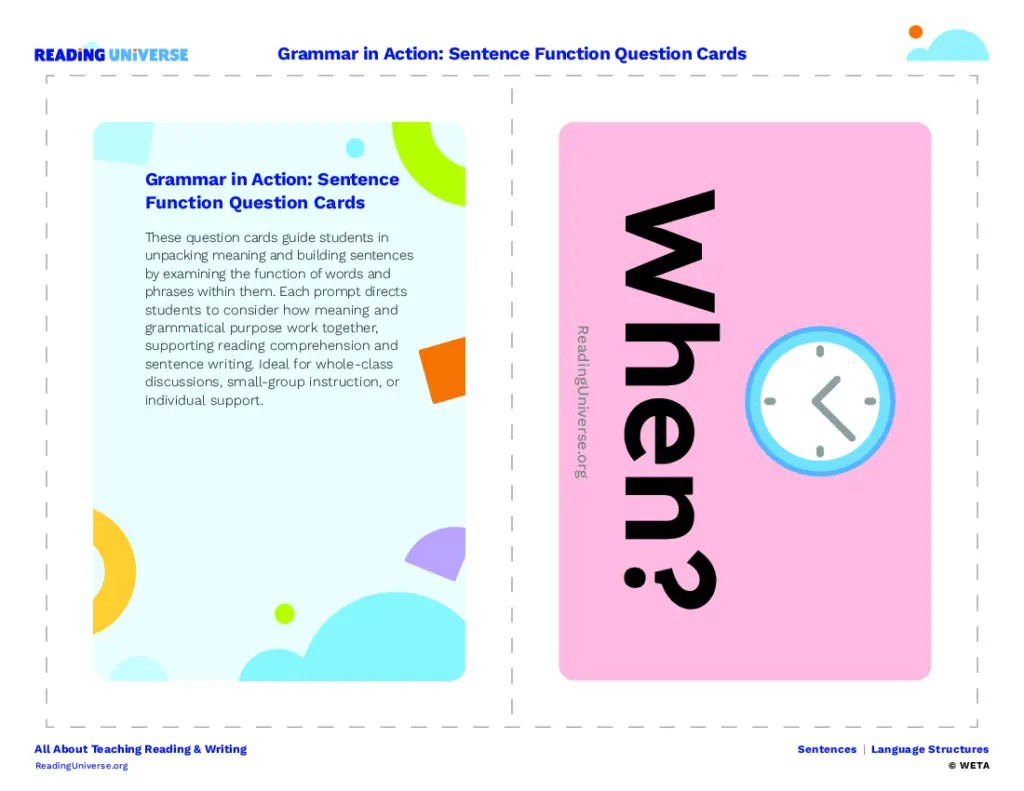
Grammar in Action: Function Question Cards
These question cards help students find meaning in sentences by examining the function of words and phrases within them.
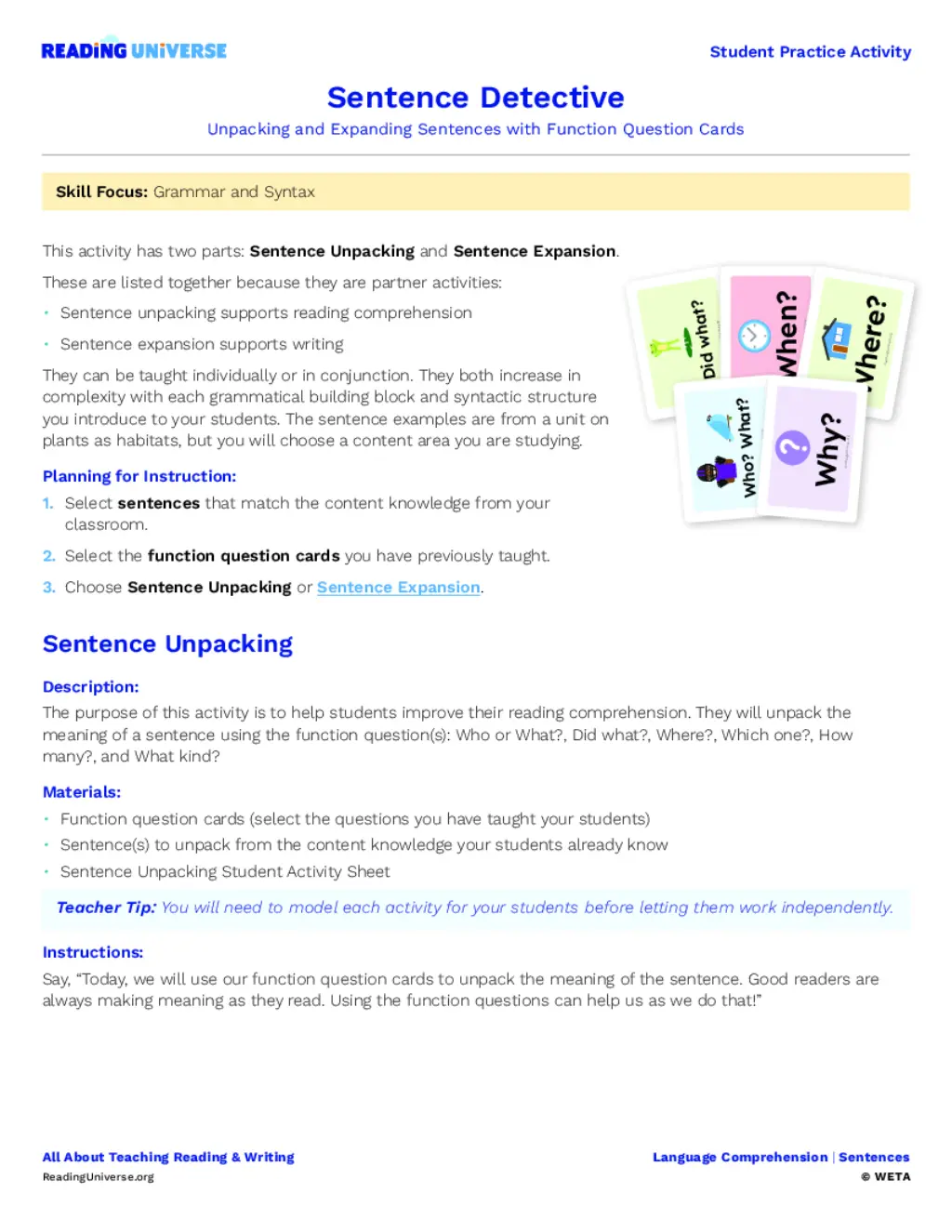
Sentence Detective: Using Function Questions
This activity helps students with reading comprehension and writing skills by unpacking sentences and expanding them.
Now it's time to teach adverbs!
1. Explicit Instruction: Teacher Modeling with Adverbs
2. Guided Practice with Adverbs
3. Teacher-Led Independent Practice with Adverbs
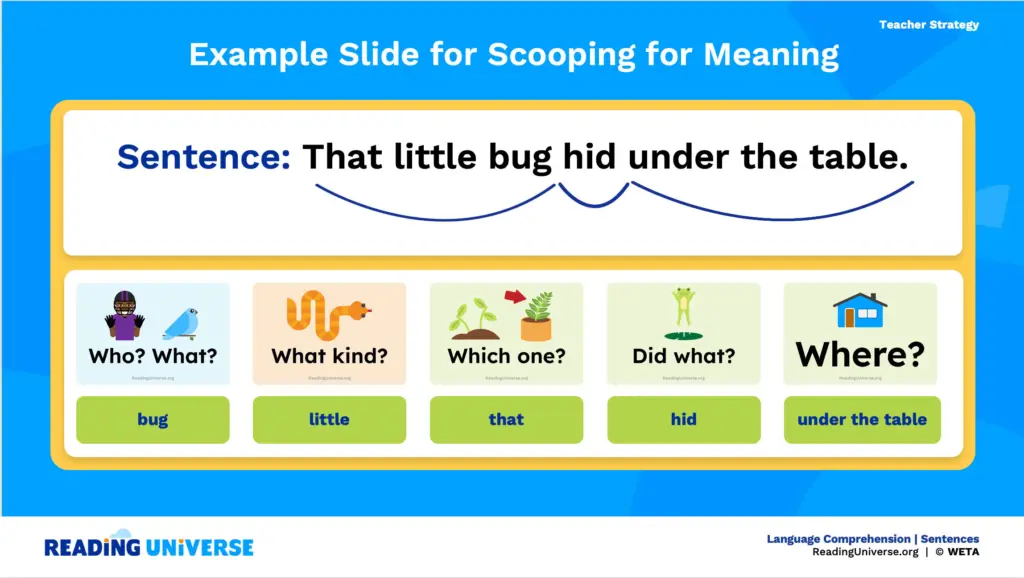
Scooping for Meaning Slide Deck
Download these slides to scoop for meaning using your own sentences.
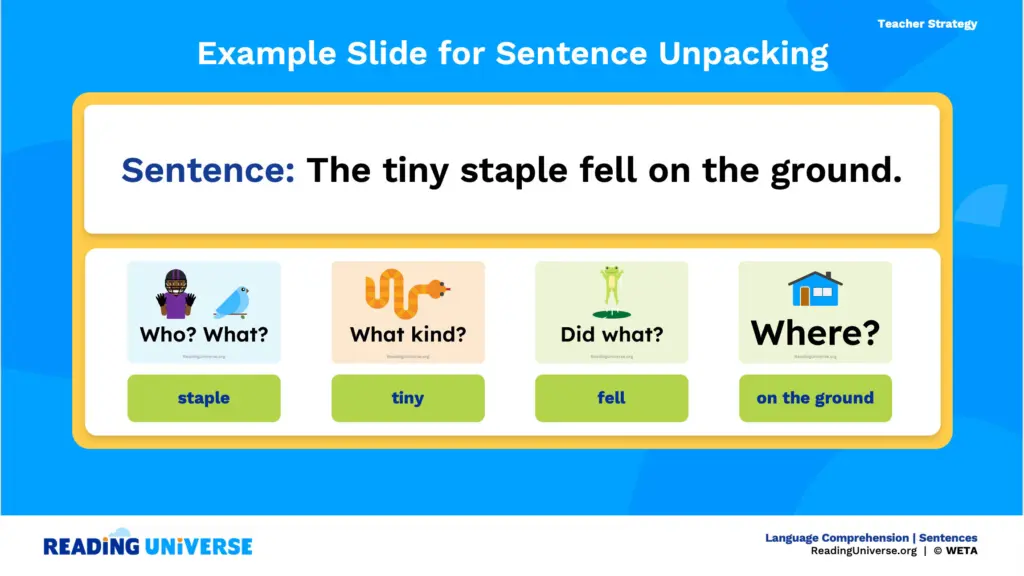
Sentence Detective Slide Deck
Download these slides for using your own sentences in sentence expansion and sentence unpacking.

Teacher Tip
Identifying Words that Answer the Questions "When?", "Where?", "Why?", and "How?" Throughout the School Day
After you introduce the concept of adverbs to your students with the lessons above, you can solidify that learning by pointing out adverbs during instruction for all subjects. Let's say you're teaching a read-aloud about the water cycle and a student reads, "In the winter, water in the atmosphere returns to the earth as snow." You can ask your students each of the questions "When?", "Where?", "Why?", and "How?" about the action in the sentence … water returning to earth. This helps them unpack the meaning of the sentence. And you can also remind them that the words that answer these questions are called adverbs!
