3.9 Explicitly Teach Pronouns
Grammatical Building Blocks Skill Explainer
Nancy Chapel EberhardtTypes of Pronouns
Prepare to Teach Pronouns
Grammar in Action: Function Question Cards
These question cards help students find meaning in sentences by examining the function of words and phrases within them.


Now it's time to teach pronouns!
1. Explicit Instruction: Teacher Modeling
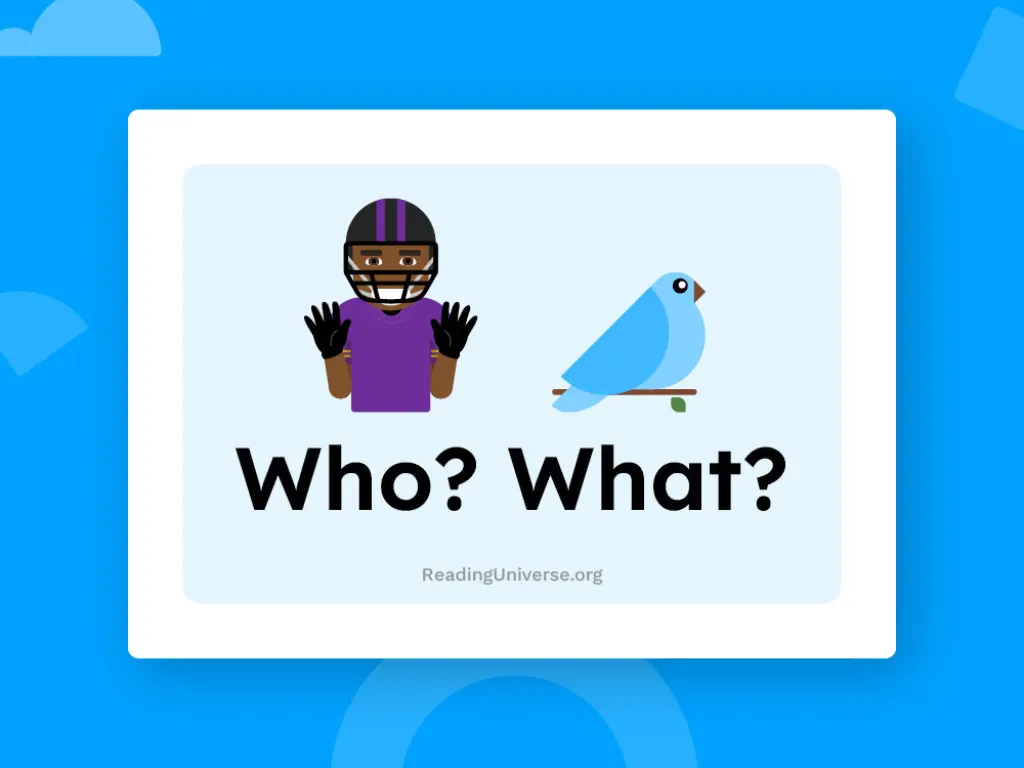
2. Guided Practice Part 1: Replacing the Who or the What with a Pronoun

Teacher Tip
Additional Practice Opportunities
Depending upon the level of your students, you may continue to practice. We recommend that you choose sentences or pictures based on content area topics you are studying, books you are reading aloud, or phonics patterns you are teaching.
2. Guided Practice Part 2: Identifying the Noun That a Pronoun Refers To
3. Teacher-Led Independent Practice
Rose made the cake. She did not care. She wanted cake, too. When she was done, she left it on the table. When she came back to the kitchen, she saw that Jake ate the whole plate of cake! He was in a bad state. His tummy was hurting. He had to sit on the sofa and rest. He felt so bad.
Teacher Tip
Talking About Pronouns Throughout the School Day
Students are hearing pronouns in texts throughout the school day. You can talk about pronouns in social studies, science, and even math. For example, you could read this word problem to your class: "Lollipops" cost $2. Jen wants 3 lollipops. How much money does she need? Then ask your students, "Oh! Who is the word she referring to?" "Jen!"
