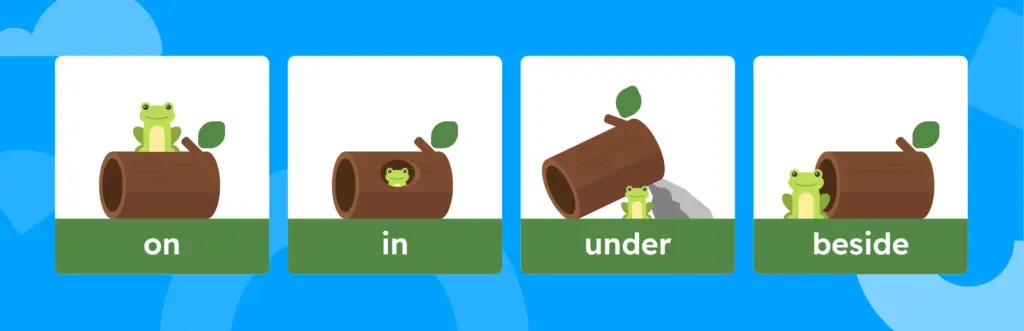
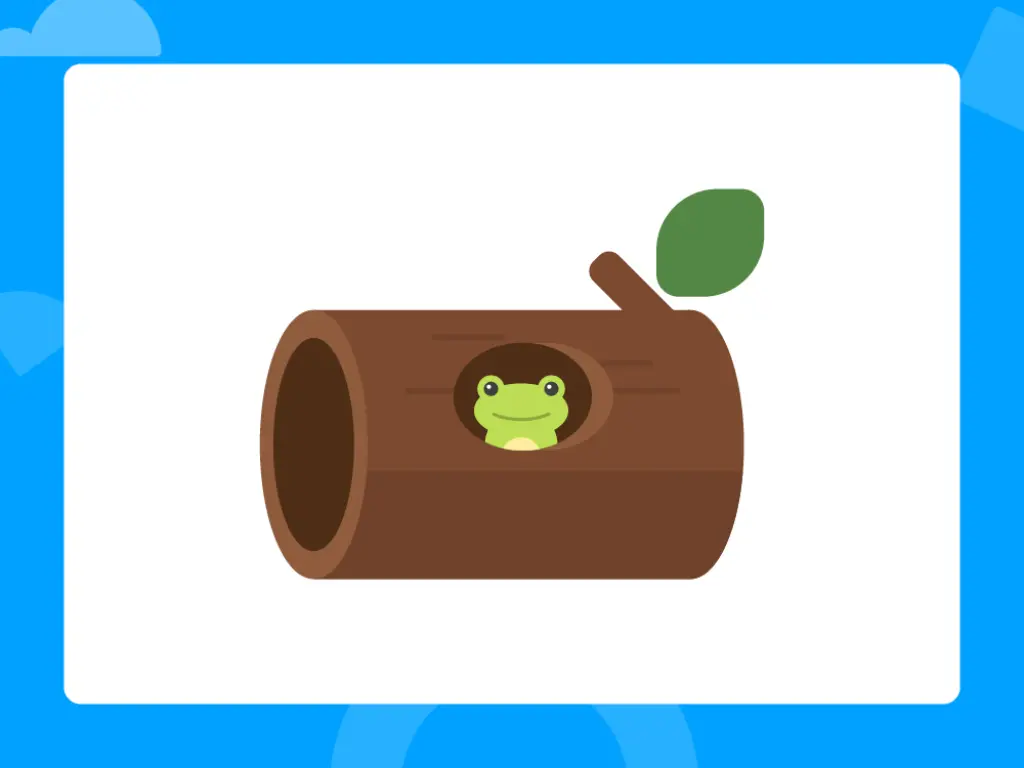
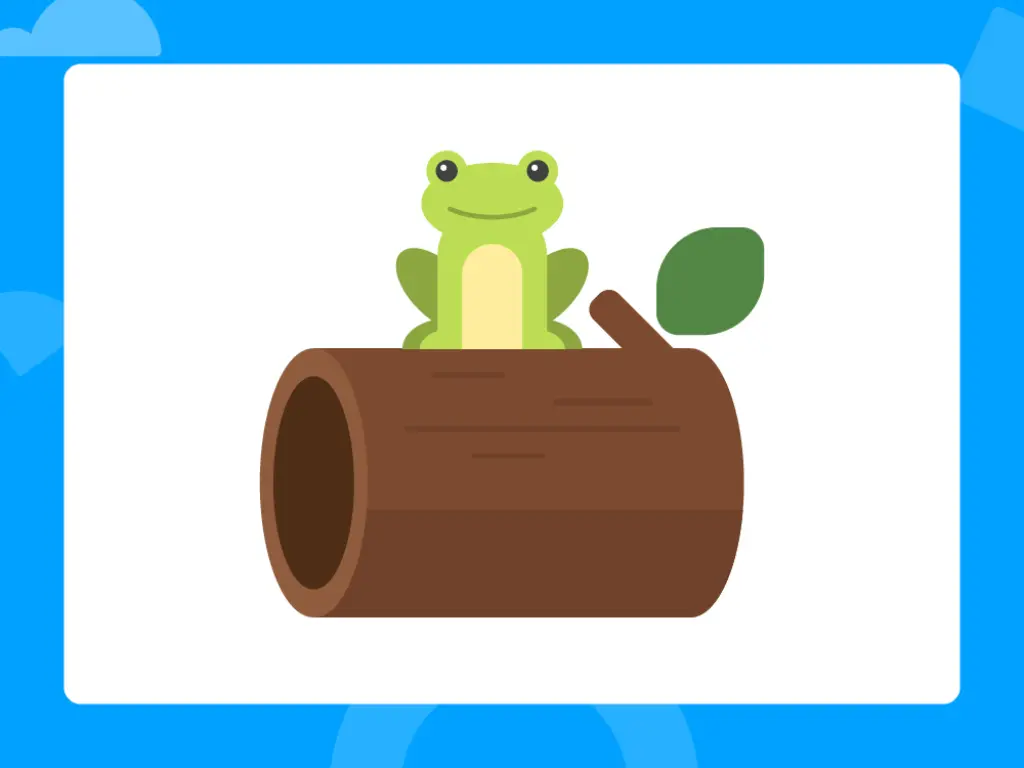
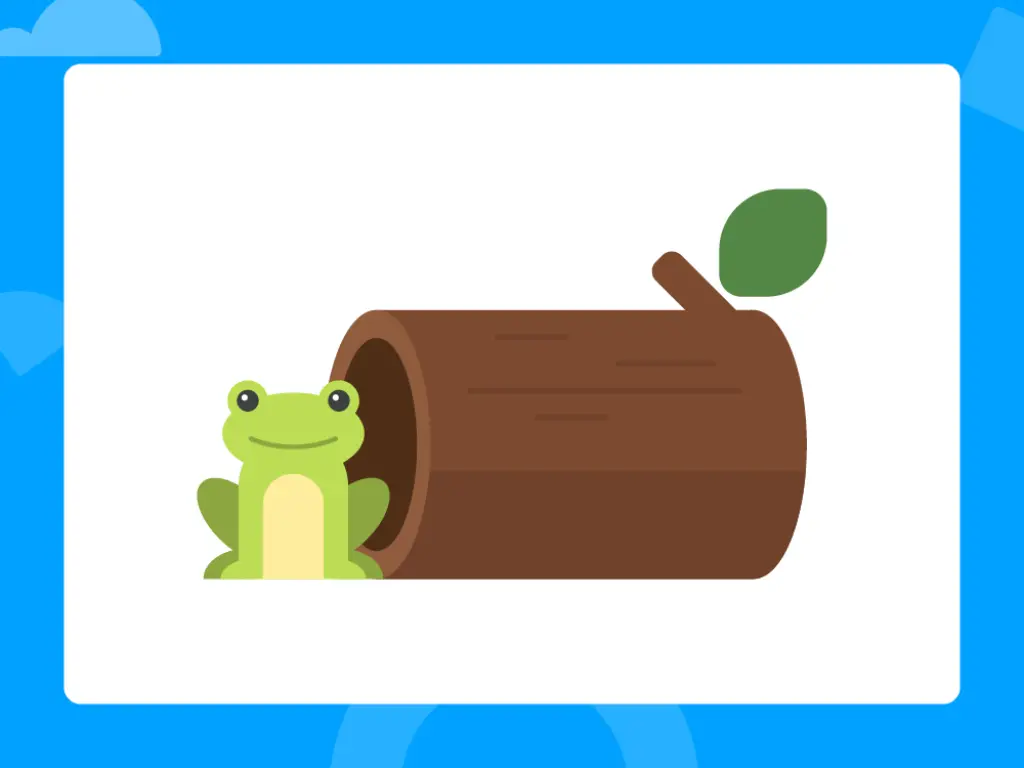
Prepositions are words that signal relationships — how one thing connects to another. Imagine a frog in relation to a log. That frog could be …
on a log in a log under a log beside a log
On, in, under, and beside are prepositions, but they don't mean much on their own.
Prepositions Live in Phrases
Notice that prepositions don't stand alone. They're part of a phrase … prepositional phrases! And prepositional phrases can answer function questions.
Adjective Phrases
Take a look at this sentence:
He picked the cupcake with sprinkles.
You'll notice the preposition with. Think of it as a signal that something important is coming … the sprinkles!
The preposition with and the noun sprinkles combine to describe the cupcake. We call this an adjective phrase.
And that adjective phrase — withsprinkles — answers the adjective function question "What kind?" about the cupcake, What kind of cupcake? A cupcake with sprinkles!
Adverb Phrases
Now look at this sentence:
The cat purred after dinner.
The word after is our preposition here. It's signaling we're about to learn something. In this case, we're learning something about the verb, purred.
The preposition after and the noun dinner combine to tell us more about the action of purring. We call this an adverb phrase.
And that adverb phrase — after dinner — answers the adverb function question "When?" When did the cat purr? After dinner!
Most of use prepositions so naturally in our oral language that it can be challenging to think about what role they actually play in a phrase or sentence. It's worth the effort to understand them deeply, because many of your students may need extra support and more explicit instruction, especially your English Learners and students with developmental language disorder.
Preposition Functions
Most prepositions express …
Examples
Function
Relationship in space, or position (for example, in, on, under)
ran on the sand
The preposition on expresses the relationship between the action — ran — and where the action occurred — thesand. The adverb phrase on the sand answers the question "Where?"
Relationship in time (for example, during, until)
open until midnight
The preposition until expresses the relationship between the word open and the time — midnight. The adverb phrase until midnight answers the question "When?"
Some prepositions help describe a noun (a who or a what), as part of an adjective phrase
butterfly with fluttering wings
The preposition with expresses the relationship between the butterfly and the wings. The adjective phrase with fluttering wings answers the question "Which butterfly?"
Here's how prepositions can look in sentences:
Cactus, pine, and grass survive because they adapted tothe amount of water intheir habitat.
After a big rain inany habitat, plants that live there get the water that they need!
The prepositions to, of, in, and after used in these sentences show a relationship between a noun and another noun or verb. The words making up the prepositional phrase function together to answer a function-first meaning question. For example, after a big rain answers the question "When?"
This all can feel pretty complicated, like advanced grammar! Of course, we'll keep it simple for our students. We'll focus just on the position prepositions in, on, and beside in our lesson below.
Prepare to Teach Prepositions
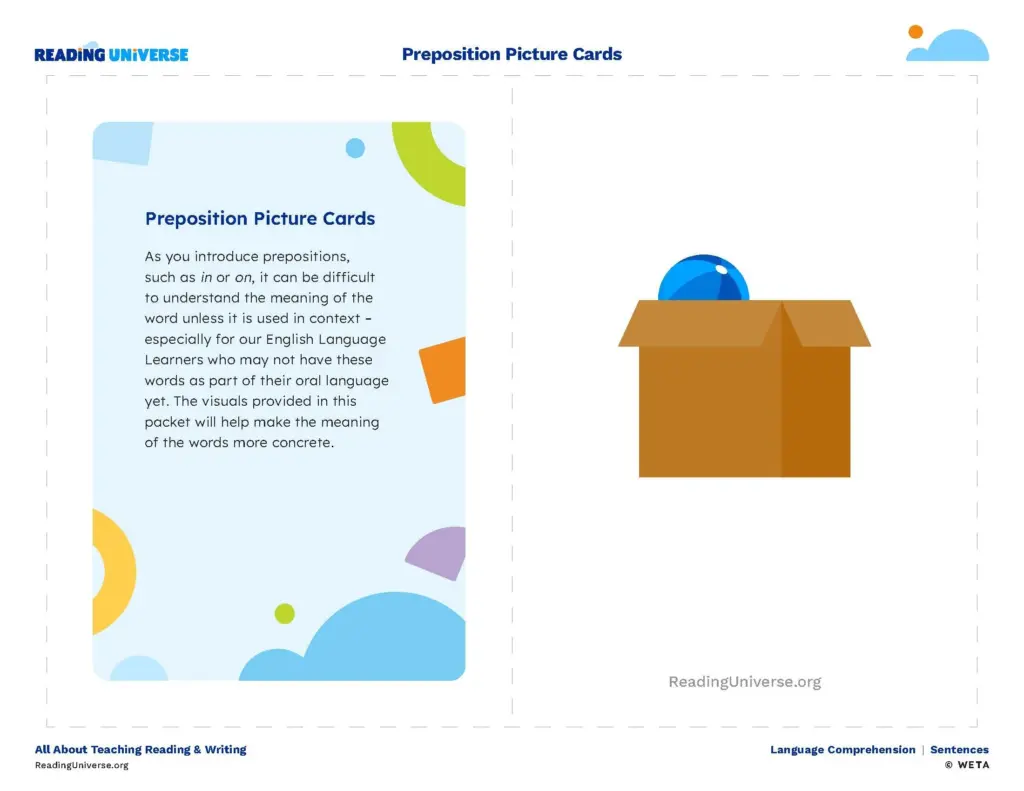
Before you teach this model lesson, you'll want to download these free preposition picture cards.
Preposition Picture Cards
Use these cards to introduce prepositions and prepositional phrases. The visual reference will support student understanding of these small, yet powerful words.
Next we'll share a short example lesson for introducing your students to prepositions. We'll focus on prepositions that show where something is: in, on, and beside.
Depending on your students, you can decide which prepositions you would like to focus your instruction on and how many to introduce in one lesson.
1. Explicit Instruction: Teacher Modeling
Think of this as the I Do section of your lesson. To start your lesson on prepositions, here's what you can say to your students.
Say,
We've been learning the grammatical building blocks, and today we're going to learn a new one. It's called a preposition. Let's all say it together.
You all say together,
Preposition.
Say,
Prepositions are little words. You know them, like in, on, if, and with. And they're really important!
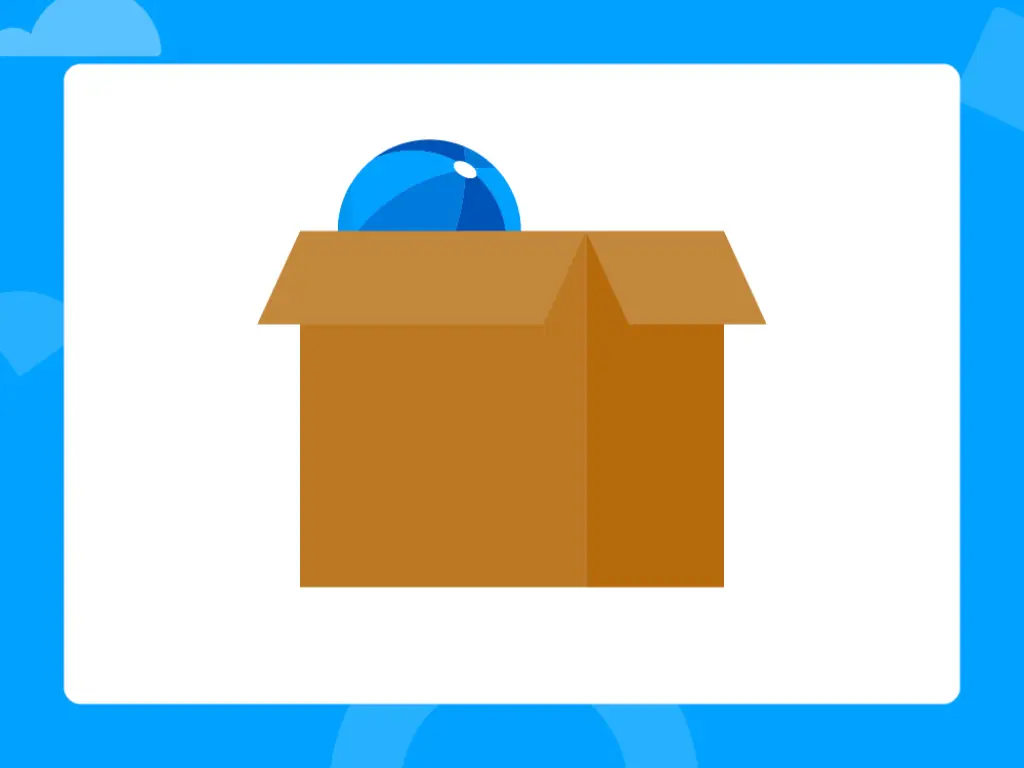
Show them this picture (or a real box and a real ball!):
Say,
In this picture, the ball is in the box. The word in is our preposition, and it tells us how the ball and the box are related ... the ball is in the box.
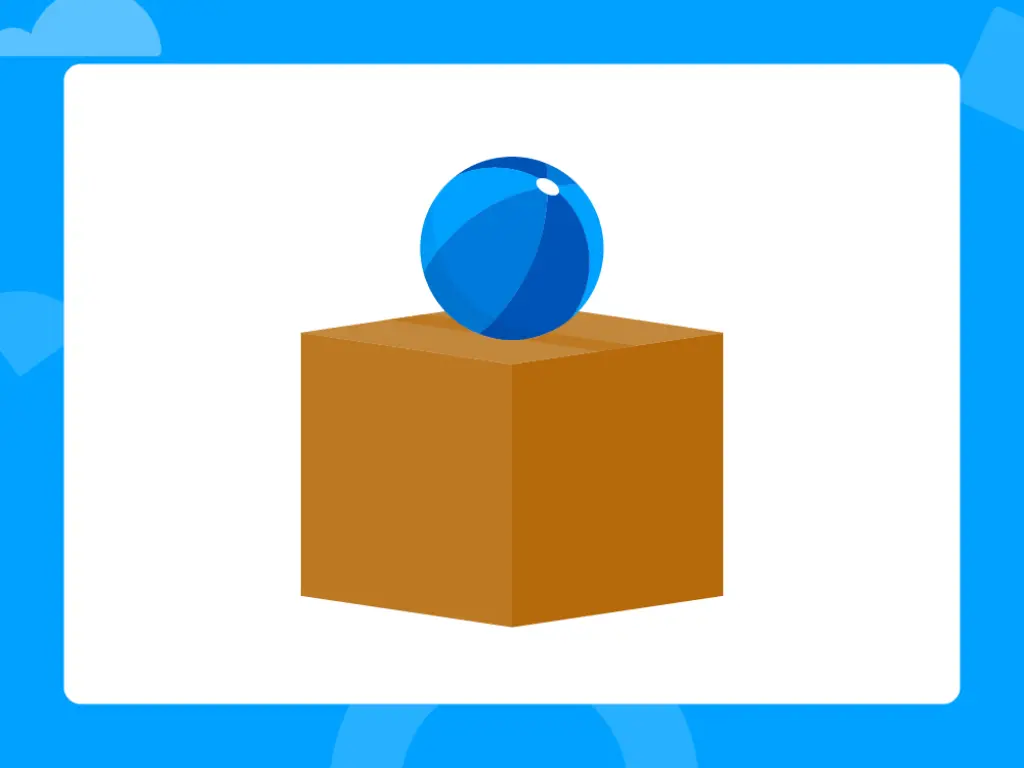
Show them this picture:
In this picture, the ball is on the box. The word on tells us how the ball and box are related. The ball is on the box.
Show them this picture:
In this picture, the ball is beside the box. The word beside tells us how the ball and box are related. The ball is beside the box.
We can tell the way that the ball and box are related with this special kind of word called a preposition. We used the prepositions in, on, and beside to show where the ball is.
2. Guided Practice with Prepositions
Think about this next part as the We Do section of your lesson.
Write the following sentence on the board:
The frog is in the log
And show this picture:
Say,
Now we're going to look at a preposition in a sentence. Let's read this sentence together:
You all read together,
The frog is in the log.
Say,
What word tells us how the frog and log are related?
Students say,
In.
Circle in on the board and say,
Right! In tells us how the frog and the log are related. The frog is in the log.
Now write this sentence on the board:
The frog is on the log.
Say,
What if I showed you this picture?
Show this picture:
What word tells us how the frog and log are related?
Students say,
On.
Circle on on the board and say,
Right! On tells us the frog and the log are related.
Write this sentence on the board:
The frog is beside the log.
Say,
Let's read this sentence together:
You all read aloud:
The frog is beside the log.
Say,
What word tells us how the frog and log are related in this sentence?
They respond,
Beside.
Circle beside on the board and say,
Yes! Beside tells us how the frog and log are related.
Now let's look at this picture.
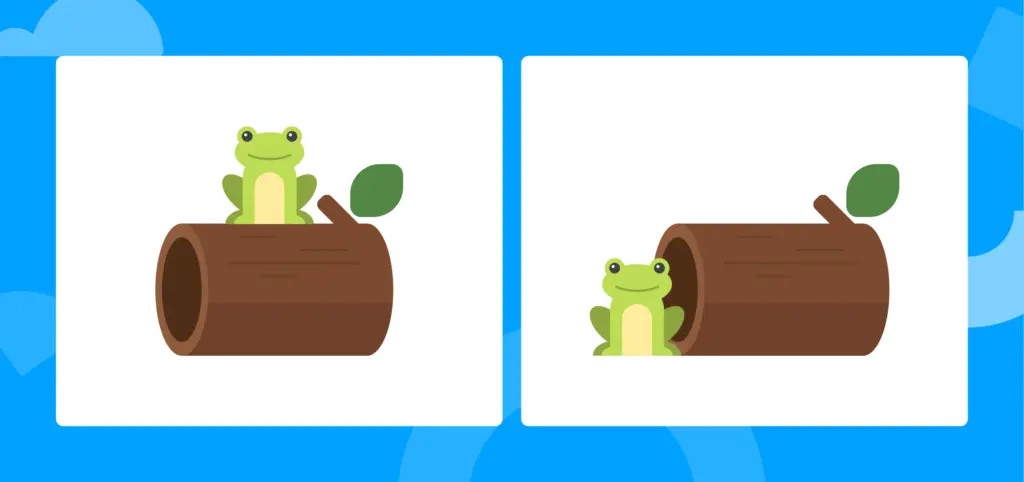
Show pictures of a frog on a log and a frog beside a log.
Which picture shows us this sentence? The frog is on a log.
Students should point or refer to the image on the left.
Right! This frog is on the log.
Point to the picture of the frog beside the log and say,
Turn to a partner and tell them a sentence that we could use for this picture.
After a minute, say,
Who wants to share their sentence?
Listen to students' sentences and highlight one that focuses on the frog being beside the log.
Words like in, on, and beside are called prepositions. That's a big word for many important little words. When we listen or read, we need to pay careful attention to these little words because they can make a big difference in meaning.
As with the other grammatical building blocks, your students may grasp the concept of prepositions after a single lesson, or it may take more time and more guided practice.
3. Teacher-Led Independent Practice with Prepositions
When your students show they understand prepositions in the We Do section, you can move on to the You Dosection.
To give your students more practice with prepositions, you can play a version of Simon Says (opens in new window). Your commands will always include a preposition that tells the students where to be in relation to their chairs:
Simon says, "Stand by your chair."
Simon says, "Sit on your chair."
Simon says, "Sit next to your chair."
And they'll perform the action. Of course, you'll also give commands without Simon asking:
Put a hand on your chair.
Stand far from your chair.
Put a foot under your chair.
And your students should NOT perform the action. If they do, they're out for this round.
After each command that Simon says, ask the class, "Where are you?"
They should tell you the preposition in each command, like so:
Simon says, "Stand by your chair." [they move] "Where are you?" — "By the chair!"
Simon says, "Sit on your chair." [they move] "Where are you?" — "On the chair!"
Simon says, "Sit next to your chair." [they move] "Where are you?" — "Next to the chair!"
In addition to providing fun practice, this activity is also a quick assessment that will give you an idea of who's understanding the function of prepositions and who needs more instruction.
Teacher Tip
Talking About Prepositions Throughout the School Day Prepositions are everywhere, and they have a big impact on meaning. Look for them in all kinds of text, including decodables: The cat hid in the hat. Ask your students, "Where did the cat hide?" "In the hat." In science class you can point out the location of, for example, types of clouds: "Cirrus clouds float above cumulonimbus clouds. Ooh! There's a preposition! What word tells us where the cirrus clouds are in relation to the cumulonimbus? That's right! Above!" When students can contextualize a high frequency word like above within a phrase or a sentence, they're really understanding how that word is functioning.
Subscribe to our e-newsletter
We'll keep you posted as we add new resources, articles, and videos to support your classroom reading instruction.
Thank You
Thanks for signing up — please check your email for our confirmation message and save our address.