8. Resource Hub: Teaching Grammatical Building Blocks
Grammatical Building Blocks Skill Explainer
Nancy Chapel EberhardtVideos
Hide Video Transcript
Show Video Transcript
Julie Turner: Boys and girls, remember how we read the story "The Cactus Hotel" earlier today?
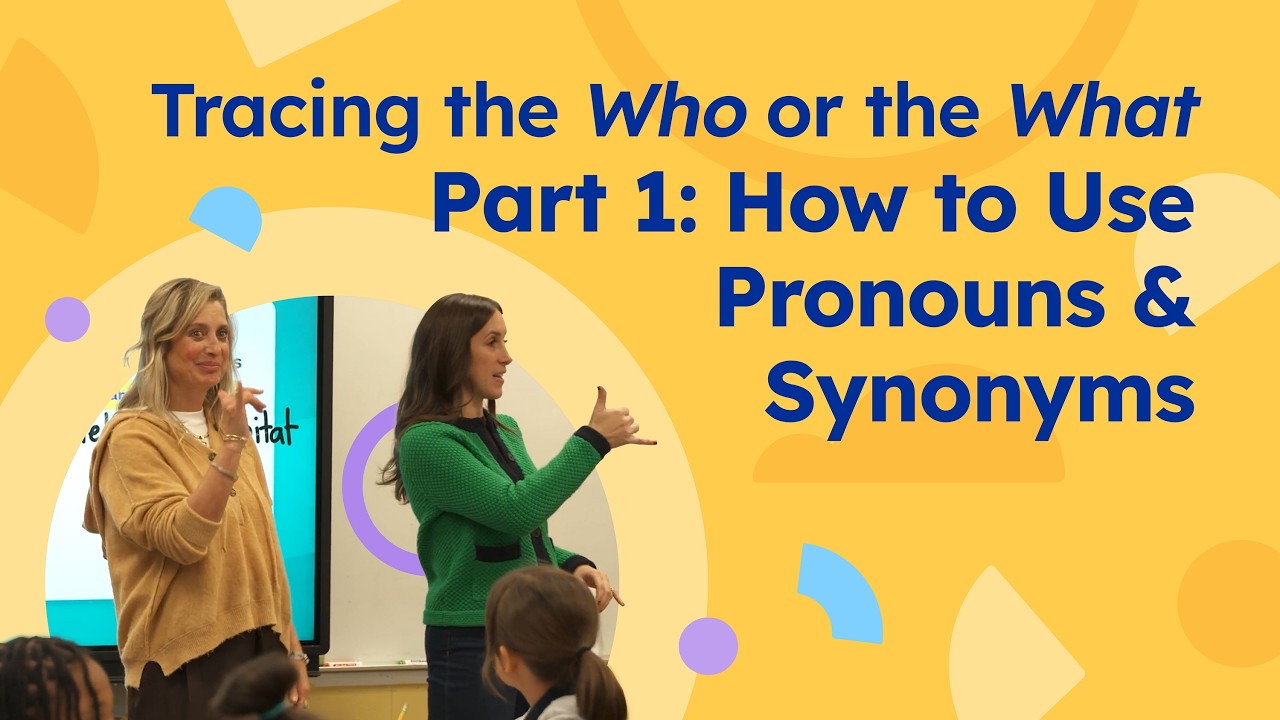
Narrator: As your students start to read more complex text, they'll need to be able to track the subject, the "who" or the "what," across a passage. It's what turns a group of disconnected sentences into a story. Students already know that every sentence has a "who" or a "what." What they'll be learning today is how authors use pronouns and synonyms to point back to the subject and keep those ideas connected. Watch as third grade teacher Julie Turner and reading specialist Carla Stanford guide students at Burgess-Peterson Academy in Atlanta through their first step in tracing the subject ... learning how pronouns and synonyms work.
Carla Stanford: Today we're going to become experts on the "who or what."
Narrator: They start by reviewing pronouns.
Carla Stanford: There's a group of words that can take the place of the "who or what." What are those words, Ms. Turner?
Julie Turner: Those words are called pronouns. Let's read through the list of words together. I, you, she, he, it, we, you, they.
Carla Stanford: Thumbs up if you've heard of a pronoun before. Thumbs up if you've used a pronoun when you were talking. Yes. You're already experts on pronouns when you're talking. You might say, "My mom is working hard. She is a hard worker." Right? And you would take mom and you would replace it with what pronoun? She. Excellent. So we know about pronouns when we are speaking, but now we want to think about the way an author uses pronouns to replace. Everyone say "replace."
Students: "Replace."
Carla Stanford: Say "pronouns replace."
Students: "Pronouns replace."
Narrator: The label pronoun doesn't tell us exactly what pronouns do. By teaching students that pronouns replace, Ms. Stanford is helping them understand the job of a pronoun.
Carla Stanford: So they replace the "who" or "what." And when they replace, they refer back. And what we have to start doing is thinking about, what are they referring back to? So we're going to do some practice. We're going to read some sentences, and we are going to make some decisions. We're going to pretend to be the author, and we're going to make some decisions about what pronouns should replace. You ready?
Students: Yes.
Carla Stanford: Let's do it.
Julie Turner: Let's take a look at our first sentence.
Everybody: "The giant cactus grows."
Narrator: Ms. Turner asks her students to think about what pronoun would replace the giant cactus in a second sentence: "The giant cactus grows for years."
Carla Stanford: "The giant cactus" is a noun that we can replace with one of those words from the list. Which word would replace "the giant cactus"? Give me a thumbs up when you know which word could replace "the giant cactus." Hadley, which word do you think would replace "the giant cactus"?
Hadley: It.
Julie Turner: Exactly: "It grows for years." "The giant cactus" is "it."
Carla Stanford: Do you see how that would have been repetitive to say "the giant cactus" and "the giant cactus"? And the job of the pronoun was to do what?
Students: Replace it.
Carla Stanford: Replace it.
Students: So it's shorter.
Carla Stanford: So it's shorter, and it's not so repetitive. So now let's read, all together, both of the sentences; and let's replace "the giant cactus" with it. Are y'all ready?
Students: Yeah.
Carla Stanford: All right. Let's read together.
Everybody: "The giant cactus grows. It grows for years."
Carla Stanford: Doesn't that sound so much better?
Students: Yes.
Narrator: The cactus hotel story has a lot of subjects to keep track of. The hotel itself, birds, bats, and snakes. Knowing which pronoun can stand in for a subject will help students keep track of, or trace, who or what each sentence is referring to, boosting their comprehension.
Julie Turner: So I think it's worth doing one more example where we're not replacing it with it, because it is one singular thing. But I noticed on this sentence ... "The ants and mice want to live in the cactus hotel." ... I don't think I can replace it with "it" this time.
Carla Stanford: Why not? Why can't we replace it with it?
Students: Because there's two of them.
Carla Stanford: There's two, and it only refers to ...
Students: One.
Carla Stanford: Yeah. They know so much already. I love it.
Julie Turner: Let's take a look at our next sentence: "The ants and mice find space to nest." So what do we think we can replace it with?
Students: They! They!
Julie Turner: Let's see ... the word they. Aha! You got it. All right. Let's read those two sentences together now. Ready?
Everybody: "The ants and mice want to live in the cactus hotel. They find space to nest."
Carla Stanford: Okay. As a reader, do you see how this is flowing?
Students: Yes.
Carla Stanford: When you get to they, your brain should be thinking, "Oh, what does 'they' stand in for? What is it replacing?"
Students: The ants and mice.
Carla Stanford: So you constantly, as a reader, have to track that. And as a writer, if we do the opposite, right? We're the ones creating the content. We don't want to have our stories have the same words repeated over and over and over. And so now we know we can use a pronoun to replace.
Narrator: Next, Ms. Stanford explains how synonyms work.
Carla Stanford: Everyone say synonym.
Students: Synonym.
Carla Stanford: A synonym is a word that means "the same." Say synonym.
Students: Synonym.
Carla Stanford: Same.
Students: Same.
Carla Stanford: Use your hand. Synonym.
Students: Synonym.
Carla Stanford: Same.
Students: Same.
Carla Stanford: If happy is a word, what is a word that means the same as happy.
Student: Joy.
Carla Stanford: Joy.
Student: Excited.
Carla Stanford: Excited.
Student: Happiest.
Carla Stanford: Happiest. Glad. Those are all very similar. What'd you say, sweet friend?
Student: Happiness.
Carla Stanford: Happiness, right? So words that mean, that are similar. They might not be exactly the same, but they give the same sentiment, the same meaning. So as readers, as we are reading, and we're thinking about who or what is the sentence about, who or what is the passage about? We know that the "who" or "what" will be named. We know the "who" or "what" can be replaced with a pronoun, but a "who" or "what" can also be reworded. Everyone say reworded.
Students: Reworded.
Carla Stanford: With a synonym!
Narrator: Synonyms and pronouns aren't interchangeable tools. So assigning each one a consistent function ... pronouns replace, synonyms reword ... helps students stay anchored as they're reading and processing sentences.
Carla Stanford: So we're going to practice this together. This happened a lot in "The Cactus Hotel" where the author intentionally took a "who" or "what" and did some rewording. So we're going to put our heads together; and our "who" or "what" we're going to think about is the Cactus Hotel. So I want you to think about that. If you were going to come up with another word to reword so that your passage didn't say, "The Cactus Hotel was big. The Cactus Hotel had lots of creatures. The Cactus Hotel had blooms on top" ... so that you didn't repeat "the Cactus Hotel" over and over and over ... what is another word or group of words that you could use in place of it? I'm going to have you turn and talk. Turn and talk with the people at your table, and let's see if you can come up with an idea before I share the ideas that Ms. Turner and I came up with.
Student 1: For insects, you could do bugs.
Student 2: But we're talking about both of them.
Student 1: Oh yeah.
Carla Stanford: I love your ideas. You're doing great work. Okay. We're going to pull some together. All right, friends. Eyes this way. I heard some amazing ideas. We have the Cactus Hotel. What did you say, friend?
Student: A house for animals.
Carla Stanford: A house for animals. That's really cool. These guys also were saying ...
Student: A word for house.
Carla Stanford: Another word for house. They were really brainstorming. What is another word for a house? I heard some people over ...
Student: Home.
Carla Stanford: A home. A home. What else?
Student: A nest?
Student: Maybe ...
Carla Stanford: A nest.
Student: Shelter.
Student: A shelter.
Student: Shelter.
Carla Stanford: A shelter. Do you like that? A shelter?
Students: Yes.
Carla Stanford: A shelter for animals? That could work.
Student: A safe place.
Carla Stanford: A safe place. There's this scientific word that I'm thinking of that means a home for animals. Do you guys know? What is that, Hadley?
Hadley: Habitat.
Carla Stanford: A habitat. Everyone say habitat.
Students: Habitat.
Carla Stanford: So now we have come up with a whole plethora of synonyms to reword "the Cactus Hotel." So let's think about this. As a reader, if I'm reading "The Cactus Hotel" and I know the "who" or "what" this book is about is what? It's about the Cactus Hotel. Now I can anticipate all the ways the author may reword "the Cactus Hotel" so they don't repeat it over and over and over and over again. Does that make sense? Now shift your brain. Say, shift!
Students: Shift!
Carla Stanford: Now think about it as a writer. As a writer, if Ms. Turner said, I would like for you to write a paragraph about the Cactus Hotel and all the residents of the Cactus Hotel, now you have a strategy. You can use the Cactus Hotel. You can use a replace word called a ...
Students: Pronoun.
Carla Stanford: Pronoun. And now you can use a reword, which is a ...
Everybody: Synonym.
Carla Stanford: You have a strategy. You ready to try some more?
Students: Yes.
Carla Stanford: So now we're going to look at birds, rats, and snakes. That's our "who" or "what." Now you are going to work with the people at your table, and I want you to come up with the rewords or the synonyms. It can be one word, or it can be a group of words. Turn and talk.
Student 1: Synonym is creatures, animals ...
Student 2: And um ...
Carla Stanford: What do you think?
Student: Visitors.
Carla Stanford: Oh, visitors. Do you like that one? Okay, Kingston and Kailei. Okay. We had some brilliance over here. We're going to check in with them. These two friends had a way that they want to reword birds, rats, and snakes. They said ...
Kingston and Kailei: Visitors.
Carla Stanford: Visitors. You guys agree? I also heard some other ones. Did you hear some over here, Ms. Turner?
Julie Turner: I heard desert animals.
Carla Stanford: I like that one, too. I heard another one over here.
Student: It was creatures.
Carla Stanford: Do you like that one? So we have desert animals. We have creatures. We have visitors. And we have birds, rats, and snakes. Do you think we have a bank of words that would help us anticipate what's coming?
Student: Yes.
Carla Stanford: I think so, too. You want to see what we came up with?
Everybody: The animals.
Carla Stanford: Would that work?
Students: Yeah.
Carla Stanford: Not as fun as yours, but yeah.
Students: Creatures.
Students: Residents of the hotel.
Carla Stanford: Excellent. Now, trick question. If I wanted to replace, not reword, but if I wanted to replace all of these "who" are "whats", what pronoun would I use?
Students: They.
Carla Stanford: They. You're really getting the hang of it. You guys are doing excellent work.
Julie Turner: Okay. So boys and girls, you said that the replacement pronoun for cactus is ...
Students: It.
Julie Turner: Now I want to hear some of the synonyms that you had for cactus. Raise your hand. Joseph.
Joseph: Hotel.
Julie Turner: Hotel. All right. So I'll write hotel on my list. Let's see if we've got another idea. Kingston?
Kingston: Plant.
Julie Turner: Plant. Absolutely. Cactus is a plant. We'll add the word "plant" to the list. And I saw some of those people had the same idea as Kingston.
Carla Stanford: I think you guys have gotten really good at this. Are you ready? Drum roll.
Everybody: [hands patting to make a drumroll sound]
Carla Stanford: Can you do it with your partners?
Student: Yeah.
Carla Stanford: Can you turn and talk and work to fill out the next one all by yourselves?
Students: [unintelligible]
Julie Turner: Okay, boys and girls, I think we're ready to have some discussion here. I heard a really good conversation between Ava and Joseph. They were deciding which pronoun to use. And, Ava, I heard you say something about the word it. Can you tell us what you said about the word it?
Ava: So what I said about it was ... bats and insects are two, and "it" means one, so we decided to put they.
Julie Turner: That was such a smart idea. And I see some people are giving you this. They had the same conversation with their partners. And I know I saw some really eager hands ready to answer replacement synonyms for bats and insects. Sadie.
Sadie: Creatures.
Julie Turner: Creatures. That's a great word that will replace both bats and insects. Let's record that on our chart. I think we haven't heard from Amy in a while.
Amy: Animals.
Julie Turner: Animals. That makes sense. Let's record the word animals.
Carla Stanford: Thumbs up if you had animals on your paper; and if you didn't, you can add it. This is all about creating a word bank for you to really think about this. So we're going to stop right here. Put your hands down and put your eyes right here. You guys, thank you so much for this hard work you did today. You already knew what a pronoun was, and you already knew what a synonym was; but what you started learning today is that they have a job when they're in a sentence or when they're in a passage. And as readers, if we know their job, we know their intention, we can track them and we can be thinking about the "who" or "what."
Narrator: Now that students understand the role that pronouns and synonyms play at the word level, their next lesson will be focused on applying what they've learned at the next level: sentences and passages.
Carla Stanford: Pat yourselves on the back. Give yourselves a round of applause. Give yourselves a woot woot!
Students: Woot woot!
Carla Stanford: Good job.
Narrator: Reading Universe is made possible by generous support from Jim and Donna Barksdale; the Hastings/Quillin Fund, an advised fund of the Silicon Valley Community Foundation; the AFT; the Emily Hall Tremaine Foundation; and anonymous donors. Special thanks to Burgess-Peterson Academy, Reading is Essential for All People, and Atlanta Public Schools. If you enjoyed this video, please subscribe to our YouTube channel @RUTeaching. Reading Universe is a service of WETA Washington, D.C., the Barksdale Reading Institute, and First Book.

Hide Video Transcript
Show Video Transcript
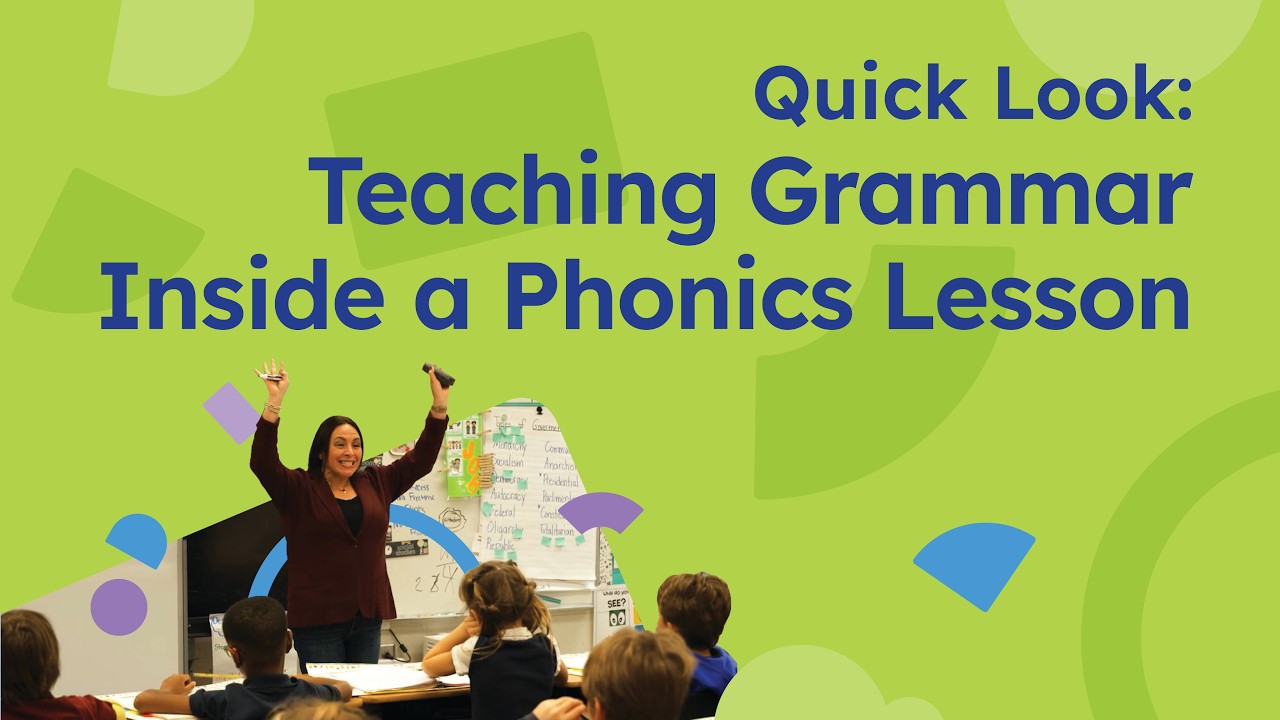
Lisa Glickman: Okay. The first thing we're going to do is practice writing the letters that spell the /oi/ sound.
Narrator: These second graders at Burgess-Peterson Academy in Atlanta have been learning about vowel teams 'oy' and 'oi' in their daily phonics lesson.
Lisa Glickman: So we have two ways to spell the /oi/ sound, right?
Narrator: Now, reading specialist Lisa Glickman will guide them through dictation, starting with writing words.
Lisa Glickman: When we do our word dictation, you're going to have to listen for where in the word that /oi/ comes so that you know which way you're going to spell /oi/.
Narrator: And she's going to weave in language instruction. She's going to teach her students how to identify the jobs these words can do in a sentence.
Lisa Glickman: The other thing we're going to think about today is after we do the words, we're going to think about ... is the word a who or a what. Right? Is it a noun? Does it tell us who or what? Or is it something that you can do? Is it a did what? Is it a verb? An action? Okay. Are you ready?
Students: Yes.
Lisa Glickman: The word is hoist. What's the word?
Students: Hoist.
Lisa Glickman: Hoist. I hear /h/, /oi/, /s/, /t/. Everybody write the word hoist. /h/... Hoist. Nice job. Everybody say, "To hoist is to lift."
Together: "To hoist is to lift."
Lisa Glickman: So if I was saying I need to lift this heavy box, I could also say I need to hoist this heavy box. Hoist is to lift.
Narrator: By pairing a simple motion with the definition of hoist, Ms. Glickman gives students a physical connection that reinforces its meaning.
Lisa Glickman: So is that a who or a what? Or is hoist something that you could do, a did what? What do you think?
Students: Did what?
Lisa Glickman: It's a did what. Good job. Are you ready? Next word. Look at me. The word is point. What's the word?
Students: Point.
Lisa Glickman: Point. Can we tap that together? Make sure we get all those sounds.
Together: /p/, /oi/, /n/, /t/. Point.
Narrator: Ms. Glickman carefully chose each of the words in this lesson. The word point provides an opportunity to explore multiple meanings.
Lisa Glickman: Make sure you have it like I have it. Okay. Now I want everybody to think for a minute. Guess what? You can't answer until I go like this. You ready? Point. Is point a who or a what? Or a did what? Everybody think. What do you think?
Students: Did what.
Lisa Glickman: Okay. Can I point at something? Is that something I can do?
Students: Yes.
Lisa Glickman: It is a did what. But guess what? May I borrow this? What is this?
Students: A point.
Lisa Glickman: It's a point of a pencil. So guess what? The word point can be a what. And it can be ... and it can be a did what. You're right. Okay. Now we're going to read these words back together. Are you ready? Go.
Students: Toy. Hoist. Boy. Point.
Lisa Glickman: Now, show me with your hands, not your mouth. Just quiet hands. What does hoist mean? Yes. Hoist means to lift. Great job. Okay. Now I'm going to show you a sentence. Everybody look here. Let's read this together.
Students: "The boy pointed."
Lisa Glickman: Oh, "the boy pointed." Who can tell me ... what is the who or what in this sentence? What is the who or what in this sentence?
Student: The boy. The boy pointed. It's a who?
Lisa Glickman: Good job. All right. And did what? What did that boy do? Yes, friend.
Student: He pointed.
Lisa Glickman: He pointed. Excellent. Okay. So we have, "the boy pointed." And this is just a little kernel sentence. It tells us who and did what. But we can expand the sentence by answering another question. We can answer "Where?" When we answer "Where?", if a writer answers "Where?" or you're reading about where, it helps you in your head to paint a picture of what's happening in the story. So instead of just, "the boy pointed," I could add a where. And this where is, "to his mom." Let's all read this sentence together in big loud voices.
Students: "The boy pointed to his mom."
Lisa Glickman: Good. Hmm. Where else could the boy point? If we needed to think of another where, everybody think for a minute. Where else could the boy point? Where else could the boy point?
Student: To his toy.
Lisa Glickman: To his toy. The boy pointed to his toy. Now I'm going to give you a job. Everybody is going to turn to a shoulder partner and I want you to come up with another thing and I want you to say "the boy pointed ..." and each of you think of another place the boy could point.
Narrator: By asking the question "Where?" about the action in her kernel sentence. Ms. Glickman helps her students practice their sentence expansion skills.
Lisa Glickman: Excellent. Okay, friends. One, two, three. Eyes on me.
Students: One, two. Eyes on you.
Lisa Glickman: Okay. I heard some great answers. I heard the boy pointed to his dad. The boy pointed to his home. So there are lots of wheres that could answer this "Where?" question that we could do. The next thing we're going to do in dictation, we're going to do phrases. And guess what? Those phrases could answer the "Where?" for this. Are you ready?
Students: Yes.
Lisa Glickman: So your first phrase — "At first base." Say it.
Students: At first base.
Lisa Glickman: Write it. "At first base." "At first base." And if you need any help or you want to check your work, look up here. This says "at first base." That was all you had to write. So now, can we read this whole sentence together? Let's read it.
Students: The boy pointed at first base.
Lisa Glickman: Good job. What does that where paint a picture of in your head? Everybody think. If a boy is pointing at first base, what might be happening in that story? What do you think might be happening in that story? Yes?
Student: Playing baseball. They might be playing baseball.
Lisa Glickman: Maybe they're playing baseball. What else? What else does it make you think of if someone is pointing at first base?
Student: They could be playing tag and there could be a base. They're pointing at it.
Lisa Glickman: Oh, there could be a base that you have to get to so you don't get tagged. That's amazing. So answering the "Where?" question really helps us think about what's happening in our sentence and in our story.
Narrator: The last step in this lesson is sentence dictation.
Lisa Glickman: What we're going to do now is I'm going to say a sentence to you. We're going to repeat it and you're going to write it. Okay? The sentence is, "The box was hoisted into the van." Say it.
Students: "The box was hoisted into the van."
Lisa Glickman: Good job. Write it. "The box was hoisted into the van." "The box was hoisted into the van." Okay. Let's read this whole thing together. Are you ready? Go.
Students: "The box was hoisted into the van."
Lisa Glickman: Okay. Now we have to be detectives. All right. Park your pencils. Everybody think in your head. What is the who or the what of this sentence? Everybody think for a minute. What is the who or the what in this sentence? Everybody?
Students: The box.
Lisa Glickman: The box.
Student: In the van.
Lisa Glickman: The box is the who or what that it's about. Yes. A van is also a what. That is so smart. Okay. The box is the who or the what that the sentence is talking about. Did what? What did we do with the box, everybody?
Students: We hoisted.
Lisa Glickman: We hoisted. Everybody show me hoisted with your hands. Hoisted. Everybody say, "Hoisted means lift."
Students: Hoisted means lift.
Lisa Glickman: Yes. So hoist means to lift. The box was hoisted. Oh my gosh. We still had one more question. Where? Where was the box hoisted, everybody?
Students: Into the van.
Lisa Glickman: Into the van is what answers the "Where?" question. So in this sentence, we expanded it. We have a what — was the box? We have a did what — it was hoisted. And where — into the van. So when you are reading and you're reading sentences and you think about the who or the what, did what, where, it helps you to understand what's happening in the story. And when you're writing, when you become writers and you're writing your stories, you want to think about putting all these things into your sentences so that it paints a really interesting picture for your readers.
Narrator: Reading Universe is made possible by generous support from Jim and Donna Barksdale, the Hastings/Quillin Fund, an advised fund of the Silicon Valley Community Foundation, the AFT, the Emily Hall Tremaine Foundation, and anonymous donors. Special thanks to Burgess-Peterson Academy, Reading is Essential for All People and Atlanta Public Schools. If you enjoyed this video, please subscribe to our YouTube channel @RUteaching. Reading Universe is a service of WETA Washington D.C., the Barksdale Reading Institute, and First Book.

Hide Video Transcript
Show Video Transcript
Maria Bailey: Alright, one, two, and three. Eyes on me. We've got some fabulous, fabulous ideas here.
Narrator: Today. Literacy support teacher Maria Bailey is helping second graders in Toledo, Ohio add more detail to their sentences. A skill often called sentence expansion.
Maria Bailey: So, boys and girls, we have been working on writing sentences and making them better and more interesting, right? So, some of the sentences that we thought we need to have some help with were sentences like, "I like mom," "I like dad," "It is fun." "Let's play." What is wrong with sentences like that?
Student: They don't share enough detail.
Maria Bailey: There's no details ... Who is fun? What is fun? Tell me more.
Narrator: By learning how to add more detail, students aren't just making their sentences more interesting, they're also building their understanding of sentence structure. Ms. Bailey models how to use simple question words like "when," "where," and "why" to add more detail to their sentences.
Maria Bailey: So these are question words that we use when we are writing a sentence and how we might answer or add more details using one of those question words.
Narrator: In this lesson, students will work on expanding sentences by answering the question "why?" with some help from the word "because."
Maria Bailey: "Because" ... our word "because" is going to answer our "why" ... why is something happening? Why ... why is that happening? The dog was barking because why? Okay, that's our why. So let's start with "the dog was barking because ..." So, let's start.
Narrator: "Turn and talks" are a key part of Ms. Bailey's lesson, giving students the opportunity to safely share ideas while practicing their new sentence elaboration skills.
Students: The dog was barking because he was hungry ...
Maria Bailey: All right, so let's chat. I like a quick share out. Quick share out and then we'll pick one. We'll start right here. Go ahead. Josiah, your group. What'd you say?
Josiah: The dog was barking because it saw another dog.
Maria Bailey: ... because he saw another dog. I like that. That would make a dog bark. Absolutely. Ian.
Ian: The dog was barking because it seen a squirrel.
Maria Bailey: Oh-oh-oh, it saw a squirrel. Okay. I kind of like that because that would make my dogs bark. Thumbs up if that would make a dog bark. Does that make sense to us? Yeah, I think so, too.
Narrator: After Ms. Bailey models a few more examples, it's time for the students to write their sentences down.
Maria Bailey: Okay, so what I want to do right now, guys, I want us to do a little practice with this in partners. So on your paper, let's take a look at your paper today, all right? And let's put our finger at the first sentence. Here we go. "Winter is a fun season because ..." Okay, I want you now, this is on you guys. This is your "We Do." So we, you and your partner, you're going to talk, you're going to come up with an answer, and I'd like you to write it on the lines, okay? If you need any assistance, I'm right here, but let's go. So turn and talk to your partner. Why winter is the fun season. Why? Okay, talk to her partner and then write your answers.
Narrator: As students put their ideas down on paper, Ms. Bailey listens carefully and steps in to help when needed.
Maria Bailey: So, I should see, it should say, because we make something, don't just put one word. We're expanding a sentence here. Okay. Alright. So I have heard a lot of different, some really good ideas, and a lot of them were quite the same. So, I know what you guys like to do in the winter time. So, why don't you share out, what did you come up with? What'd you come up with? What is your sentence?
Students: Winter ... winter is a fun season because we make a snowman.
Maria Bailey: A snowman. And does that make sense, everybody? Thumbs up. If you think that makes sense ... in the winter, we can make a snowman. Now, thumbs up if you also said we can make a snowman ... because half of you did.
Narrator: Now that they've had a chance to practice as a group and with a partner, the next step for Ms. Bailey students will be stretching out their sentences independently.
Maria Bailey: Pat on the back for working so hard today. Oh my gosh, you just kissed that brain. You're amazing.
Narrator: Reading Universe is made possible by generous support from Jim & Donna Barksdale, the Hastings/Quillen Fund, an advised fund of the Silicon Valley Community Foundation, the AFT, The Emily Hall Tremaine Foundation, and anonymous donors. Special thanks to the Toledo Federation of Teachers, Riverside Elementary School, and Toledo Public Schools in Toledo, Ohio. If you enjoyed this video, please subscribe to our YouTube channel @RUTeaching. Reading Universe is a service of WETA, Washington, D.C., the Barksdale Reading Institute, and First Book.
Hide Video Transcript
Show Video Transcript
Lisa Glickman: After we do the words, we're going to think about is the word a who or a what? Right. Is it a noun? Does it tell us who or what? Or is it something that you can do? Is it a did what? Is it a verb? An action? Okay. Are you ready? The word is hoist. What's the word?
Students: Hoist.
Lisa Glickman: Hoist. Everybody say, "To hoist is to lift."
Students: "To hoist is to lift."
Lisa Glickman: So if I was saying, "I need to lift this heavy box," I could also say, "I need to hoist this heavy box." Hoist is to lift. So is that a who or a what? Or is hoist something that you could do, a did what? What do you think?
Students: [overlapping voices] Did what.
Lisa Glickman: Did what? Good job. Your next word is boy. What's the word?
Students: Boy.
Lisa Glickman: Is boy a who or a what? Or a did what? Everybody on three. Let's see. Who or what or did what? [counts silently by holding up her fingers]
Students: Who.
Lisa Glickman: It's a who. It's telling us who. Good. Are you ready for your last word?
Students: Yes.
Lisa Glickman: The word is point. What's the word?
Students: Point.
Lisa Glickman: Is point a who or a what? Or a did what? Everybody think. What do you think?
Students: Did what.
Lisa Glickman: Okay. Can I point at something? Is that something I can do?
Students: Yes.
Lisa Glickman: It is a did what, but guess what? May I borrow this? What is this?
Students: A point!
Lisa Glickman: It's a point of a pencil. So guess what? The word point can be a what. And it can be ... and it could be a did what. You're right.
