8.1 Differentiating Closed Syllable Instruction for Students with Dyslexia
Closed Syllables Skill Explainer
Landmark Outreach
As you're teaching closed syllables, you may start to notice that some students struggle with reading and spelling closed syllable words during dictation. We are here to help you identify the additional supports those students might need!
Students with dyslexia struggle to hear the individual sounds in words (phonemic awareness) and make the connections between sounds and letters (sound-letter correspondence); so it's no surprise that learning how to read and write closed syllables can be challenging for them.
In this section, we will walk you through:
And offer suggestions to differentiate your instruction to explicitly teach students who make:
- Sound Mismatch Errors (Phonological)
- Sound confusion — for example, fan for van
- Sound omission — for example, sep for step
- Spelling Convention Errors (Orthographic)
- For example, kut for cut
- For example, siks for six
As we work with our students, we let them know that making mistakes is part of the journey to learning something well. In fact, making mistakes informs what the teacher needs to teach. So, adopting a mantra of "mistakes are good food" helps students lean into practice and understand that making mistakes is part of the process. The mistakes help the teacher know what teaching move to make next! Let's dive in!
Three Routine Ways to Provide Additional Support
1. Corrective Feedback
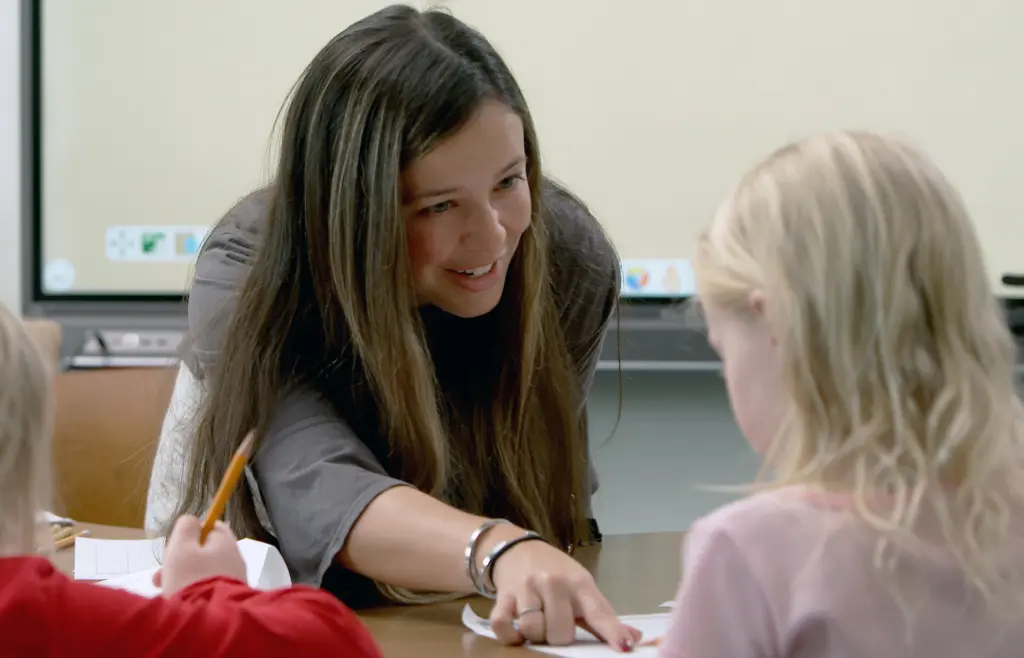
It is important to remember that corrective feedback in the moment is essential. This allows students to understand their error, how to fix it, and apply their new understanding right away. Here are some ways you can provide feedback for reading or spelling errors:
Watch as kindergarten teacher Ashton Smith notices a student's spelling error and provides corrective feedback to deepen his understanding of a new spelling pattern.

Hide Video Transcript
Show Video Transcript
Ashton Smith: So Noah, what letter do I need to put for ...
Noah: 'C'!
Ashton Smith: 'C.' Kiss your brain.
Narrator: The kindergartners in Ashton Smith's class recently learned that there are three ways to spell the /k/ sound. With a 'c', a 'k', or 'ck'. Often students will mix these up as they experiment with these patterns and learn how they work. Let's watch how Ms. Smith handles one of these expected mix ups.
Ashton Smith: This word is going to be really tricky, so you're going to have to make two decisions for your /k/ sound. Okay? So listen to your vowel and listen to where your /k/ sound is. Tapper's up. Your word is kick.
Students: Kick.
Ashton Smith: Let's tap it.
Together: /k/, /ĭ/, /k/. Kick.
Narrator: Ms. Smith and paraprofessional Diamond Jones. Circle the room as they check the student's work, either reinforcing the correct spelling or offering positive error correction, giving their students the chance to learn from their mistakes.
Ashton Smith: Good job, Tran. Okay, Noah, I have a question. Can we use 'ck' at the beginning of a word?
Noah: Yeah. Wait. No, at the end.
Ashton Smith: At the end. So not 'ck'. What would we put here?
Noah: 'T'.
Ashton Smith: What's your vowel sound?
Noah: /k/. Wait. 'K'!
Ashton Smith: Very good.
Narrator: This wasn't a random mistake, but a logical one. Noah did spell the /k/ sound just with the wrong letters for this situation. Ms. Smith gave Noah the feedback and time he needed to figure out the right letter. She's created an environment of trust where learning grows from mistakes. With Noah's permission, she's going to share this teachable moment with the whole class.
Ashton Smith: Noah wrote 'c', 'k', 'i', 'c', 'k', but we talked about it and can 'ck' go at the beginning of a word?
Students: No. It can't.
Narrator: And best of all, Noah comes out feeling great about what he learned.
Reading Universe is made possible by generous support from Jim and Donna Barksdale, the Hastings/Quillen Fund, an advised fund of the Silicon Valley Community Foundation, the AFT, the Emily Hall Tremaine Foundation, and anonymous donors. Special thanks to Hope Hill Elementary, Reading is Essential for All People, and Atlanta Public Schools. If you enjoyed this video, please subscribe to our YouTube channel @RUTeaching. Reading Universe is a service of WETA, Washington D.C., the Barksdale Reading Institute, and First Book.
Ashton Smith: My name is Ashton Smith and this is Reading Universe.
2. Whole Class vs. Small Group Instruction
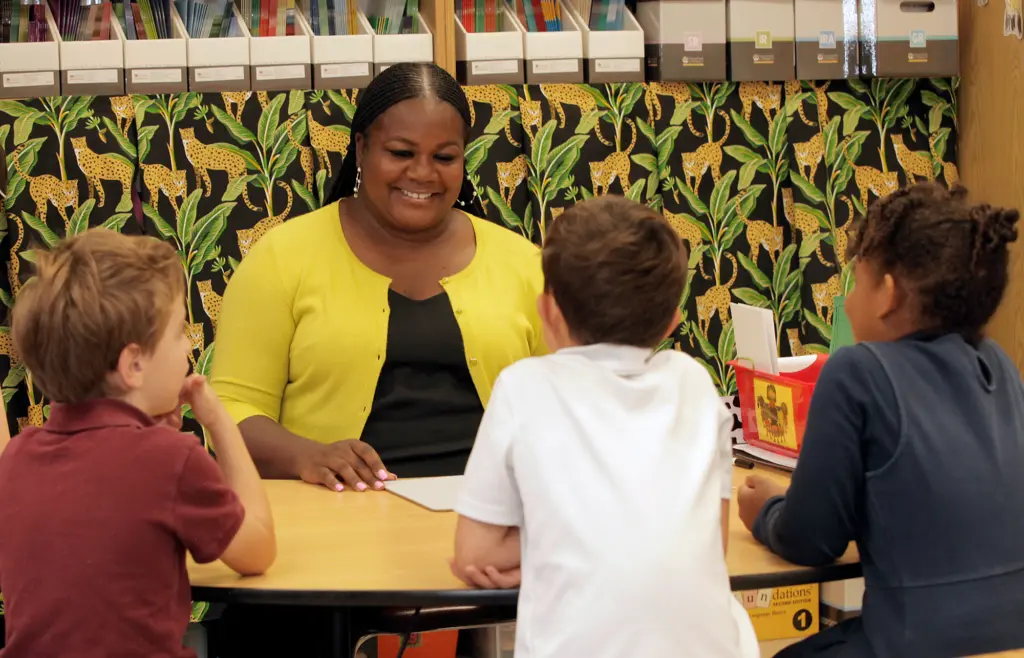
As you analyze student errors, you will probably notice trends in your class. If a majority of students are making a similar error, it suggests we typically want to reteach the skill to the whole class. For example, you may add a targeted phonological awareness warm-up focused on the sounds students are struggling with before your phonics lesson.
However, most of the time you will probably notice a few students, or even just one, who need additional support. This typically means that these students need additional practice opportunities. Here are some things you can consider to support these students:
- Change the intensity or duration — Provide more practice opportunities in small group outside of the whole group lessons. If students are already receiving small group support, consider adding additional days (for example, moving from three days a week to four days a week) or lengthening the sessions (If students are receiving 20 minutes of small group instruction, try 30 minutes.).
- Reduce the group size — If students are not making progress in a small group of five students, try reducing the group to two or one-on-one support.
- Try a different instructional routine — If students are struggling with word chaining, try Elkonin boxes or phoneme-grapheme mapping.

Short Vowel Elkonin Boxes
Elkonin boxes help students build phonological awareness. Use this activity to practice separating the sounds in words with short vowels like jet.
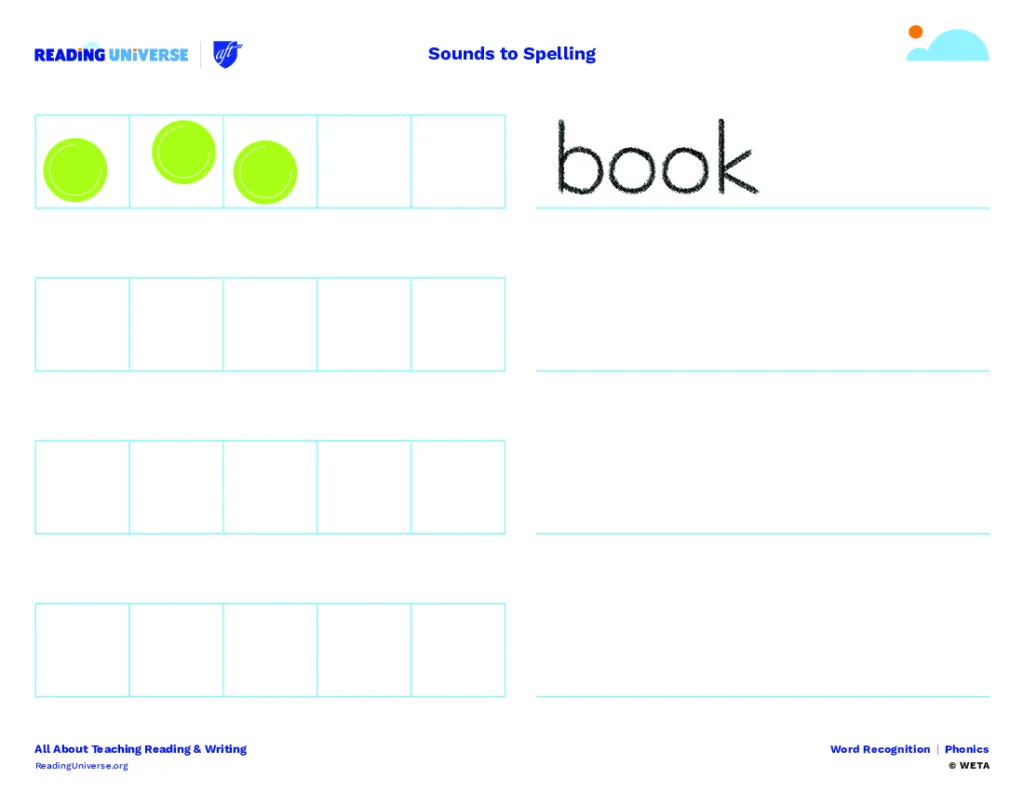
Sounds to Spelling Grid Activity
Sounds to Spelling is a word building strategy we use to teach students to match sounds to letters in order to spell a word in a spelling dictation lesson.
3. Word Choice
Sound Mismatch Errors (Phonological)
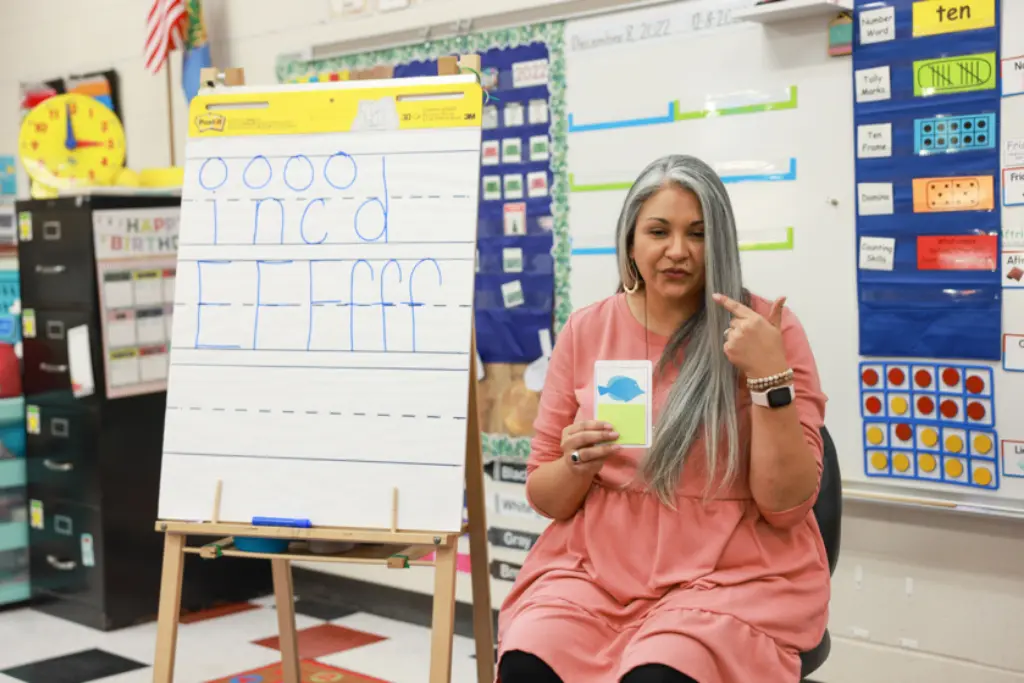
What You Might See
Students with dyslexia may read or spell pit for pet or bog for bag. We call these types of errors phonological.
Why You Might See This
If a student substitutes one vowel sound for another — /ĭ/ for /ĕ/ — this is a phonological error because the student is mispronouncing or not accurately perceiving the vowel sound in the word. Students can also substitute consonants, typically ones that are produced similarly, like /b/ and /p/. Or students may omit a sound from a blend, for example, 'sp' represented as 's'.
Strategies to Support Your Students
- Focus on articulation (how to produce the sound).
Try this routine to support students in making the sound:
- Have the student watch the instructor's mouth while they produce the sound.
- Then have the student look in a mirror at their own mouth while producing the sound.
For example, if the student is confusing /ĭ/ and /ĕ/, model the movement between the two sounds, starting with /ĭ/ and moving to /ĕ/. Then have the student do the same while looking in the mirror. You can also ask the student to place their hand under their chin to feel which sound has a more open mouth, in this case, /ĕ/. - Find the vowel sound on the sound wall or add it if it is not currently there.
- Use kinesthetic prompts to support differentiations. For example, /ĭ/ is formed with an opening that fits your fingernail in your mouth, whereas /ĕ/ fits an opening the size of the tip of your finger.
- Introduce one sound at a time, allowing a lot of opportunities to practice. Then contrast the two easily confused sounds, like /ĭ/ and /ĕ/, using pairs of words that differ only in the vowel sound. For example, use minimal pairs like pit-pet, bit-bet, big-beg, sit-set, rid-red, and ask the student to find the pairs, read each pair, and then discuss the different meanings.
- Include listening activities where students can hear a word and are asked to tap out the sounds, isolate the vowel sound, and then identify it by pointing to its corresponding picture on the sound wall.
- Link the listening activities to letters by having the student build words with letter tiles. Provide practice with easily confused sounds using a word chain, for example, pit → pet → bet → beg → big → dig.
