3.2 Explicitly Teach R-Controlled Vowels
R-Controlled Vowels Skill Explainer
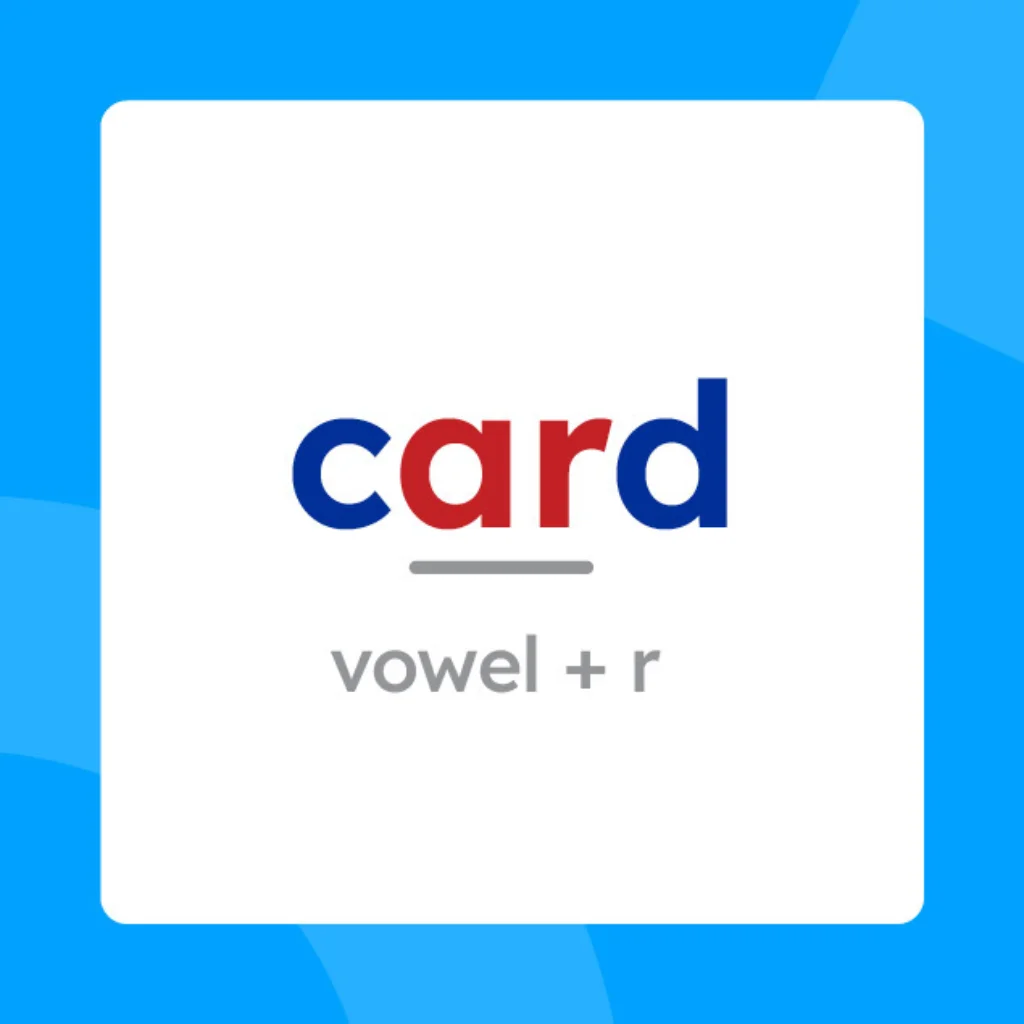
What is the vowel that you see?
[Students should say 'a'.]
What kind of letter do you see after the 'a'?
[Some may say a consonant or 'r'.]
Yes! I see a consonant and the consonant is an 'r'.

Teacher Tip
The grade you teach will determine how many r-controlled vowels you teach at a time. We recommend in the younger grades beginning with 'ar', then 'or', then mixing 'ar' and 'or'. Then teach 'er', 'ir', 'ur', separately. In older grades, you can teach multiple patterns at once.
Only introduce the flash card(s) that you will be explicitly teaching in your lesson.

R-Controlled Vowel Flash Cards with Pictures
Print these 5x7 letter flash cards with pictures to help students practice r-controlled vowels like 'ar'.

R-Controlled Vowel Flash Cards without Pictures
Print these 5x7 letter flash cards without pictures to help students practice r-controlled vowels like 'ar'.
Teaching R-Controlled Syllable Type


Walk students through reading the closed syllable vest.
Then have students put the two syllables together to make the word harvest.
Identifying the vowel and writing 'R' for r-controlled will be especially useful when students start dividing multisyllabic words. As soon as students become confident with this process, you should fade it out. Marking a syllable type is a scaffold and not the skill itself, so stop when students can decode without it.
However, each time students are learning a new syllable type, they'll go back to using all the steps for identifying a syllable until that new skill is mastered.
