Skill Explainer
8. For Students Who Need Additional Support with Sentence Combining
Sentence Combining Skill Explainer
I went to my cousins and we played on her brand new swing set and it started to thunder and lightning and we went inside and we looked for a fun game to play and we picked twister and we got all twisted up and we had fun and I was so happy.
How can I help my students?
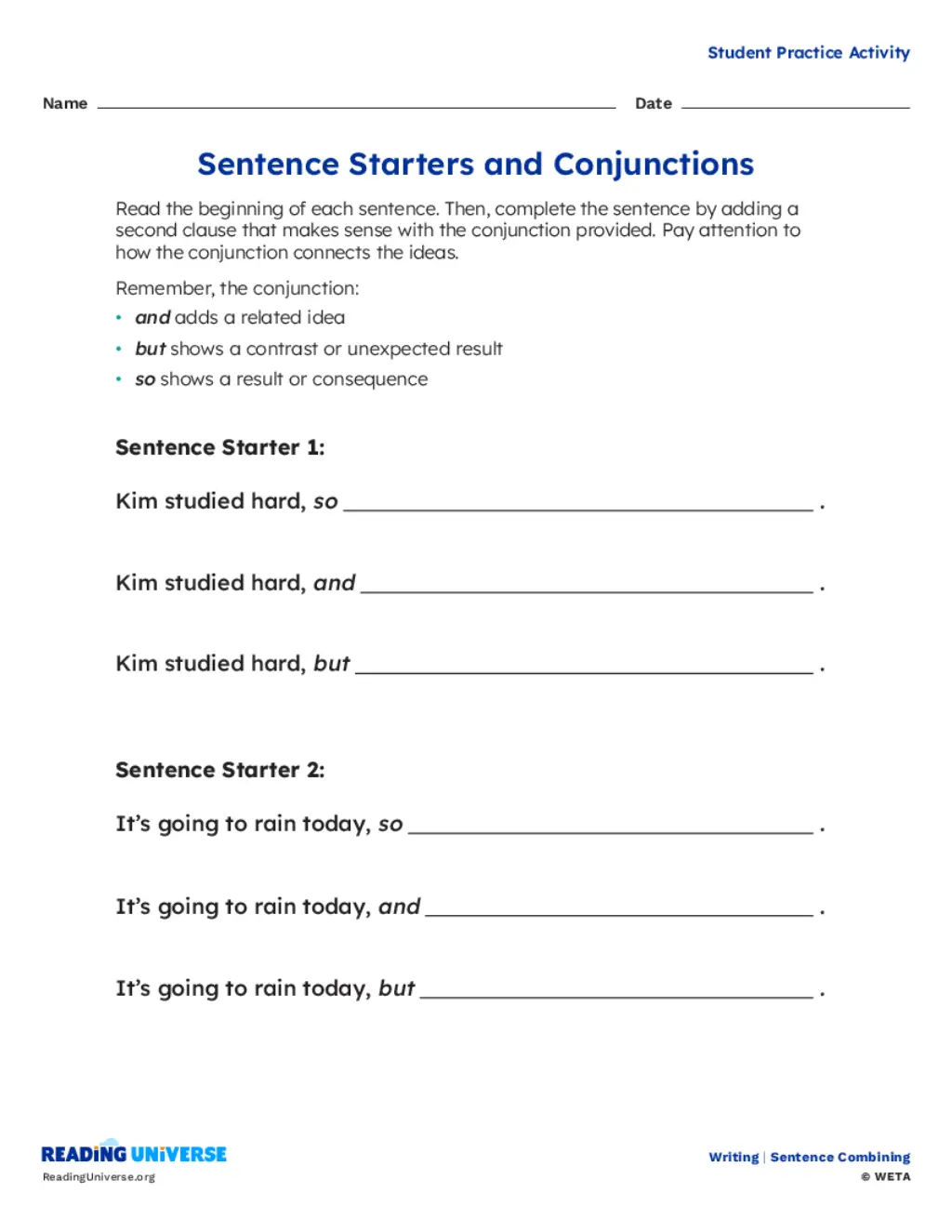
Sentence Combining: Sentence Starters and Conjunctions
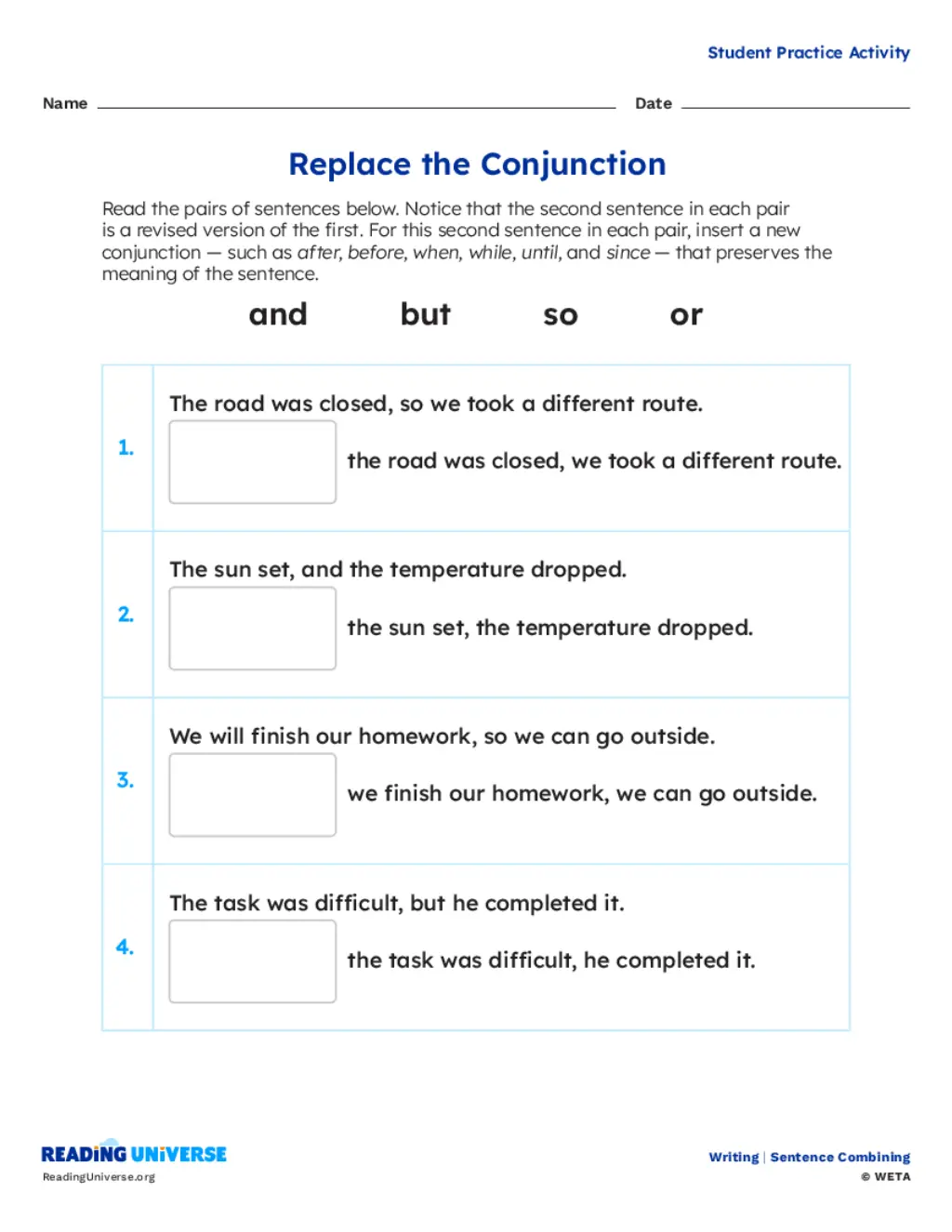
Replace the Conjunction
Support for students who need extra practice.
