1. Overview of Sentence Combining
Sentence Combining Skill Explainer
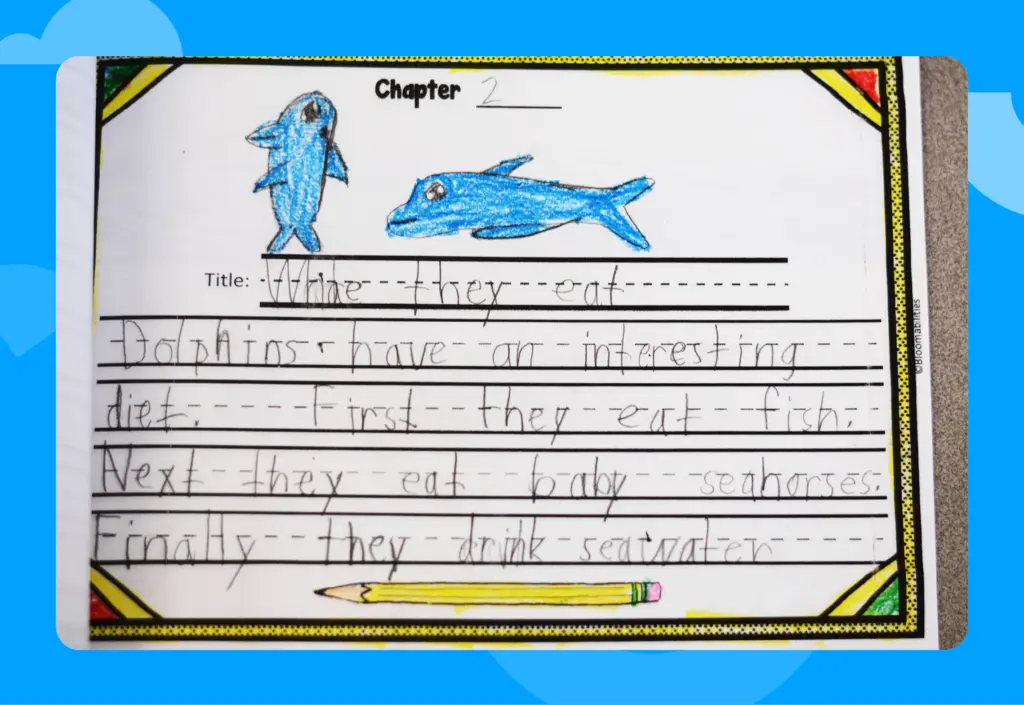
Once you draw attention to conjunctions, or connector words, students begin learning how ideas connect. They learn to add information, show contrast, explain cause and effect, and present choices. Suddenly, their writing becomes smoother, more sophisticated, and more reflective of the complex thinking they're already capable of.
The best part? Most students pick it up quickly with direct explicit instruction and practice.
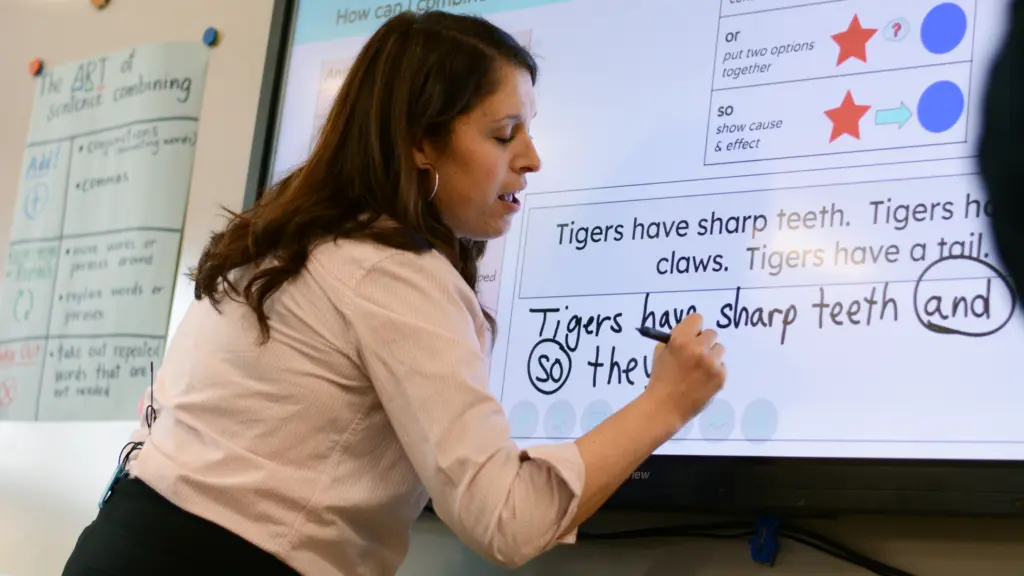
In this skill explainer, we'll show you how to give students an immediate, concrete strategy for writing longer, stronger, and more meaningful sentences with the coordinating conjunctions and, but, so, and or.
Let's Watch! In the video below, Heather Adams of Oak Street Elementary School in Franklin, Massachusetts, reviews with her third-grade class how conjunctions like and, but, or, and so help take simple sentences and turn them into more complex, rich writing. Notice how Ms. Adams gives students short sentences and asks them to combine them into a single grammatically correct sentence by using conjunctions.
Hide Video Transcript
Show Video Transcript
Heather Adams: Are you ready? All right, we're going to start by just going over these four important words. Let's read them out loud together. What's our first conjunction?
Together: And.
Heather Adams: We put related ideas together. What's our second conjunction?
Students: But.
Heather Adams: But. This is when we have two contrasting ideas, things that are different than each other. What about this third one?
Students: Or.
Heather Adams: Or. I remember last time Molly said, "chicken patty or salad." We use this for choices or options. And then finally, what's this last one?
Students: So.
Heather Adams: So. I think so might be my favorite because so shows cause and ...
Together: effect.
Heather Adams: This happens, so this happens. Exactly.
How does sentence combining develop students' writing skills?

Hide Video Transcript
Show Video Transcript
"Syntactical awareness" ... what is that? It's that inherent knowledge of the rules of the language that you speak. So, for example, in English, we put our adjectives in front of words. So, if I say, "...the flat gray table," my adjective is in front of the table. In other languages — romance languages, — the adjectives come after. So I would say, " ... the table flat gray." Now that doesn't sound right to our ears, right? Because we've developed this sense of how the word should be in order within a sentence in the language that we speak, and that develops when children are very, very young. It's why we want to be reading to children and talking to children in complete sentences. So they build that ability to have syntactic awareness. Now, some students come to school with better awareness than others, but we can teach that. Now, there are several things — especially as it relates to writing, developing the ability to write a good quality sentence — that we know from research can be helpful.
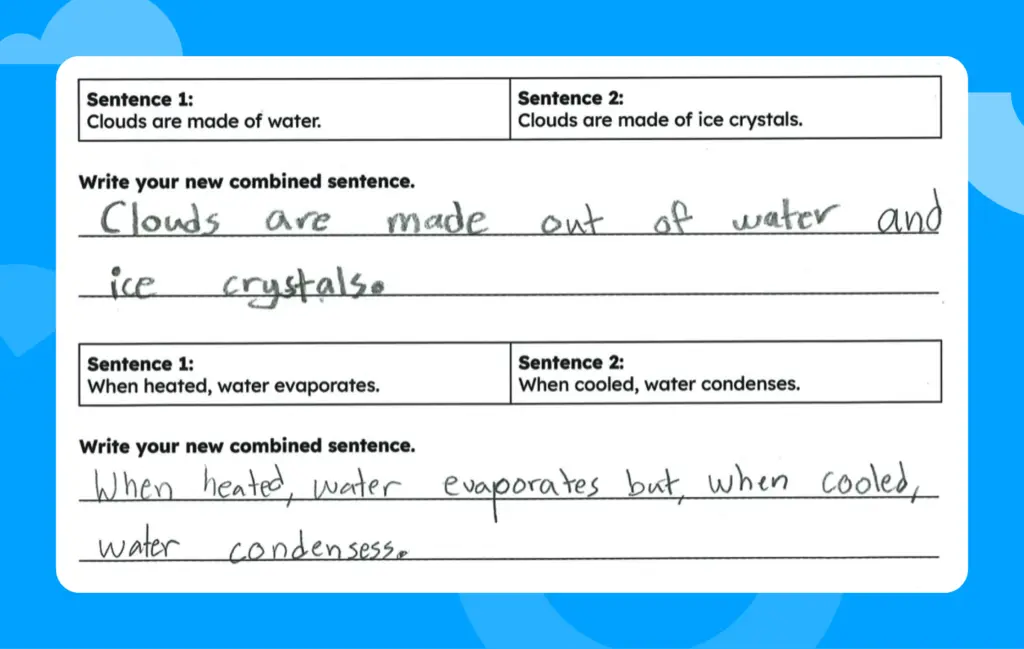
One of those is called "sentence combining." There has been research on sentence combining from the 1950s and 60s and, over and over again, what it shows is that it is a way to develop syntactic awareness and develop students' ability to manipulate words in sentences. Sentence combining is very simple. I have a very simple sentence, "The movie was good, the book was good." Can you combine them into one sentence? "The book and the movie were good." Or, "The movie and the book were good." It's a very simple thing to do, and it's been found to be effective from kindergarten all the way up through college level. Now, one of the findings in the research — and Steve Graham and his colleagues who wrote a research report synthesizing it , it was a meta analysis of research, it was called "Writing Next" — and one of what they did was identified the 11 things that over and over again seem to show up as being effective for improving the writing of students in grades three and above. Sentence combining is in that list, and they make the point that it's even been much more effective in terms of developing that syntactic awareness than other forms of what's called traditional grammar. By traditional grammar, I'm referring to things where you label what part of speech is that, or where you ask students, "What is a noun, what is an adjective?" And so things like sentence combining that push students to manipulate words and play with words is going to do much more towards developing that syntactic awareness than the more traditional approaches to teaching grammar.
