2. When to Teach the Types of Sentences
Types of Sentences
Grade Level
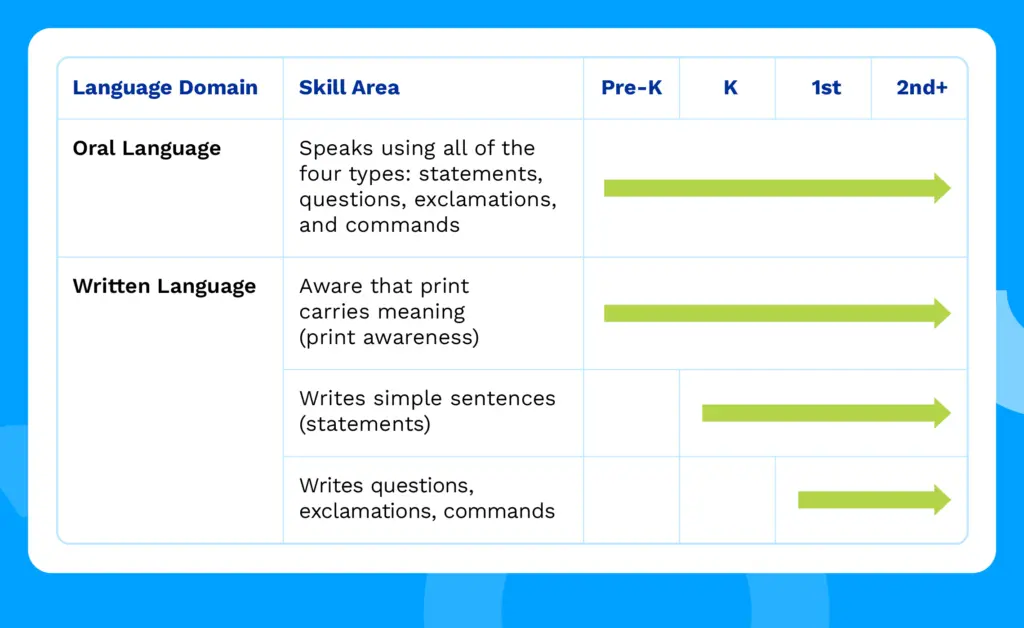
Then in first grade, they're introduced to writing questions, followed by exclamations, and commands. Your students will continue developing these skills throughout second and third grade.
In third grade and beyond, you'll focus your explicit writing instruction on more advanced sentence writing skills. However, even as your students' writing skills advance, it's important to regularly encourage them to use a variety of sentence types in their speaking and writing.
Prerequisite Skills
Teaching the Sentence Types Begins with Oral Language

1. Model and identify sentence types in everyday conversations. Use natural opportunities throughout the day to highlight how different sentence types are used for communication. For example, as you give your students instructions for lining up for lunch, you could say,
If you're wearing blue, please line up for lunch. This is a command because I'm giving you directions.
This gives students a chance to hear a command being used in everyday conversation.
2. Build opportunities for students to use different sentence types during turn and talk conversations. Prompt students to take turns asking a question and making a statement. For example, you might tell your students to turn to a partner and ask them a question that includes their new vocabulary word, habitat. They might ask, "What is a bear's habitat like?" Their partner might respond, "Bears like habitats where there's fresh water and vegetation."
3. Highlight different sentence types in books during read-alouds. During read-alouds, pause on occasion to identify sentence types and discuss how they help readers understand the story better. For example, in the book Llama Llama Red Pajama by Anna Dewdney, the mother says, "Please stop all this llama drama and be patient for your mama." This is a command sentence; she means business!
When you use these strategies you're reinforcing your students' understanding of sentence types and preparing them to eventually write them.
Your students are ready to write different sentence types when they can do these things:
- Identify and use the four sentence types in their oral language. You can use this activity to determine if your students have mastered this skill.
- Demonstrate phonetic spelling and basic handwriting skills.
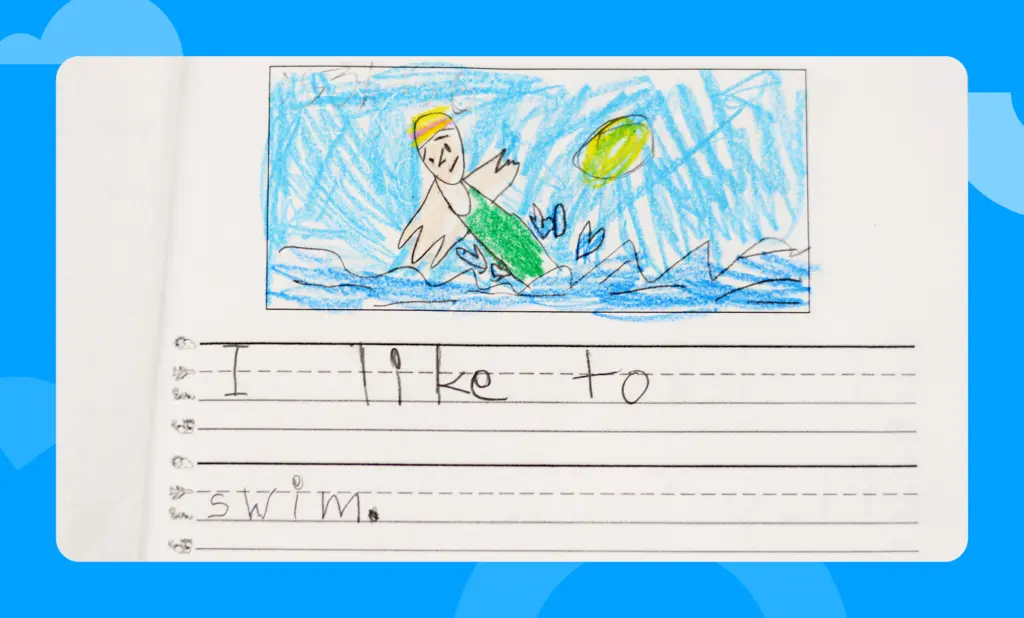
- Write a simple sentence with increasing fluency. This means their accuracy is improving, and they're getting faster.