3.6 Explicitly Teach the Suffix '-ed'
Suffixes Skill Explainer
The Three Sounds of Suffix '-ed'
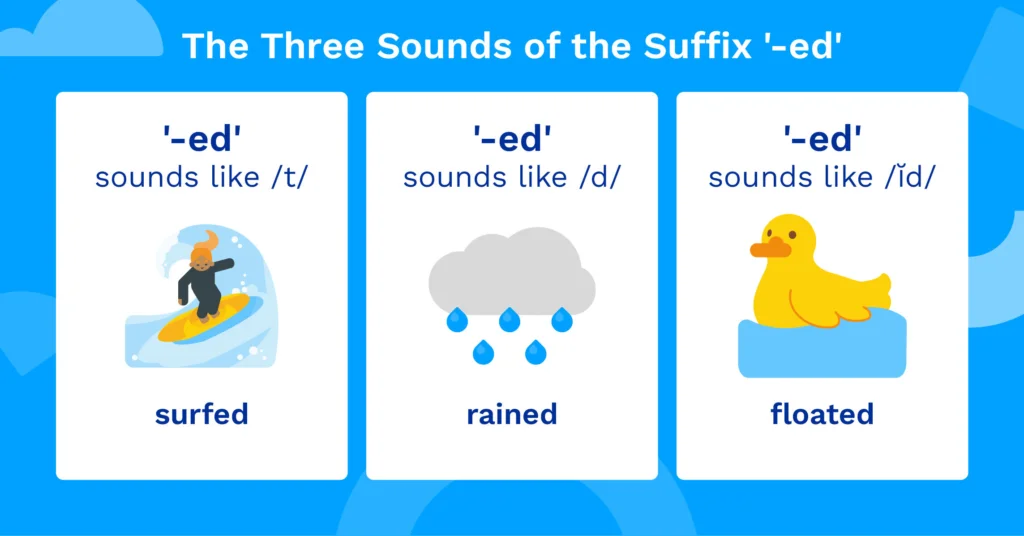
1. When the base word ends in an unvoiced sound, like /f/ in surf, the suffix '-ed' will be pronounced /t/. Listen to the audio file below; then repeat what you hear.
2. When the base word ends in a voiced sound, like /n/ in rain, the suffix '-ed' will be pronounced /d/. Listen to the audio file below; then repeat what you hear.
3. When the base word ends in a /t/ like float, the suffix '-ed' is pronounced /ĭd/.

Teacher Tip
Pronunciations of '-ed'
Understanding how the final sounds of base words affect the pronunciation of '-ed' is teacher knowledge. Students should learn the three sounds of '-ed,' but you don't need to explicitly teach how ending sounds affect pronunciation.
Choosing Words for Your Lesson
Teacher Tip
Went and Did: Two Examples of Irregular Past-Tense Verbs
Some verbs are called irregular because they don't form the past tense by simply adding the suffix '-ed.' Instead, the entire word changes. For instance, go becomes went in the past tense, or do becomes did.
You might hear students say, "I goed to the store."
We can support their oral language development by modeling the sentence, "I went to the store."
You'll teach these exceptions at another time. For now, you want to just work on words that follow the patterns being explicitly taught so student can learn how to read and spell words with the suffix '-ed'.
Now it's time to teach!
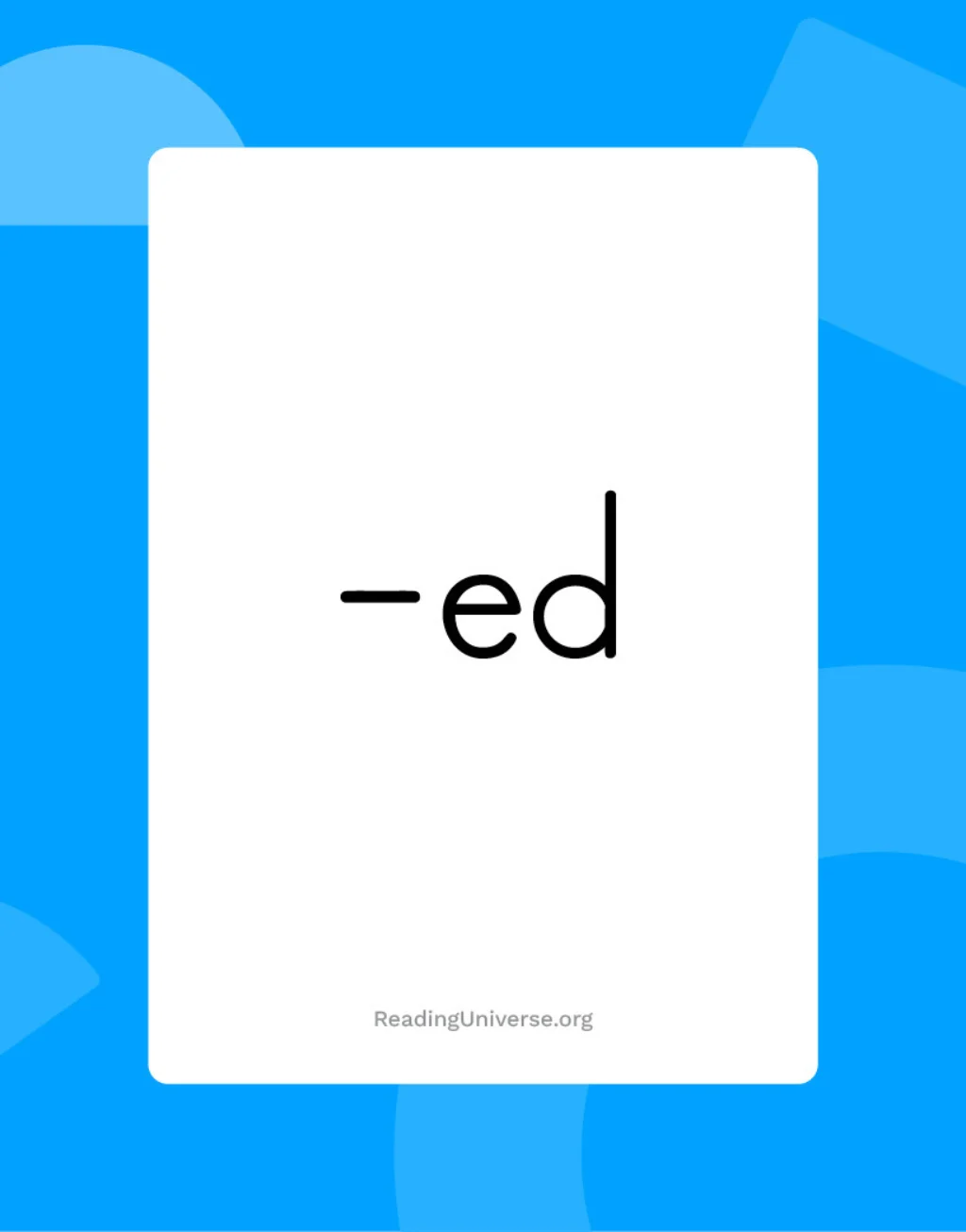
This is the suffix 'e-d'. The suffix 'e-d' is special because it can make three different sounds!
Listen to what we will say when we see this card:
"The suffix 'e-d', can say /d/, /t/, and /ĭd/. It makes a word past tense. This means that it has happened already."
Repeat.
