The suffix '-er' is a morpheme that is added to a base word. It can indicate:
a person who does something, like a teacher
a thing that does something, like a blender, or
something is more than something else, like the word faster.
By the time your teaching suffix '-er' to students, they will have already learned that the r-controlled vowel 'er' says /er/ like in the words fern, clerk and verb. Your suffix 'er' lesson will focus on word meaning.
Depending on how it is used, this suffix can be both an inflectional and derivational suffix. As an inflectional suffix, it does not change the part of speech of the word. For example, the word cold is an adjective; and when we add -er to make colder, it remains an adjective. As a derivational suffix, the part of speech is changed for the word when the suffix is added. For example, the word teach is a verb; and when we add -er to make teacher, it becomes a noun.
Choosing Words for Your Lesson
On your first introduction to '-er', it's helpful to use base words that remain unchanged, meaning no doubling of the final consonant, as in robber, and no dropping of a magic 'e', as in baker. Using words with two consonants after a short vowel makes it easier to add the suffix. Here are some examples of words to choose:
Words with ending blends, like print and cold
Words that end with digraphs, like fresh and crush
Words that end with glued sounds, like sing and blink
Words that follow the FLoSS(Z) rule, like call and buzz
Words that end with '-ck', like lock and kick
Words that end with '-tch', like pitch and catch
Words with r-controlled vowels, like smart and burn
These word choices not only simplify the addition of '-er' but also allow students to review previously taught phonics patterns.
Now it's time to teach!
When we explicitly teach suffix '-er' we spell out the suffix, say the sound, and tell students the meaning.
You might say,
The suffix 'e-r' says /ěr/. It means: a person who, a thing that, or more.
<p><i>The suffix 'e-r' says /ěr/. It means: a person who, a thing that, or more.</i></p>
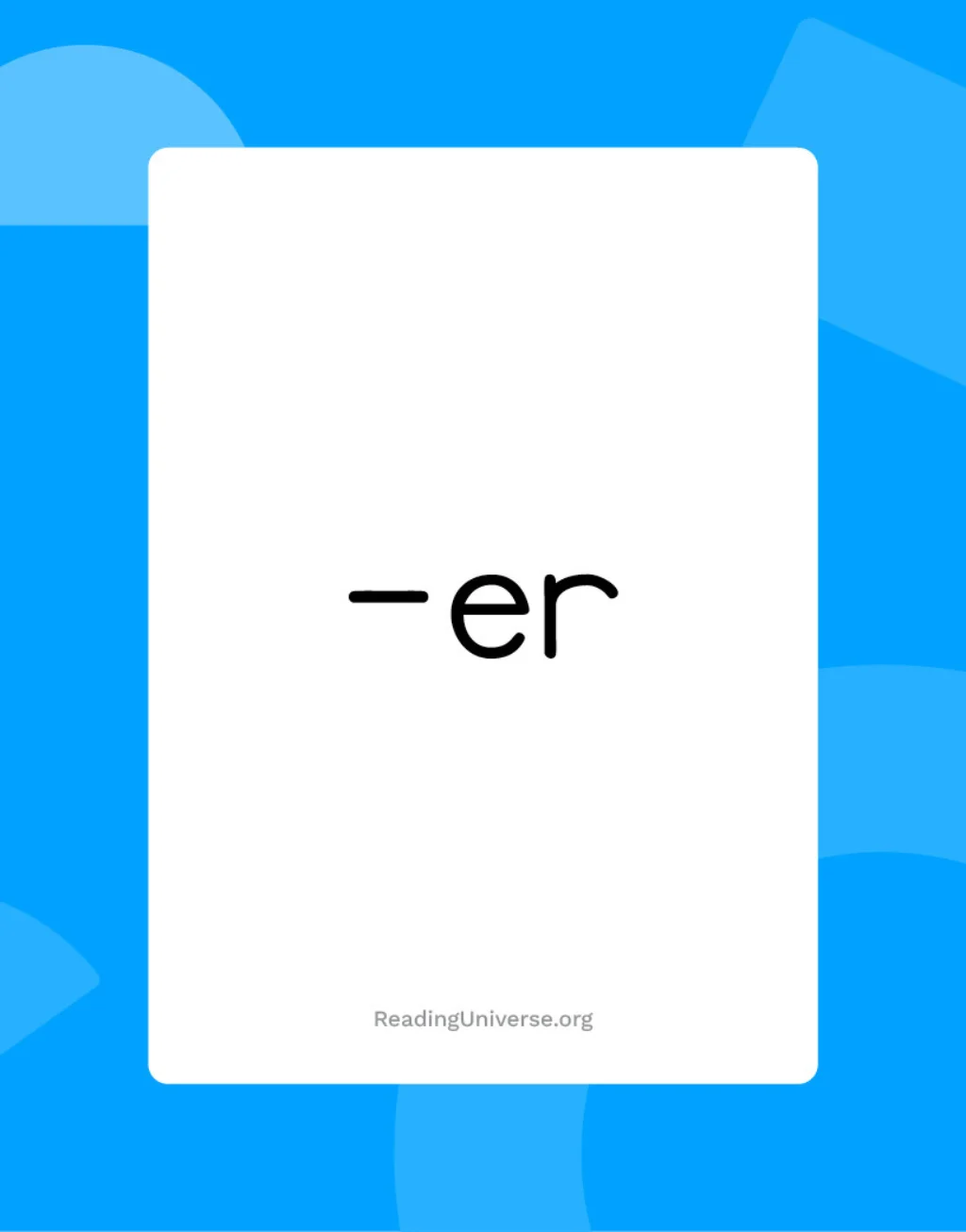
Show the students the suffix '-er' flash card with the keyword picture.
Say,
We have already learned that 'e', 'r' says /er/ like in the word fern. We know that the sound /er/ is in the words clerk and verb.
Today I am going to show you a new card that has 'e', 'r' on it; but instead of being a part of the base word, this /er/ is a suffix. Remember: a suffix is something that gets added after a base word and holds meaning.
Next, grab your suffix '-er' flash card.
Say,
Listen to what we will say when we see this card.
The suffix 'e-r' says /er/. It means: a person who, a thing that, or more.
Repeat.
<p><i>The suffix 'e-r' says /ěr/. It means: a person who, a thing that, or more.</i></p>
Students repeat,
The suffix 'e-r' says /er/. It means: a person who, a thing that, or more.
Say,
The suffix '-er' can mean a person who does something. A teacher is a person who teaches. The base word is teach; and when you add the suffix '-er', it makes it a person who teaches.
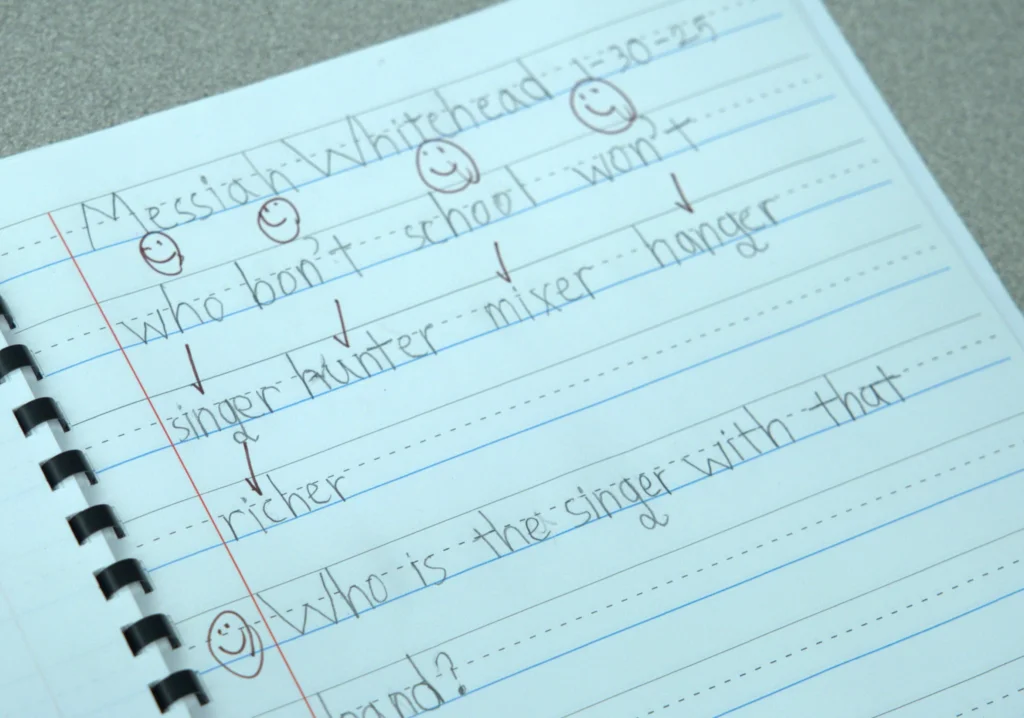
Write the word singer on the board.
Say,
Turn and tell your partner what the base word is and what it means once you add the suffix '-er.' [Base word is sing. Singer means someone who sings.]
The suffix '-er' can also mean a thing that does something. A blender is a thing that blends.
Write the word printer on the board.
Say,
Turn and tell your partner what the base word is and what it means once you add the suffix '-er.' [Base word is sing. Singer means someone who sings.]
The suffix '-er' can also mean a thing that does something. A blender is a thing that blends.
Write the word printer on the board.
Say,
Turn and tell your partner what the base word is and what it means once you add the suffix '-er.' [The base word is print. Printer means something that or someone who prints.]
Finally, the suffix '-er' can also mean more, or it can compare. For example, I am short, but my daughter is shorter than I am. Shorter helps compare and show that my daughter is not as tall as I am.
Watch and listen to what we'll say when we see this card.
"The suffix '-er'
says /er/.
It means: a person who, a thing that, or more."
Say and have students repeat,
The suffix '-er'
says /er/.
It means: a person who, a thing that, or more.
Write the word her on the board. Say,
Here 'er' is part of the base word. If I take away the 'e', 'r', I am left with 'h', and 'h' is not a word. This word her does not have the suffix '-er'.
Write the word tall on the board. Have students read the word. [tall] Now add the suffix '-er' to the word. Ask students to read the new word.
taller
Write on the board: My dad is taller than my mom.
Have students read the sentence aloud together.
My dad is taller than my mom.
Say,
The suffix '-er' that is added to tall tells me that the dad is "more tall" than the mom.
Write the following words on the board one at a time and have students read them aloud chorally: small, work, help, and fast.
Then add the suffix '-er' to each word and have students read the new words. Discuss how the meaning of the word changed when you added the suffix.