3.7 Explicitly Teach the Prefix 'pre-'
Prefixes Skill Explainer
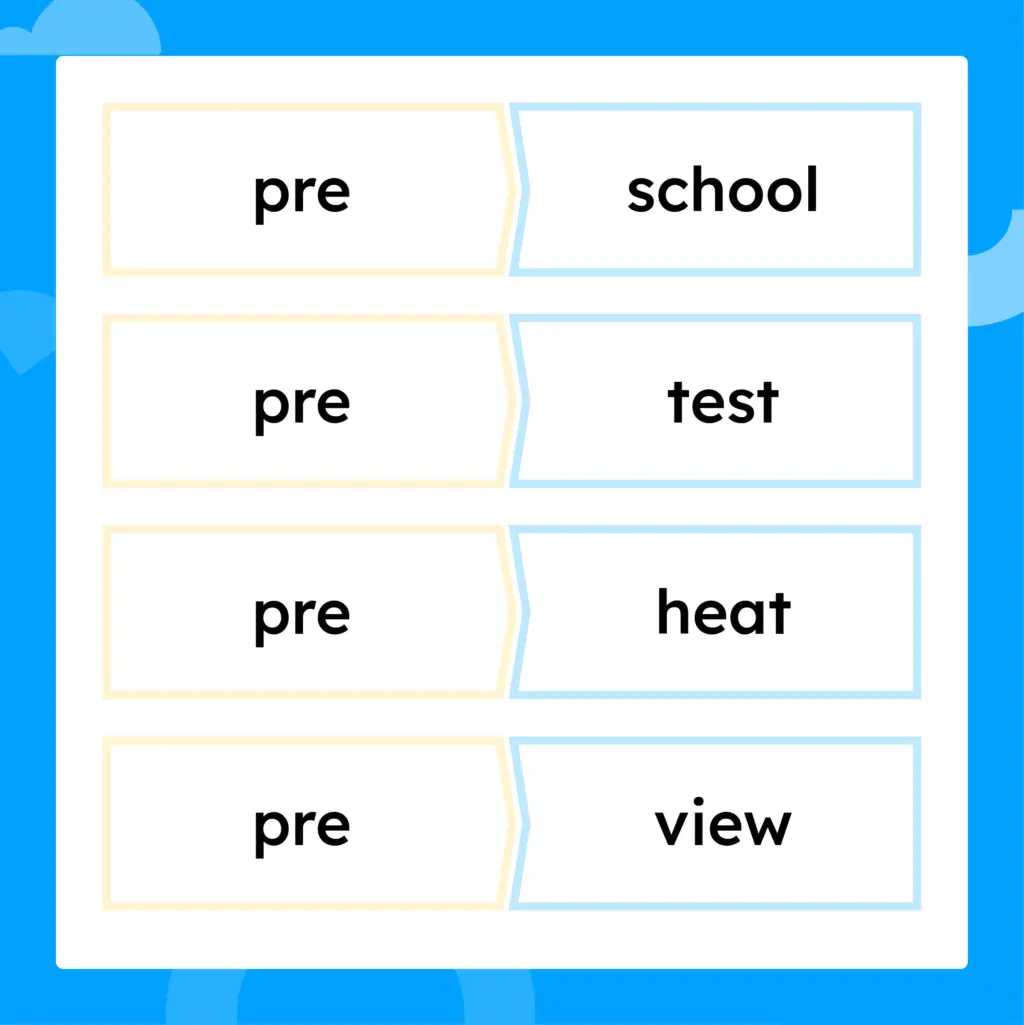
The prefix 'pre-' is a morpheme that means "before" or "in advance." You can add the prefix 'pre-' to nouns to show that something comes before something else:
nouns
pre + school = preschool (before school)
pre + test = pretest (a test before another one)
When you add the prefix 'pre-' to verbs, you show that an action happened before something else:
verbs
pre + heat = preheat (to heat something before you use it)
pre + view = preview (to see something before)
When teaching the prefixes, we usually don't teach students that the prefix makes a specific sound. That's because the pronunciation can change depending on the base word. For example, 'pre-' is pronounced /prē/, like in pretest, or /prĕ/, like in preface.
When we teach it or talk about it with our students, we spell it out: "the prefix 'p', 'r', 'e'." It sounds like this:
Now it's time to teach!
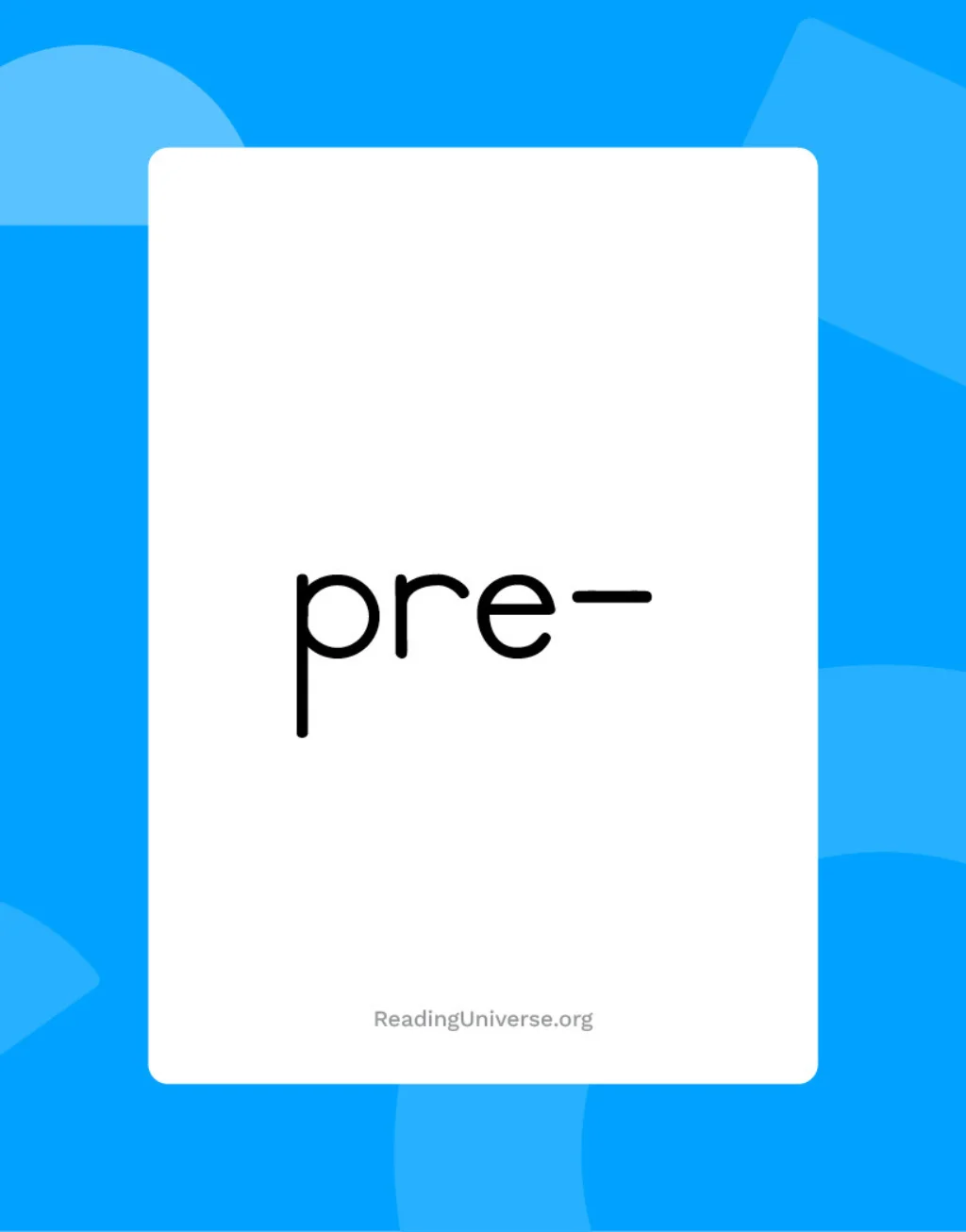
This is the prefix 'pre-'.
The prefix 'p-r-e' means "before" or "in advance."
Repeat.
