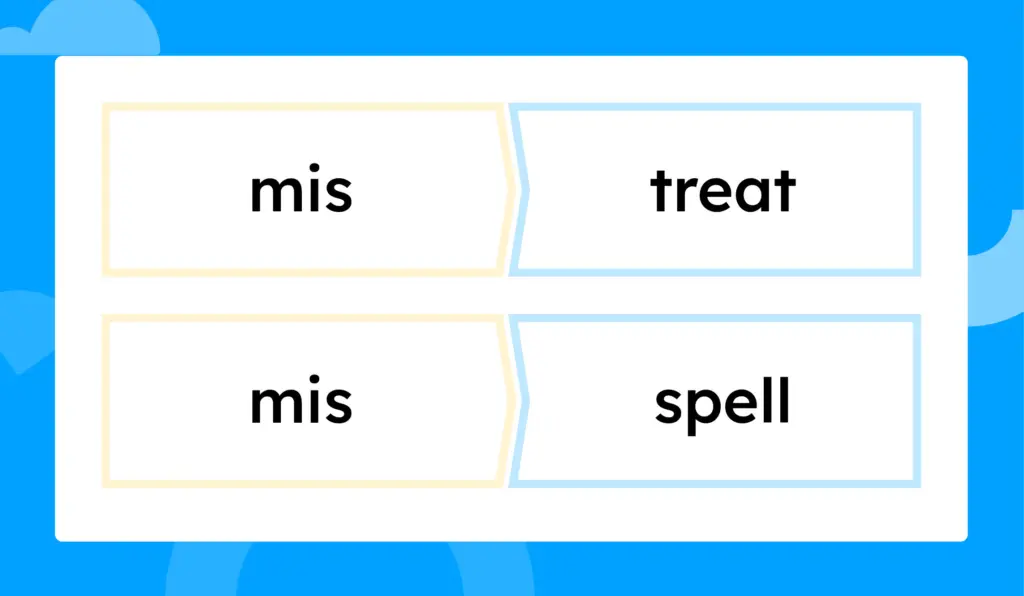
The prefix 'mis-' is a morpheme that means "bad" or "wrong." We usually add 'mis-' to a base word that's a verb:
mis + treat = mistreat (to treat badly)
mis + spell = misspell (to spell incorrectly)
Unlike some prefixes, the prefix 'mis-' is generally stable and usually pronounced /mĭs/, as in mistake.
When we teach the prefix 'mis-' or talk about it with our students, we spell it out like this: "the prefix 'm', 'i', 's'." It sounds like this:
<p>the prefix 'mis-' </p>
Now it's time to teach!
Say,
Today, we are going to learn another new prefix. Remember, prefixes come before a base word and hold meaning.
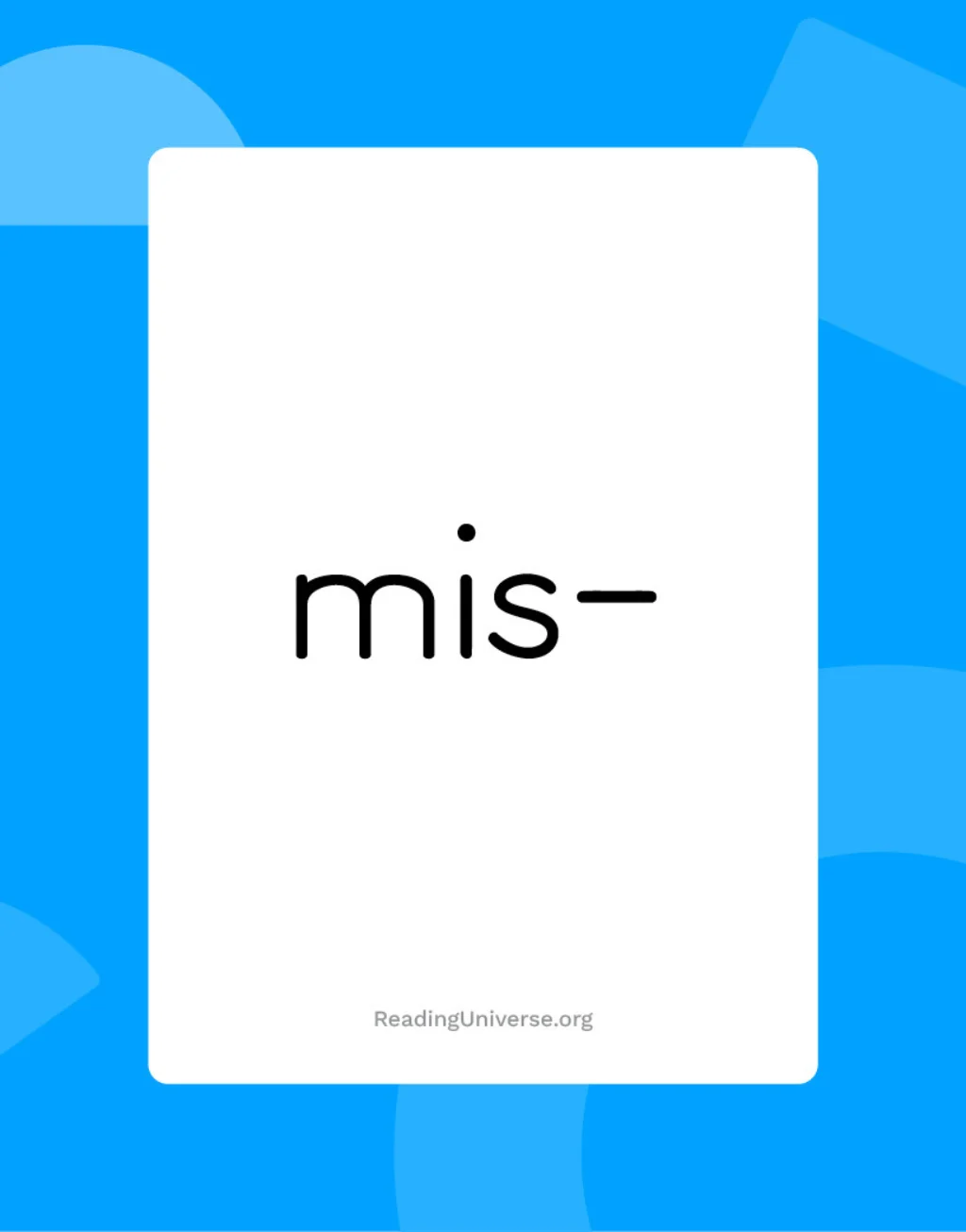
Show the students the prefix 'mis-' flash card.
Say,
This is the prefix 'mis-'.
The prefix 'm-i-s' means "bad" or "wrong."
Repeat.
<p>The prefix 'm-i-s' means "bad" or "wrong."</p>
Students repeat,
The prefix 'm-i-s' means "bad" or "wrong."
Write the word led on the board.
Ask,
If I add the prefix 'mis-' to the word led, what is the new word?
Students answer,
misled
Say,
Yes, misled, like in the sentence, "I was misled by the map and ended up walking the wrong way." The word misled has the prefix 'mis-', which tells us that the map told me the wrong way.
Hold up your prefix 'mis-' card again.
Say,
Remember, unlike our letters, patterns, and suffix cards, we don't say what the prefix "says" when we do the flash cards, because the sound can change depending on the base word it's added to. When we see a prefix card, we will spell the prefix and say the letter names.
Watch and listen to what we will say when we see this card. The prefix 'mis-' means "bad" or "wrong."
Say and have students repeat,
The prefix 'mis-' means "bad" or "wrong."
Write the following words on the board one at a time and have students read them aloud chorally:
spell, match, print
Then add the prefix 'mis-' to each word and have students read the new words. Discuss how the meanings of the words changed when you added the prefix.