3.3 Explicitly Teach the Prefix 'un-'
Prefixes Skill Explainer
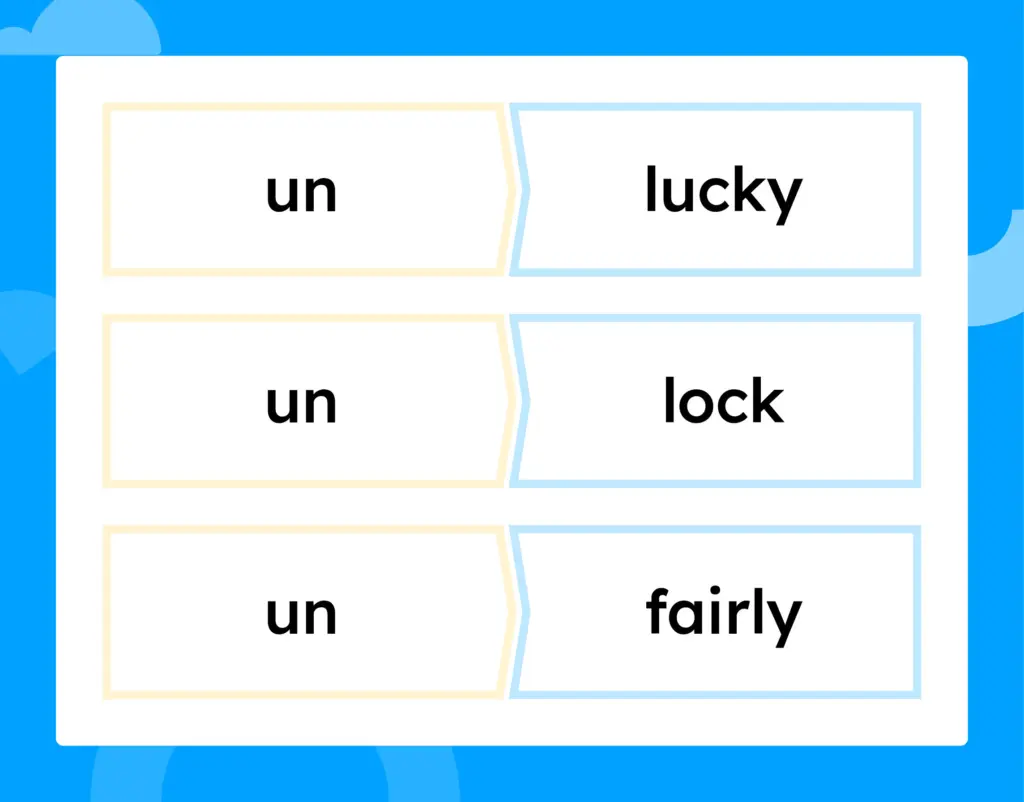
The prefix 'un-' is the most common prefix in the English language. We add it before a base word, and it means "not" or "the opposite of." You can add the prefix 'un-' to:
adjectives
un + lucky = unlucky (not lucky)verbs
un + lock = unlock (the opposite of lock)adverbs
un + fairly = unfairly (the opposite of fairly)
Unlike some prefixes, the prefix 'un-' is generally stable and is usually pronounced /ŭn/, like in unfold or unhappy.
When we teach it or talk about it with our students, we spell it out: "the prefix 'u', 'n'." It sounds like this:
Now it's time to teach!
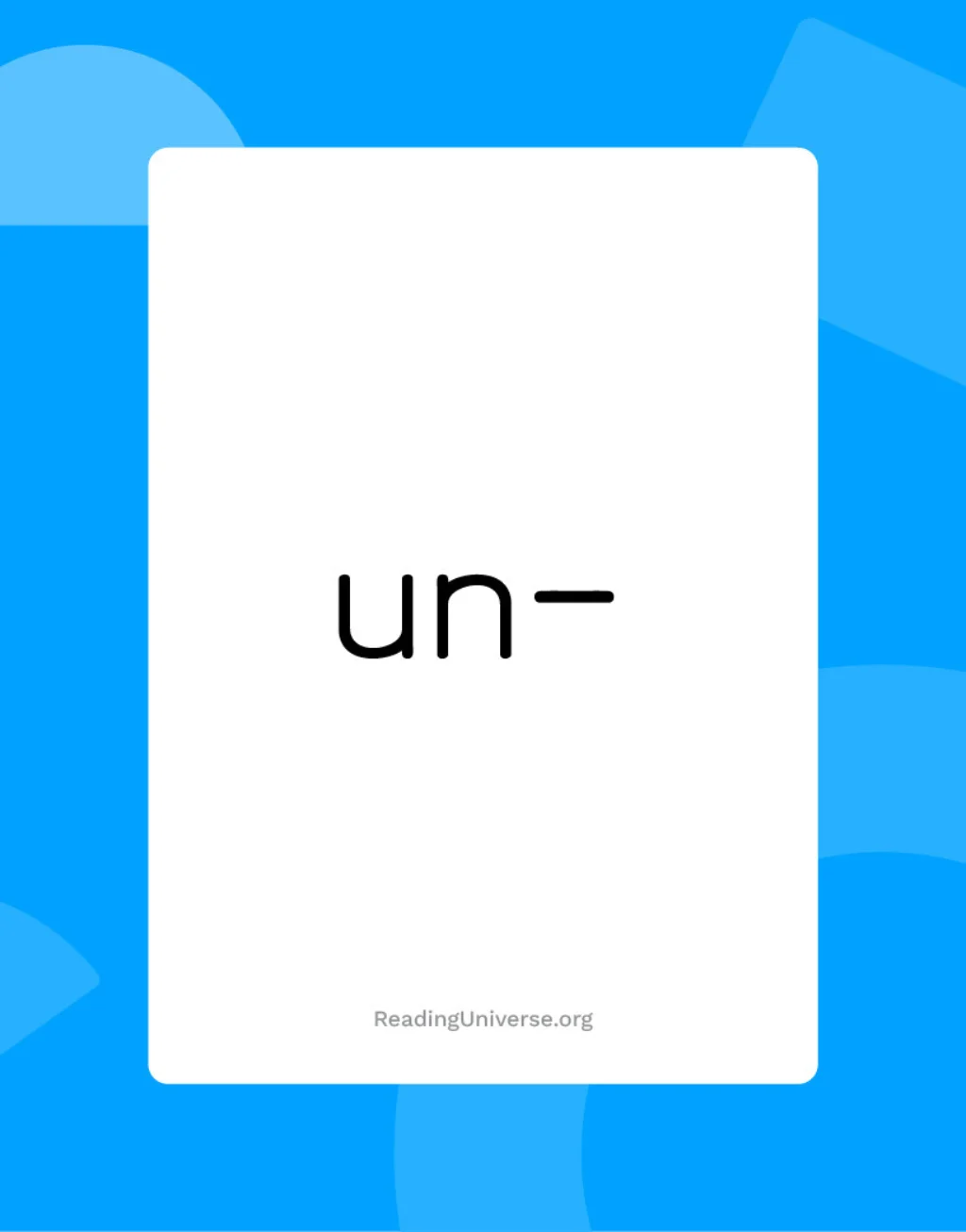
Today we're going to learn about something new called a prefix. We've been learning about suffixes, which come after a base word and hold meaning. Prefixes come before a base word and also hold meaning.

This is the prefix 'un-'.
The prefix 'un-' means "not" or "the opposite of."
Repeat.
The prefix 'un-' means "not" or "the opposite of."
If I add the prefix 'un-' to this word, what new word do I get?
unlock
Yes, unlock, like in this sentence: "I will unlock the door." The word unlock has the prefix 'un-', and the prefix 'un-' tells us that unlock means it's not locked.
Let's say the word again together.
unlock
What is the prefix in this word?
'un-'
Unlike with our letter, pattern, and suffix cards, we don't say what the prefix “says” when we show the prefix card, because the sound of a prefix can change depending on the word we add it to. When we see a prefix card, we'll spell the prefix and say the letter names.
Watch and listen to what we'll say when we see this card. The prefix 'un-' means "not" or "the opposite of."
The prefix 'un-' means "not" or "the opposite of."
