1. Let's Start with the Taxonomy!
Here's a Demo
Watch the video or open the taxonomy in a new window and give it a try! Be sure to expand the full taxonomy to get a view of all of the skills and see how they are connected.

Hide Video Transcript
Show Video Transcript
[Music] If you teach reading, you know how rewarding it can be. But you've probably also found that in every class there will be students who really struggle with learning to read.
Reading Universe is here to help. With expert guidance we've developed a new framework to support educators everywhere. It's called the Reading Universe Taxonomy.
How does this free professional resource work? It's built upon the leading research on how we learn to read. We are born with the ability to learn oral language, but making sense of the written word doesn't come naturally; so we need to teach students that the letters on a page represent the sounds we all use to speak with each other.
The path to literacy is through word recognition. Children need to crack the alphabetic code using phonological awareness and phonics. They need to be able to hear that a spoken word like net is made up of separate sounds: /n/, /e/, /t/. That's phonological awareness. And they need to connect those sounds to the letters of the alphabet to see 'n', 'e', 't' and read net. That's phonics.
But being able to read words is just one part of the process. Students also need to understand what the words mean. That's called language comprehension. As children gain more knowledge of the world around them, they begin to recognize more of the words that they sound out. Then they can build on their knowledge through more reading. Only students who develop word recognition and language comprehension can achieve reading comprehension. It takes both to become a good reader.
Inside the Reading Universe Taxonomy you'll find everything you need to know about how to teach the reading skills your students need to master. Each literacy component is broken down into its many skills and processes. For each skill we show why it matters and how to teach it effectively, and we offer ideas for supporting students who need extra help. We don't just describe effective teaching, we show it with in-classroom video filmed in schools around the country.
Ongoing assessment is critical to effective teaching, so we provide guidance for determining what each student needs and how to tailor your instruction to meet those needs. Reading comprehension is not just one skill. It's the product of all the many skills that we teach our children.
We hope the Reading Universe Taxonomy will become your trusted go-to guide and that, together, we can give more children the chance to excel as readers and in their lives. This is Reading Universe.
2. Explore Example Skill Explainers
3. Continuums and Checklists to Guide Instruction
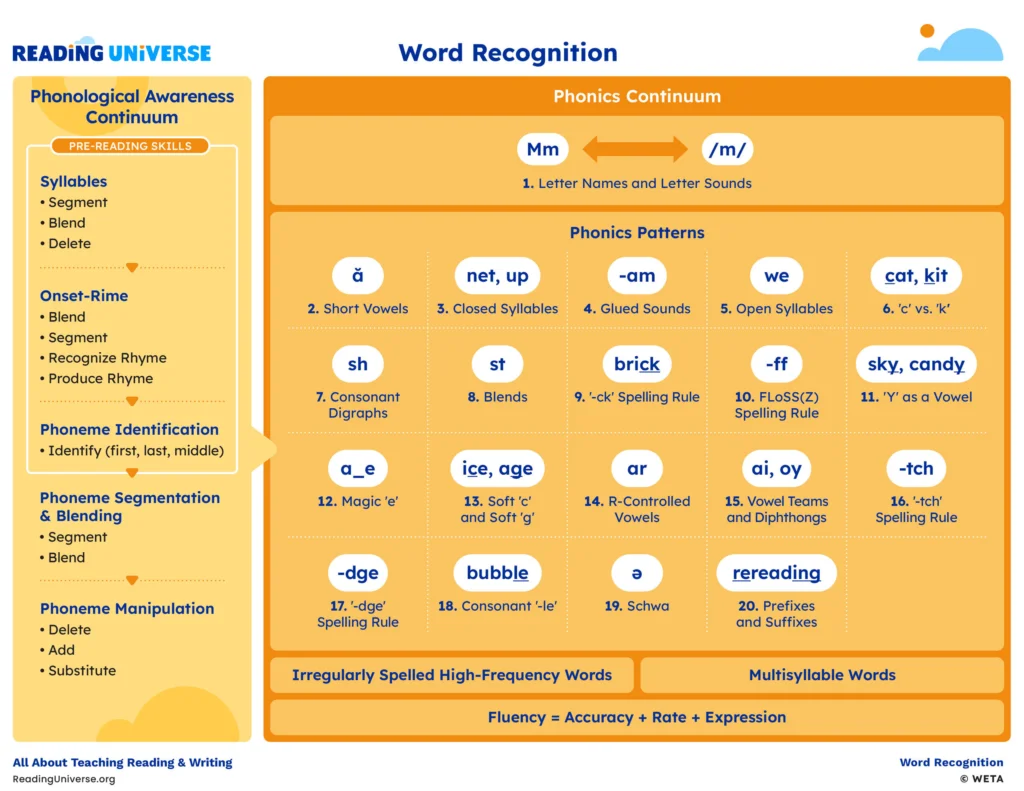
Word Recognition Continuum
Use this scope and sequence to know when to teach each skill.

Phonics Lesson Daily Checklist
Use this routine to make the most of your 30-minute phonics block.
4. Collection Pages
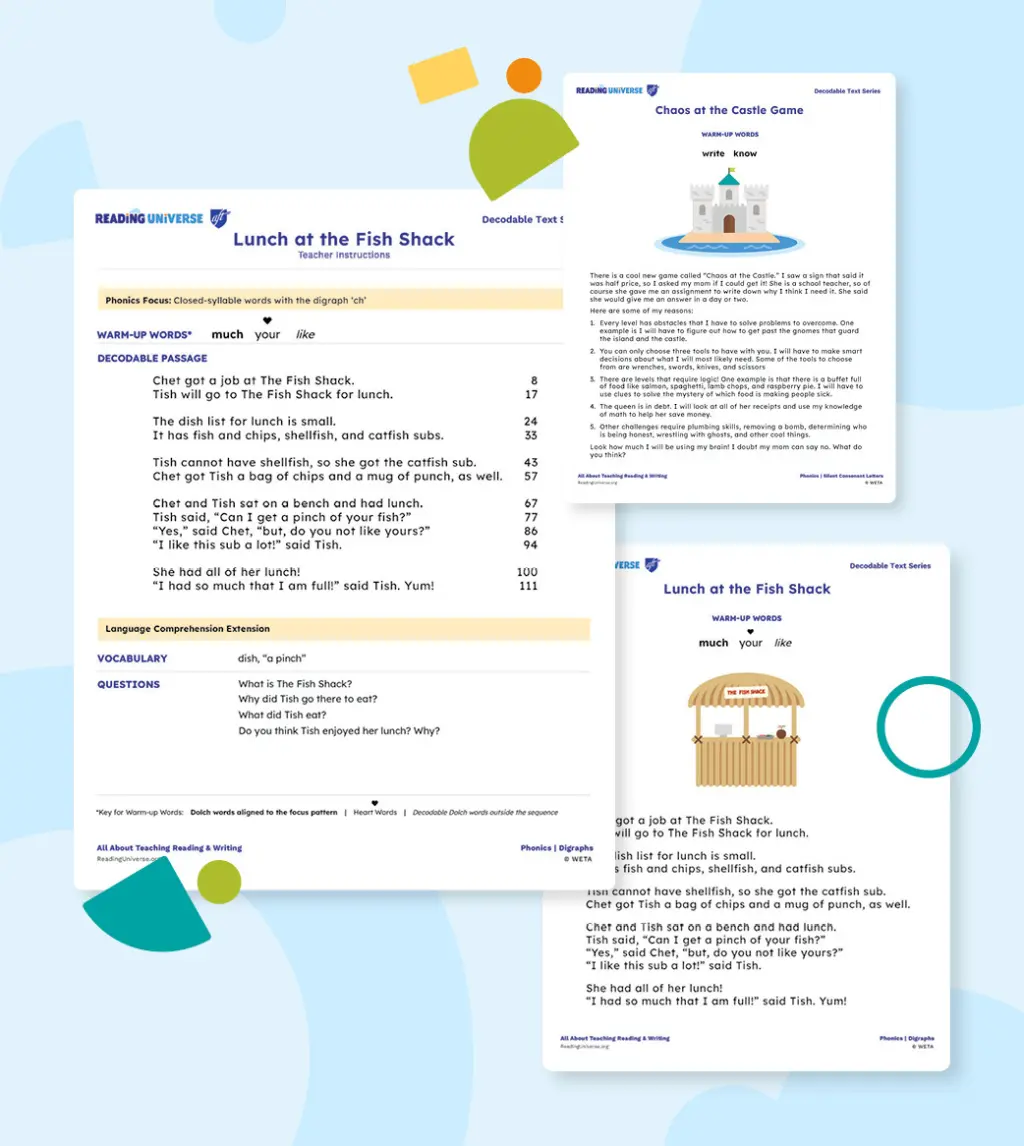
Decodables
Find decodable texts for every single phonics skill! Match a decodable text with the spelling pattern you're teaching. And if you're just getting started, be sure to check out our How to Use Decodable Texts article.
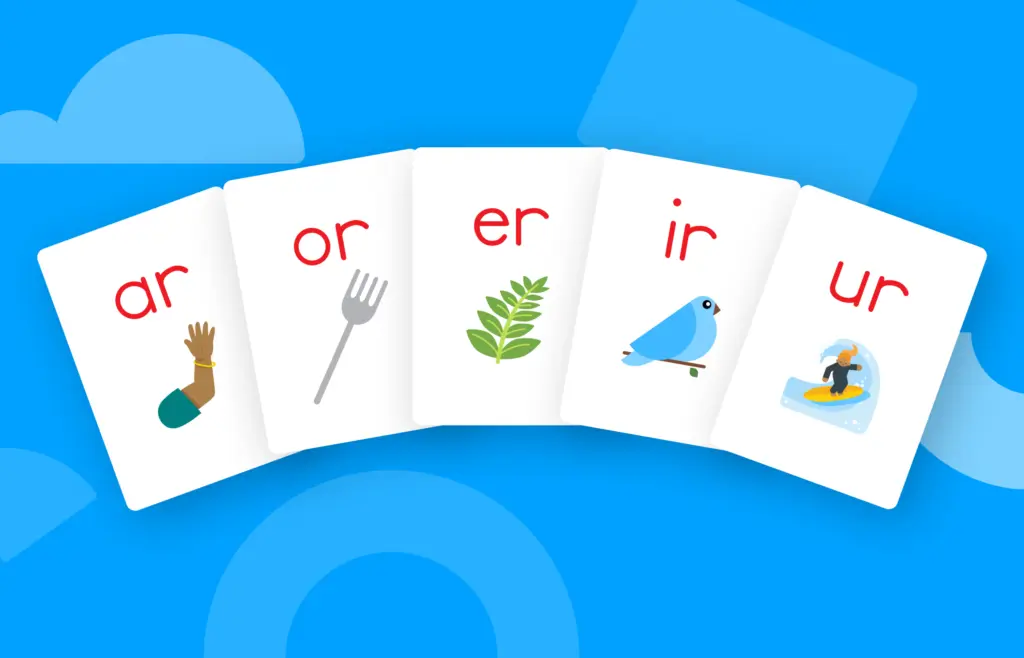
Flash Cards
Flash cards for sound-letter correspondence are the heart of phonics! Reading Universe offers a free collection of 30+ flash cards organized by skill.
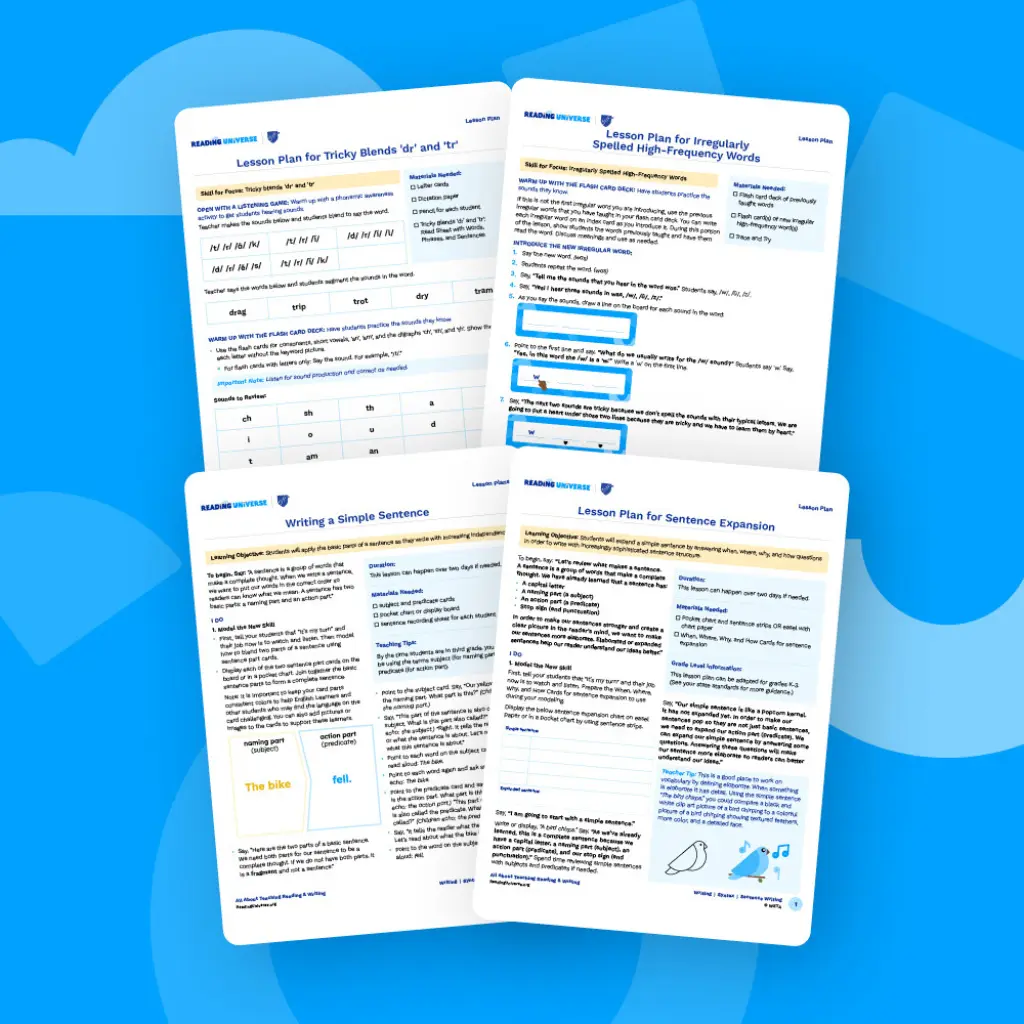
Lesson Plans
Reading Universe has over 90 structured literacy lesson plans organized by phonics skill to help you establish strong routines, so you can focus on explicitly teaching the content.
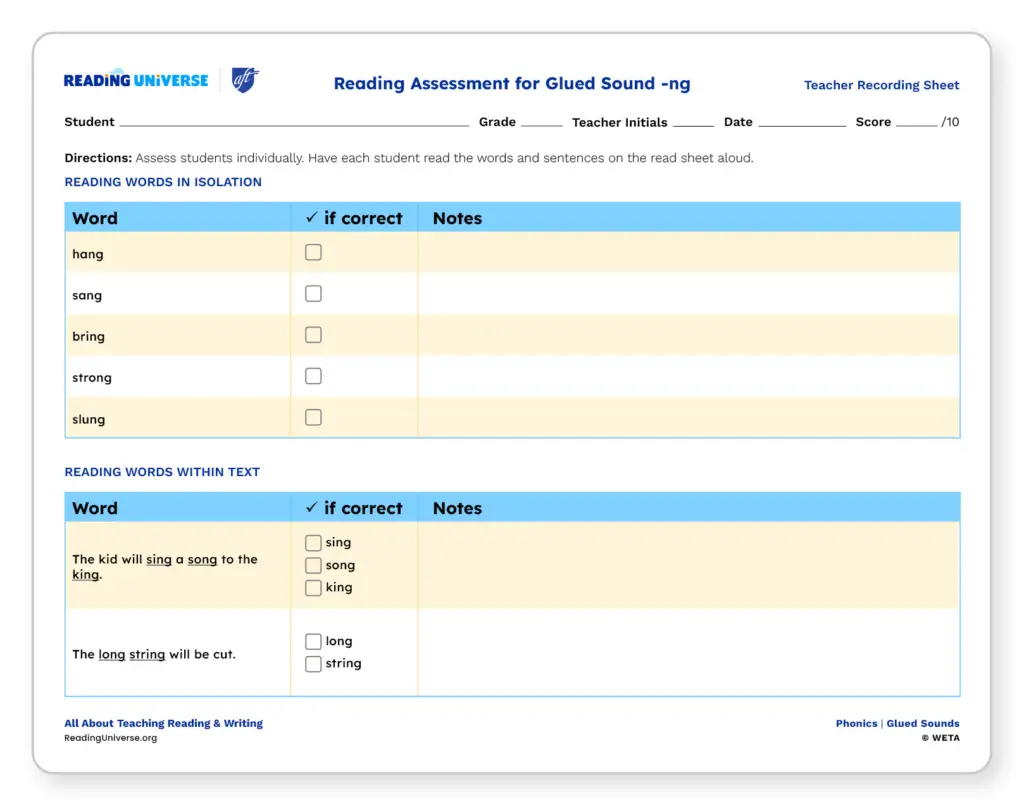
Assessments
Our collection of 40+ assessments serve as a quick "check in" to see if students understand a skill and if your instruction is effective before moving on.
5. Reading Research and Teacher Learning
Courses and Trainings
-
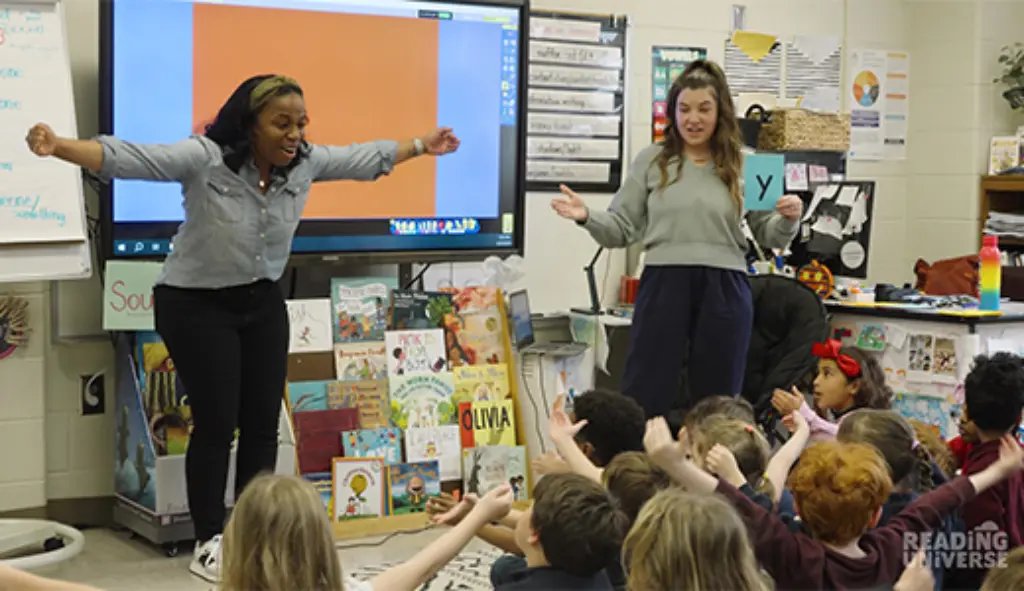
![Two teachers working with students who are sitting on the floor.]()
Photo by Tanya Martineau Explore Our ParaReading CoursesParaReading: A Five-Course Series for Paraprofessionals
-
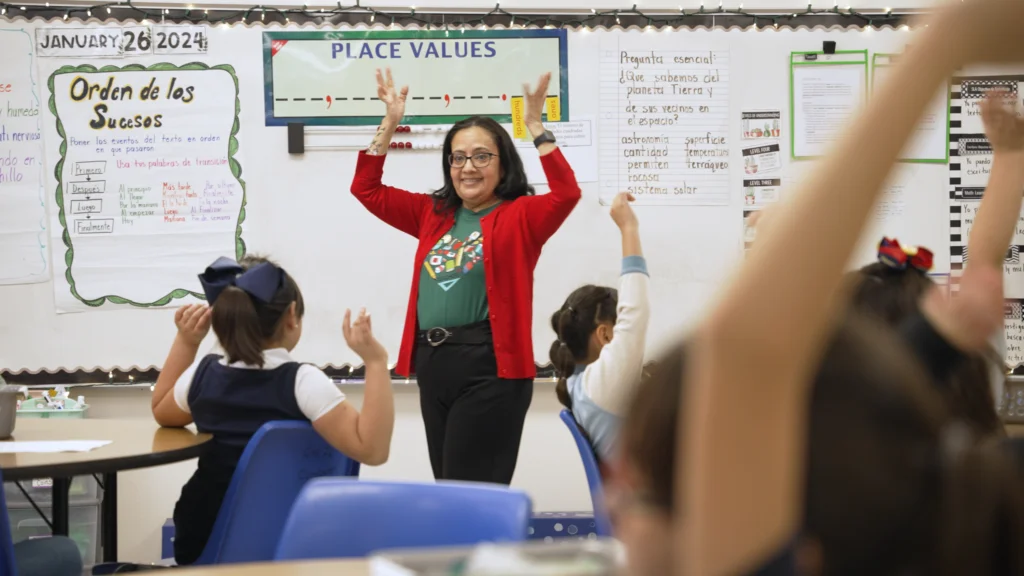
![Ms. Escajeda's Classroom]() View the Toolkit
View the ToolkitPLC Toolkit: Teaching English Learners How to Read
Timely Talks
In these in-depth lecture videos, nationally renowned reading experts discuss critical topics related to reading instruction, including what the cognitive science says and how to value students' home languages in the classroom.
