- Phonics
Free Flash Cards for Each Phonics Skill
Warm-Up Demo
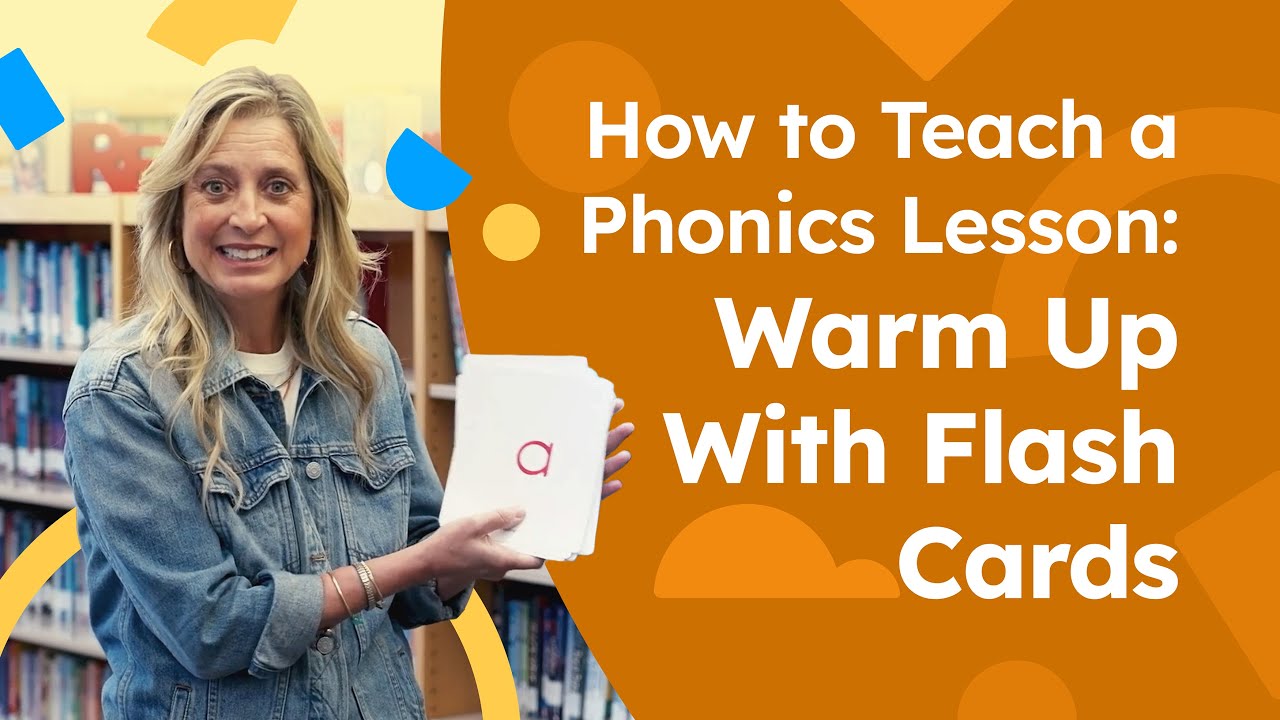
Reading coach Carla Stanford demonstrates how to use flash cards as a warm-up activity, including how to decide what cards to include in your phonics lesson.
Hide Video Transcript
Show Video Transcript
(Carla Stanford) So now we're going to talk about warm up with flashcards. The warm up with flashcards is a really important part of the lesson plan. However, it's really short. It doesn't last very long, and everything that happens in it is super intentional. And as the teacher, I'm making all the decisions about what's going to go in this warm up with flashcards. So let's start with talking about the purpose of a flashcard. The purpose of a flashcard is to teach kids that when they see a letter, the letter has a name and the letter has a sound. And in order to get to spelling and reading, kids need to be able to have this sound-letter correspondence is what we call it. And it needs to be accurate and it needs to be quick. And this accuracy and this quickness, we pull it together and we call it automaticity. So the purpose of this work is to develop this ability.
When kids see this letter, they can automatically with automaticity, recall the sound. Now, in order to get from seeing the letter and automatically giving the sound, there has to be teaching involved. And there is direct explicit instruction that happens with that. But the deck is a place to practice that. It's all about practice. So when I'm planning my deck, I have two decisions to make. I need to decide what I'm going to put in my deck, and then I need to decide how the card is going to be read with the kids. And that sounds like a lot, but eventually it becomes like this automatic thing that happens. You flip through your cards, you make your decisions, and then you know exactly how you're going to have your kids read the cards. So remember, the deck is short. It's very intentional. You're driving the bus.
Everything that goes in your deck is chosen based on what kids need because you have assessed them informatively. You know what they need and based on what they need to do the job at hand in the lesson today. Now I'm going to talk you through the choices that I made to teach the '-ck' spelling rule. So I would have my short vowels because kids have to have a really great grasp of short vowel sounds. I would also put 'c' and 'k' because those are two ways that they know how to spell the /k/ sound already. And today we're going to add a third with the '-ck' rule. And I would also have my digraphs in there as a review because that is what has just been covered. So it's nice practice to ensure that they're holding onto that new concept. So let's talk about how you move through a deck.
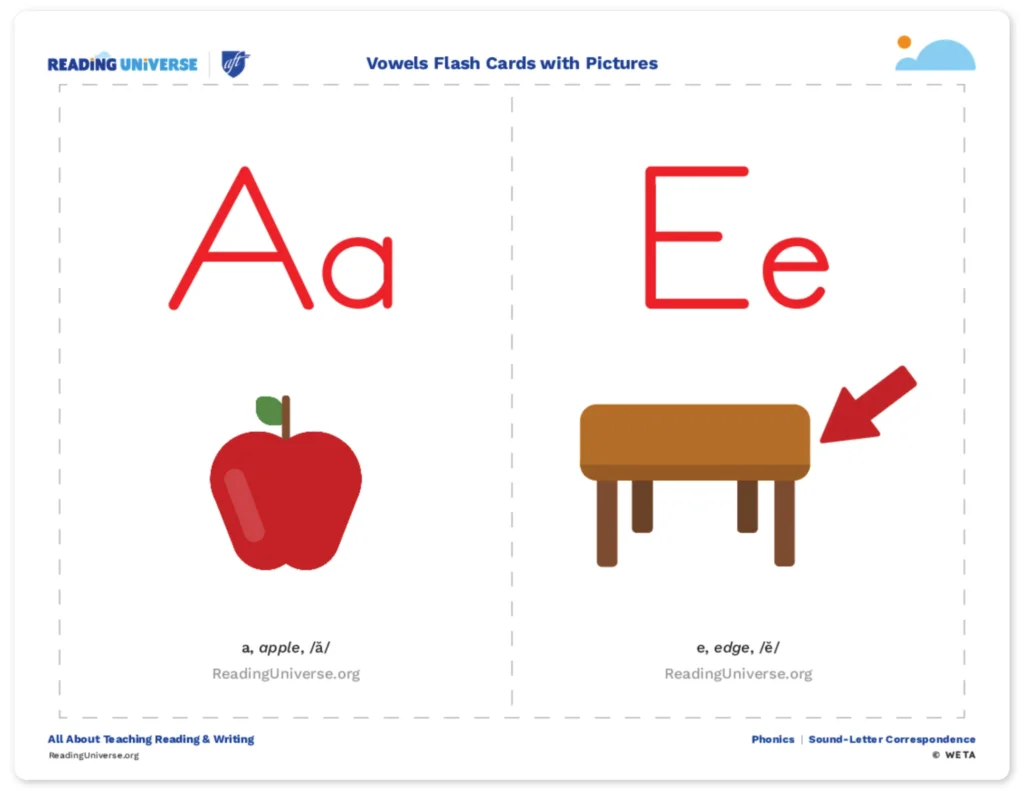
First of all, when you have a keyword picture card, you can go through the card like this. You say the name of the letter, you give the keyword picture, you give the sound, and you can make a motion if the motion is helpful. The motion is really nice because you can hold onto that motion during dictation and you can make the motion and kids will get the sound quickly. So it ends up being a nice reminder of sounds as you're moving through the lesson. So this would sound like 'a', apple, and you would pretend like you're biting an apple. And kids love that. It gets their kinesthetic part of their learning involved and they get to participate. So we go 'a', apple, /ă/. And what happens is once kids know this, you can have them just say 'a', /ă/, and then eventually you can just have them say the sound, /ă/.
If I were going to do this deck, I would go through it like this, 'a', apple, /ă/. 'O', octopus, /ŏ/. 'E', edge, /ĕ/. And I would be listening to my kids and making sure that they were articulating the sound correctly. And if I hear anything that feels like maybe it's a little off, I would say, wait a minute, listen to me. I'm going to model. And I would say, 'e, "edge," /ĕ/. Your turn. And they would echo me because in this moment I'm listening and I'm teaching quickly to clear up any issues with the way sounds are pronounced. 'I', "igloo," /ĭ/. 'U', "umbrella," /ŭ/.
'Th', "thumb," /th/. Now this 'th' is a digraph that we would be reviewing. And it has two sounds. It has a motor off sound, which is /th/ like in "thumb," and it has a motor on sound like in mother. So I would say 'th', thumb, /th/. and /TH/. This is also a tricky sound. It sounds just like 'w'. 'Wh', whistle, /wh/. 'Ch', chair, /ch/. 'Sh', shoe, /sh/. And then I would say, that was amazing. Now friends, I think that you are ready to do the rest of this deck with no pictures. I'm going to hold up the card and I just want the sound. And I would have them go through these.
/ĕ/. /ŭ/. /ŏ/. And then I would probably say, because I can't let this moment go, Hey friends, look at these. And I would spread these guys apart. And I would say, tell me what kinds of letters are these. And they would say, vowels. And I'd say, you are so amazing. And just did the short vowel sounds. Last part of our deck. Sound /k/. Sound /k/. Oh my goodness, you guys are so brilliant. You know two ways to spell the /k/ sound. Guess what? Today you might learn another way and I would give them a little hint into what was to come. And so the deck just serves as a nice way to practice, to listen, and set the stage for what is coming next — building automaticity with sound-ltter correspondence.
(narrator) Reading Universe is made possible by generous support from Jim and Donna Barksdale, the Hastings/Quillen Fund, an advised fund of the Silicon Valley Community Foundation, the AFT, the Emily Hall Tremaine Foundation, and anonymous donors.

Teacher Tip
Mark Up the Back of Your Flash Cards!
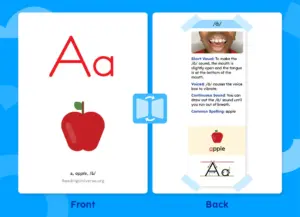
Make the most of your letter flashcards by adding helpful reminders to the back. You might write keywords, examples of words that include the phonics pattern, or brief notes on how to produce the sound. Having these cues readily available makes it easier to model sounds and provide quick examples for your students during instruction.
To use your flashcards to their fullest potential, refer to the Guide to Teaching Letters and Sounds (opens in new window). It provides the characteristics for each sound, including how to make the sound, keywords, and letter formation—perfect for copying onto the back of your cards.
1. Sound-Letter Correspondence
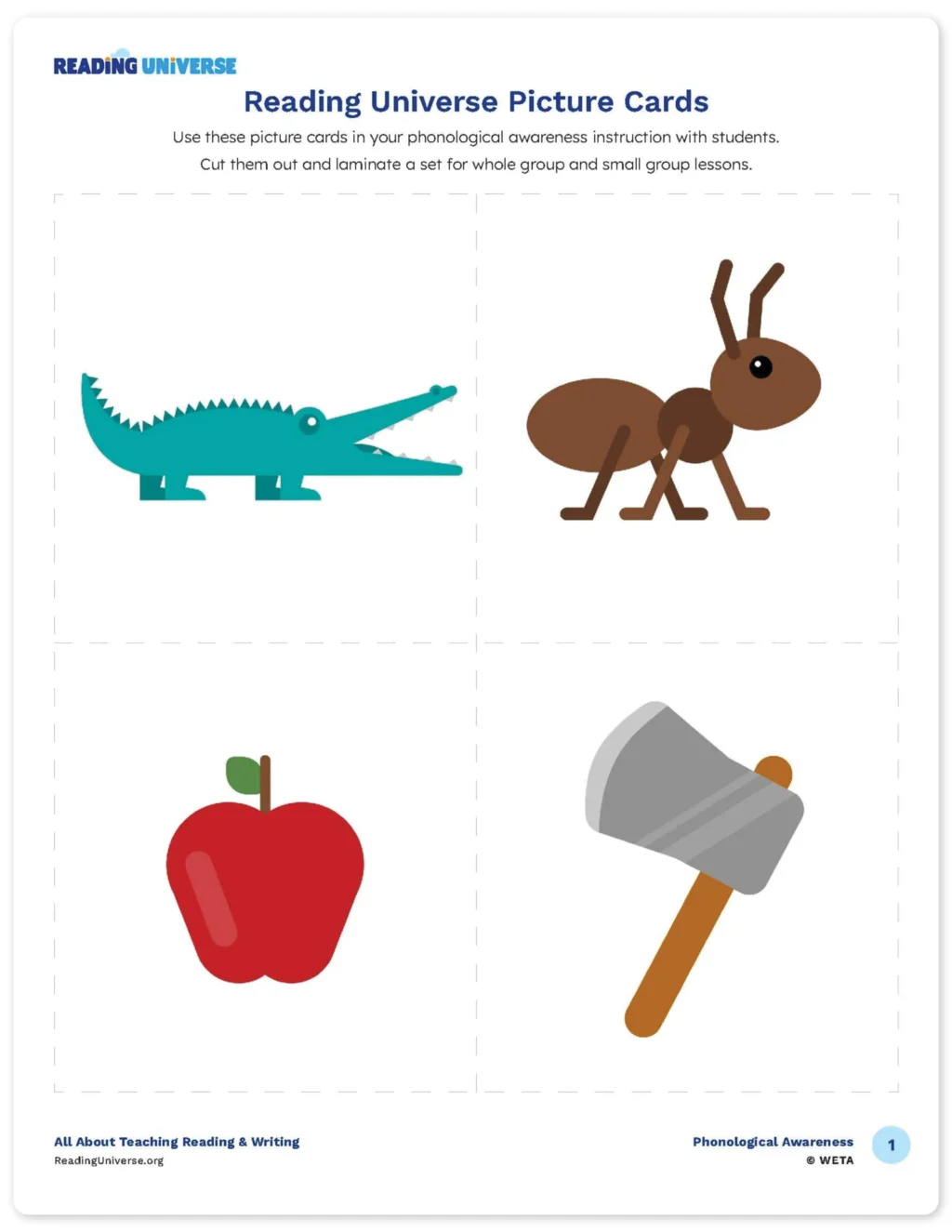
Phoneme Picture Cards
The Alphabet
- Letter Flash Cards with Pictures and Handwriting Cues
- Lowercase Letter Flash Cards without Keyword Pictures
- Flash Card Deck — All Letters and Sounds
- Upper and Lower Case Letter Flash Cards with Keyword Pictures
See the sound-letter correspondence skill explainer and phoneme identification skill explainer for more instructional resources.
3. Closed Syllables
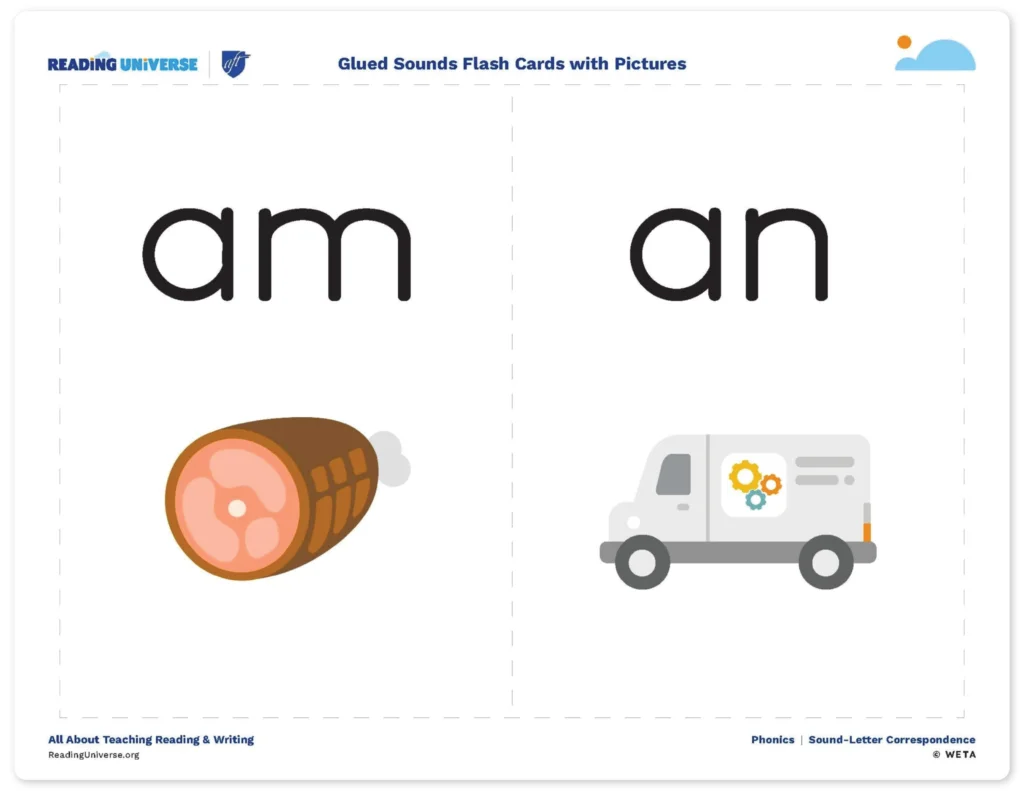
5. Open Syllables
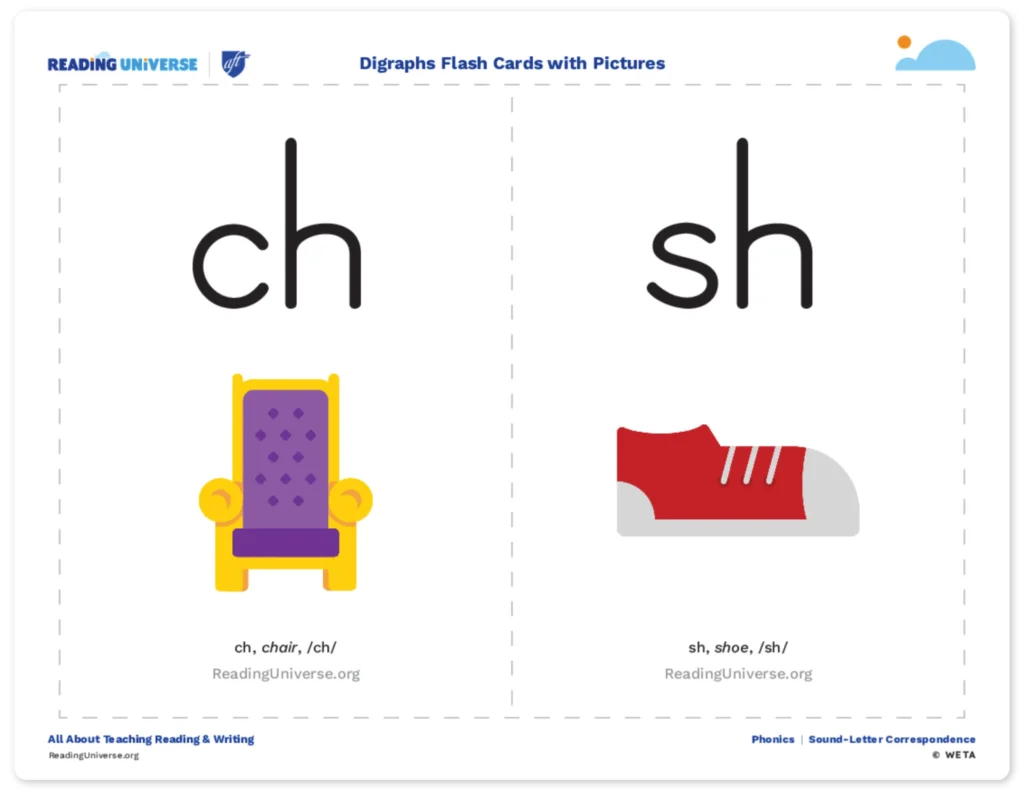
9. '-ck' Spelling Rule
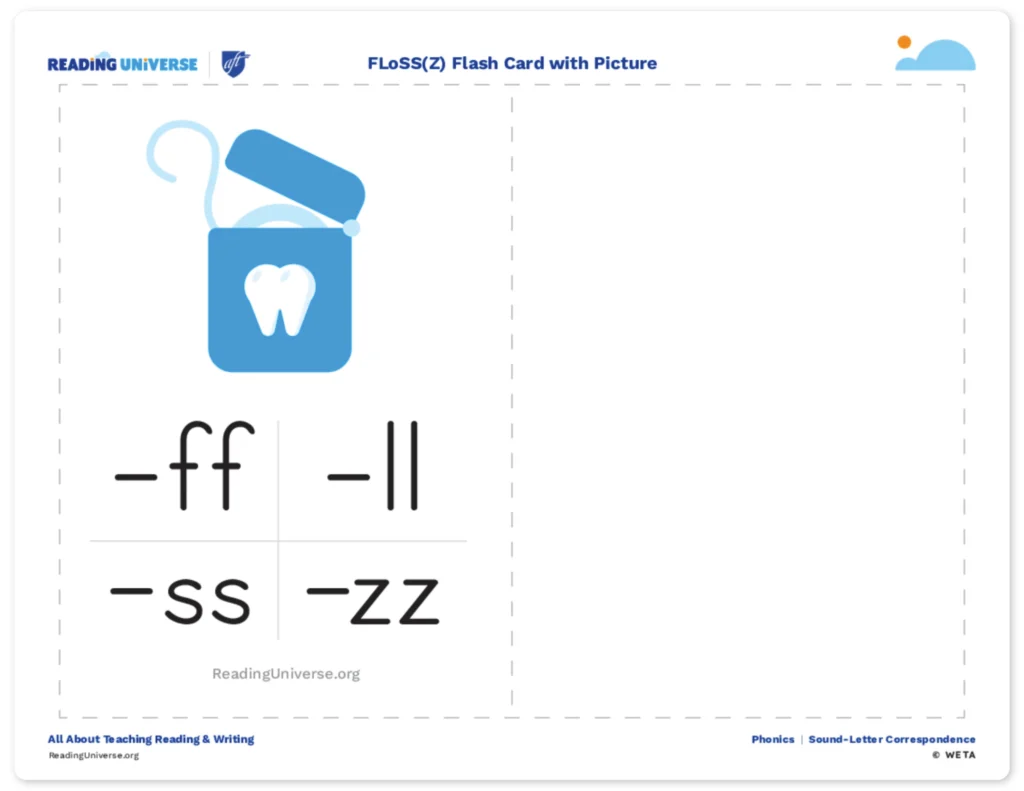
10. FLoSS(Z) Spelling Rule
See the FLoSS(Z) spelling rule skill explainer for more instructional resources.
11. 'y' as a Vowel
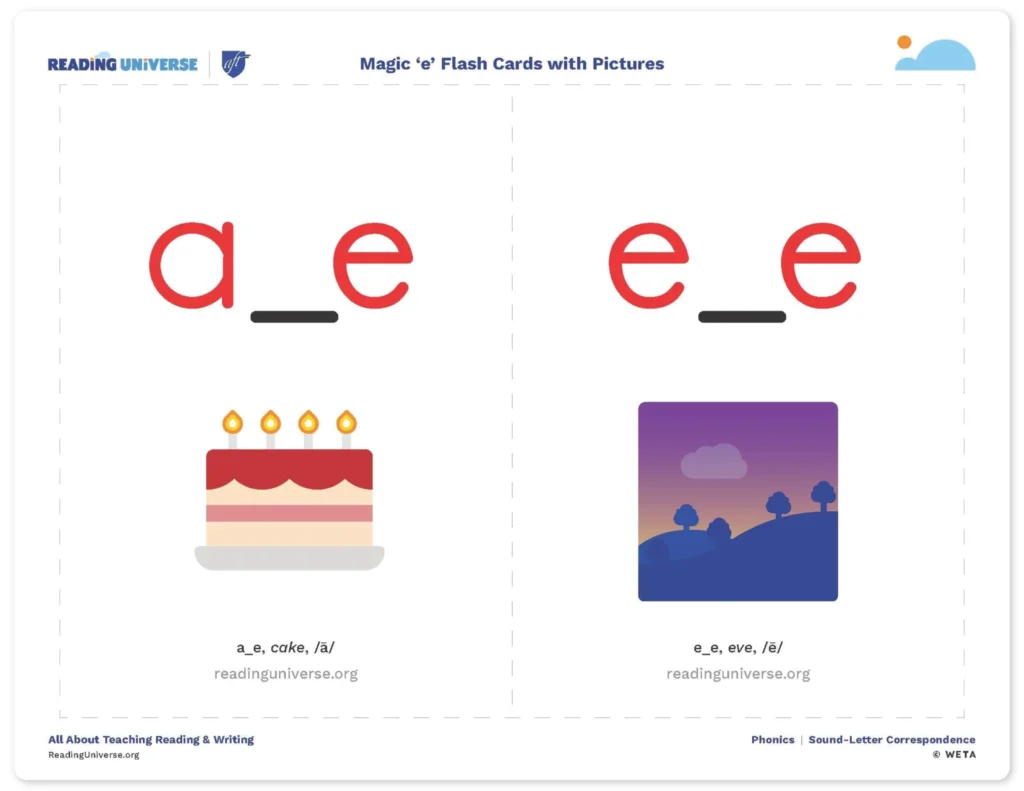
12. Magic 'e' (also known as Silent 'e')
See the magic 'e' skill explainer for more instructional resources.
13. Soft 'c' and Soft 'g'
14. R-Controlled Vowels
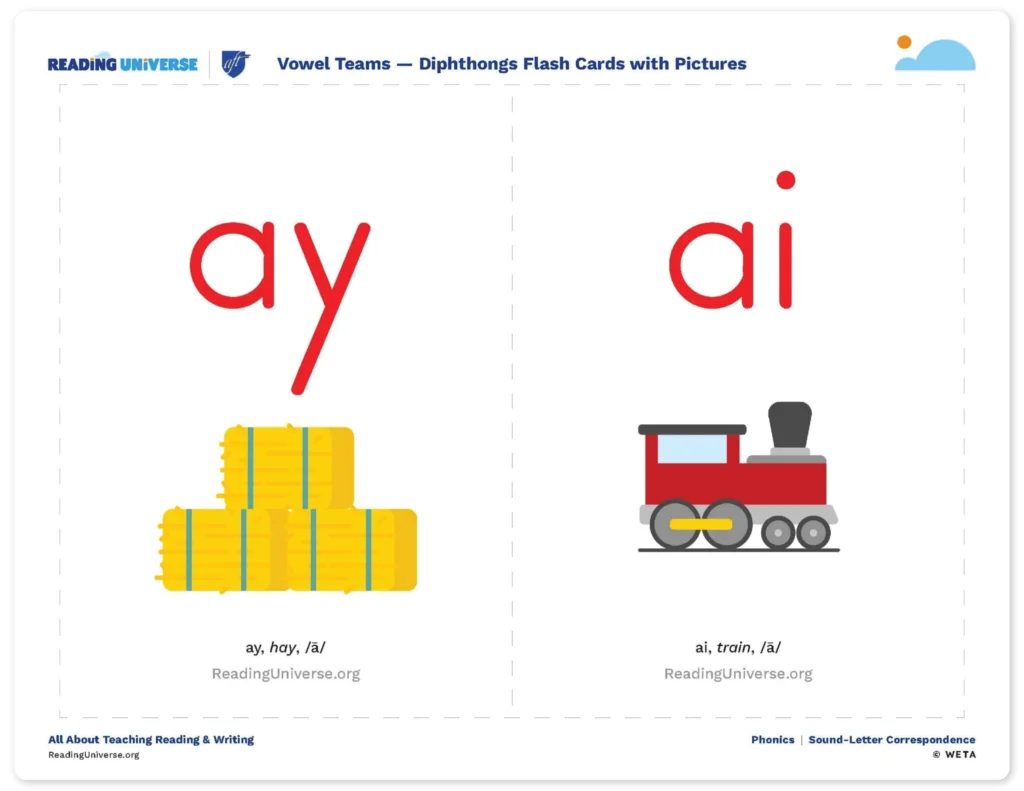
15. Vowel Teams and Diphthongs
- Vowel Team and Diphthong Flash Cards with Pictures
- Vowel Team and Diphthong Flash Cards without Pictures
See the vowel teams and diphthongs skill explainer for more instructional resources.
16. '-tch' Spelling Rule
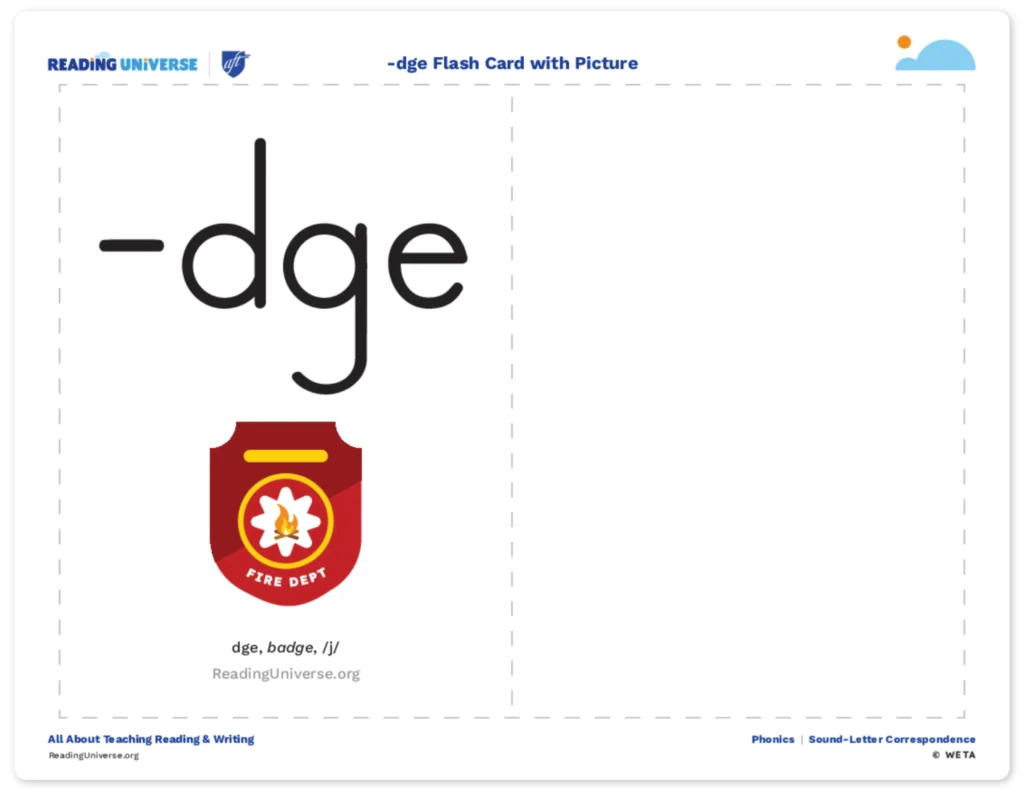
17. '-dge' Spelling Rule
Teaching '-ge' and '-dge'
Teaching '-dge' and '-tch' Trigraphs
See the '-dge' spelling rule skill explainer for more instructional resources.
18. Consonant '-le'
20. Prefixes and Suffixes
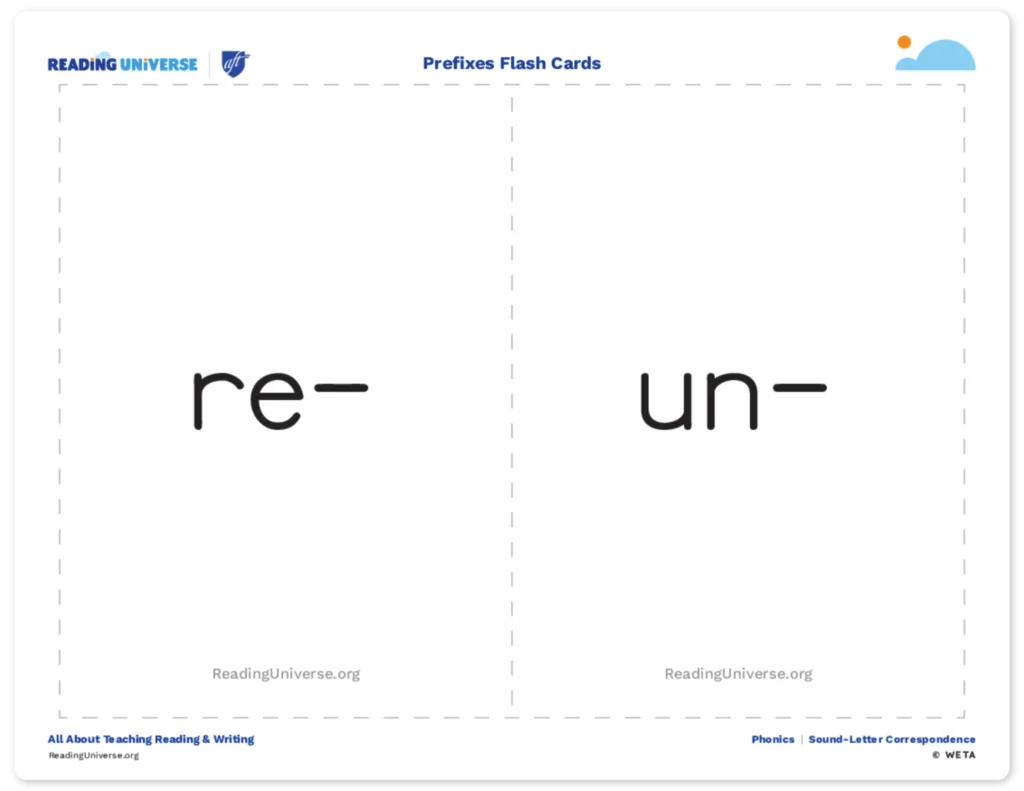
See the prefixes skill explainer and the suffixes skill explainer for more instructional resources.
Warm-Up in Action
Watch second-grade teacher Khadija Williams lead students in a flash card routine for suffixes.

Hide Video Transcript
Show Video Transcript
Khadija Williams: All right, now we have our suffixes. Okay.
Narrator: Warming up with flashcards is a fast, easy way for students to review their letter-sound correspondences. It helps them develop automaticity and gets their brains ready for new content. Watch as Khadija Williams leads her second graders through a deck on suffixes.
Khadija Williams: '-er', /er/.
Students: '-er', /er/.
Khadija Williams: Someone.
Students: Someone, something, or more.
Khadija Williams: Very good. Teacher.
Students: Teacher. Marker.
Khadija Williams: Bigger.
Students: Bigger.
Khadija Williams: Very good.
Narrator: Notice how Ms. Williams uses the same routine for each suffix. She spells it, says it, defines it, and gives examples.
Khadija Williams: Suffix '-ing'.
Students: Suffix '-ing'.
Khadija Williams: /ing/. Happening now.
Students: Happening now.
Khadija Williams: Running.
Students: Running.
Khadija Williams: Jumping.
Students: Jumping.
Khadija Williams: Very good. Suffix '-ed'.
Students: Suffix '-ed'.
Khadija Williams: /d/, /t/, /ĭd/.
Students: /d/, /t/, /ĭd/.
Khadija Williams: In the past.
Students: In the past.
Khadija Williams: Very good. Cleaned.
Students: Cleaned.
Khadija Williams: Danced.
Students: Danced.
Khadija Williams: Very good. Suffix '-ful', /ful/.
Students: Suffix '-ful', /ful/.
Khadija Williams: Full of.
Students: Full of.
Khadija Williams: Very good. Helpful.
Students: Helpful.
Khadija Williams: Thoughtful.
Students: Thoughtful.
Khadija Williams: Wishful.
Students: Wishful.
Khadija Williams: Very good. Suffix '-s'.
Students: Suffix 's'.
Khadija Williams: /s/ or /z/.
Students: /s/ or /z/.
Khadija Williams: Plural, more than one.
Students: Plural, more than one.
Khadija Williams: Teachers.
Students: Teachers.
Khadija Williams: Girls.
Students: Girls.
Khadija Williams: Chairs.
Students: Chairs.
Khadija Williams: Very good. Suffix '-less'.
Students: Suffix '-less'.
Khadija Williams: /lĭs/.
Students: /lĭs/.
Khadija Williams: Without.
Students: Without.
Khadija Williams: Thoughtless.
Students: Thoughtless.
Khadija Williams: Harmless.
Students: Harmless.
Khadija Williams: Hopeless.
Students: Hopeless.
Narrator: Building a consistent flashcard routine like this one helps students focus less on the process and more on mastering their suffixes.
Khadija Williams: Very good. Awesome.
Narrator: Reading Universe is made possible by generous support from Jim and Donna Barksdale, the Hastings/Quillin Fund, an advised fund of the Silicon Valley Community Foundation, the AFT, the Emily Hall Tremaine Foundation, and anonymous donors. Special thanks to Hope Hill Elementary, Reading Is Essential For All People, and Atlanta Public Schools. If you enjoyed this video, please subscribe to our YouTube channel @RUteaching. Reading Universe is a service of WETA, Washington D.C., the Barksdale Reading Institute, and First Book.
Khadija Williams: My name is Khadija Williams, and this is Reading Universe.
Irregularly Spelled High-Frequency Words
Grid Paper to Make Flash Cards or Letter Tiles
Make your own flash cards with this grid paper to support your phonics instruction.
